Binti
A modern alternative to SparkNotes and CliffsNotes, SuperSummary offers high-quality Study Guides with detailed chapter summaries and analysis of major themes, characters, and more. For select classroom titles, we also provide Teaching Guides with discussion and quiz questions to prompt student engagement.
Summaries & Analyses
Plot Summary
Novella Summaries & Analyses
Character List
NEWCharacter Analysis
Themes
Symbols & Motifs
Important Quotes
Essay Topics
Quizzes
NEWReading Tools
Games
Novella 1-Short StoryChapter Summaries & Analyses
Novella 1-Short Story: “Binti: Sacred Fire”
Novella 1 Summary: Binti
The first novella in the series, Binti, introduces the reader to its title character. Binti is a 16-year-old young woman of an ethnic group on Earth named the Himba. The Himba are a traditional group who “didn’t like to leave the homeland” (2). Binti is a “master harmonizer” of her people; she can “communicate with spirit flow and convince them to become one current” (16). Binti is thus the first of her people to attend the renowned Oomza University, an intergalactic institution. When Binti discovers that she has been accepted and granted scholarships, she runs away from home and boards a ship to the university without alerting her friends or family. The novella begins with Binti leaving home:
Now the weight of my entire life was pressing on my shoulders. I was defying the most traditional part of myself for the first time in my entire life. I was leaving in the dead of night and they had no clue. My nine siblings, all older than me except for my younger sister and brother, would never see this coming (2).
Although she has only just left, Binti misses her ancestral home, named the Root, and her father’s astrolabe shop. An astrolabe is a complicated technology that holds its user’s identity; it allows people to communicate and store data. It also holds five possible casts of its user’s future. Binti is a master harmonizer and already makes better astrolabes than her father does. Binti has never been away from home before, and she worries that she has made a mistake: “My prospects of marriage had been 100 percent and now they would be zero. No man wanted a woman who’d run away” (3). Binti clings to the remnants of normalcy, even though she has left it behind.
Binti finally boards the living ship known as Third Fish, “a type of ship closely related to a shrimp” (8). While onboard the ship bound for Oomza University, Binti finds kinship amongst many academics and scholars. Binti teaches her friends how to “tree,” or how to meditate using mathematical equations, to “imagine the most complex equation and then split it in half and then in half again and again” (9). Binti develops a crush on a Khoush boy named Heru, who notices that her hair is braided into a mathematical pattern.
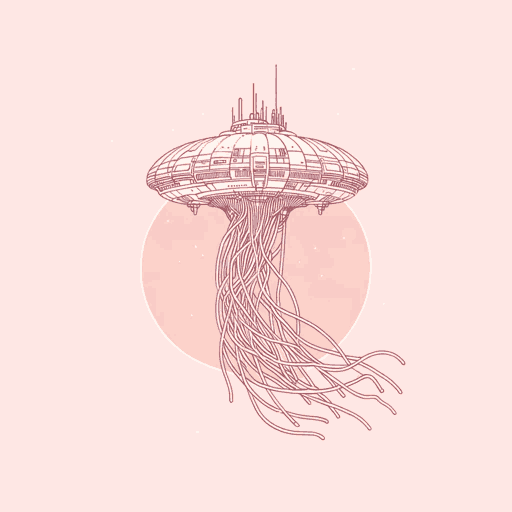
The Meduse attacks the Third Fish while it is in transit to Oomza. The Meduse are a jellyfish-like alien race that is known for their aggression and warmongering tendencies. The Meduse and the Khoush have been at war for years. They kill everyone on board the ship except for Binti and the pilot. The massacre is also known as moojh-ha ki-bira, or “the great wave” (12). Binti reveals that the Meduse worship water, which the Khoush view as inferior. Binti discovers that her edan, an ancient artifact she discovered when she was a child, has protected her from the Meduse; the artifact is poisonous to them.
However, the edan also allows Binti to communicate with the Meduse; after hiding in her room for days, she discovers that she can hear their voices through her door. Although they try to convince her to open the door, she refuses to do so. Eventually, the Meduse enter her room and a young, hotheaded Meduse named Okwu, who had attempted to kill her prior, questions Binti about the red clay on her skin. Binti realizes that her otjize, mixed clay that women of her people apply to their body and hair, can heal the Meduse. Okwu returns with orders from its chief to get more otjize; Binti does not agree to its request but asks for water and food.
Later, Okwu tells Binti that they aim to kill everyone at Oomza University to get their chief’s stinger, which Khoush students had stolen and mutilated. Binti manages to convince Okwu that she will be able to broker a truce between the Khoush scholars at Oomza and the Meduse. Binti is taken to the chief of the Meduse, and it is revealed that its stinger was exhibited at the Oomza museum without consent. The Meduse believe that Binti cannot represent them while she clings to her edan; the artifact would betray how Binti distrusts the Meduse. Binti finally agrees, and she puts her edan down. When she does, a Meduse stings Binti, and she is now able to communicate with them without her edan.
Upon their arrival at the university, Binti brokers peace between the Khoush and the Meduse; the stinger is returned to the chief of the Meduse, and Okwu joins Binti at the school as a student. The head of the mathematics department, Okpala, asks if Binti will be welcome home again, considering that she is now an outsider. It is only then that Binti realizes that her hair has become a mass of tentacles, of okuoko. She is now part Meduse. Over the weeks that Binti is at Oomza University, she becomes close friends with Okwu. When she makes otjize from the clay and plants found on the Oomza University campus, Binti tries to heal Okwu’s wounds with it. Binti is successful; she has recreated her family’s traditional otjize. The novella ends after Okwu encourages Binti to call her family; she does, and her mother answers.
Short Story Summary: “Binti: Sacred Fire”
The short story “Binti: Sacred Fire” finds Binti after she has been at Oomza University for six weeks. During her time there, Binti has remained hidden from most of her schoolmates. Binti suffers from anxiety after witnessing the massacre on board of Third Fish. When Heru’s parents call her on the astrolabe, they spend over half an hour shouting and crying at her for surviving when their child did not. Another student named Haifa finds Binti having a panic attack in the field near their dorm and comforts her. Haifa is kind to Binti. She asks Binti about being part Meduse and tells Binti that she too has changed; Haifa “was born physically male” (64) and transitioned when she was 13 years old. Haifa encourages Binti and tells her that adjustment takes time.
Binti remembers her conversation with her mother. Binti’s parents are furious at her but proud of all that she has accomplished. The next morning, Binti meets Okwu as she routinely does. Binti attempts to talk to Okwu about the massacre onboard the ship, but Okwu seems ambivalent about the deaths. Okwu, instead, worries about Binti, inquiring if she has slept, eaten, and spoken to her mother. They walk together and eventually part ways to attend class. Binti attends her private session with Professor Okpala, the head of the Mathematical department at Oomza University, where they practice “deep treeing exercises” (70) so that Binti can summon the current that will activate the edan. Binti sees death and begins screaming, trying to break the edan against the surface of the table. Professor Okpala eventually calms Binti and makes her go to the medic.
On the way there, a group of Khoush students throw a current at Binti that singes her skirt. They deem her a “Meduse sympathizer” and consider her a “traitor.” They accost her and demand answers for things outside of Binti’s control. Most students and faculty at Oomza have been welcoming to both Binti and Okwu, although small factions that detest the Meduse’s presence at the school exist. Binti tries to walk away from the group of Khoush who are harassing her. Okwu appears and tells the group of students to leave Binti alone. After, Okwu accompanies Binti to the medic building.
On the shuttle to the medic, Binti has a panic attack on board as she remembers the deaths that she witnessed on Third Fish. Haifa and the Bear see Okwu and Binti and go to sit next to them. Binti continues to “tree” to try and calm down. When they must get off at their stop, Binti refuses to go, and her current zaps her friends; Binti even holds up her edan to Okwu. Binti cries, desperate to take the shuttle to the next stop: the Oomza Red Desert of Umoya.
When they arrive, Binti’s friends refuse to leave her. Haifa and the Bear dance in the sand before the group continues to walk into the desert. Binti walks for over three hours until she “no longer felt like screaming” (87). Binti demands to know why Okwu changed her hair into tentacles. She summons a current and lights a dried bush on fire. Binti explains that Himba women believed that the smoke of okuruwo, or “sacred fire” (88) would cleanse them. The Bear is accidentally set alight by the flames but escapes unscathed.
That night, they spend the night in the desert in the Bear’s tent. Binti has another panic attack when Okwu points at her with his stinger, although he does so only to kill the burrowing insects that the group of Khoush students had placed in her bag. The insects, known as the alghaza, are extremely destructive and are often used to haze new students. Haifa throws Binti’s satchel near the fire; after, Binti and the Bear watch the insects fly away. The next morning, Binti finds peace in the small desert, saying that it will be her sacred fire so far from home:
It never stops burning, even at night the sand is warm beneath the surface. I can always come here when I need to. And my community will be my friends. Who else would come into the desert with me? That is love (95).
The short story ends with Binti gazing at her edan, wondering what adventures to which it will lead.
Novella 1-Short Story Analysis
Okorafor establishes the characters and the universe in which the series is set throughout both Binti and “Binti: Sacred Fire.” Set far in the future, Binti’s world is one where magic, science, and technology collide. Okorafor melds traditional and modern forms of knowledge in Binti. Science and technology are spiritual mediums; cultural knowledge and traditions are not forsaken for the sake of advancement. The themes of modernity and tradition are at the core of the novel; the two have a consistent relationship that Okorafor explores in great detail. The constant push and pull between progress and custom is one that Binti, and others in her world, navigate.
The push and pull between hard science and faith, another layer to the themes of modernity and tradition, is evident in the way that mathematics functions within the text. When Binti describes her mathematical ability, it borders on the spiritual and magical: “And so I had become a master harmonizer by the age of twelve. I could communicate with spirit flow and convince them to become one current. I was born with my mother’s gift of mathematical sight” (16). This portrayal of mathematics turns the calculating and exacting science into one that is innate to Binti’s character, an organic skill not unlike a magic or spiritual ability. Binti’s ability to “tree” (16) is similarly spiritual in nature. In the world of Binti, mathematics and science are aptitudes that can be both inherited and passed down. While Binti “trees” or meditates, her father “passed [her] three hundred years of oral knowledge about circuits, wire, metals, oils, heat, electricity, math current, sand bar” (16).
In this way, Okorafor also juxtaposes the merits of oral traditions with that of a modern institution like Oomza University. Binti’s mother, for example, imparts to her why their people choose to remain insular: “There is a reason why our people do not go to that university. Oomza Uni wants you for its own gain, Binti. You go to that school and you become its slave” (4). The traditions of Binti’s people are thus directly at odds with her ambitions. Binti is a child of both the traditional and the modern.
“Binti: Sacred Fire” depicts the protagonist’s search for home on a new planet. Binti believes she has forsaken everything that her people stand for in her pursuit of knowledge, but she is still drawn to reminders of “home” nonetheless. Likewise, Okorafor similarly presents current issues in a science fiction context. The repatriation of the Meduse chief’s stinger is one such example. Undoubtedly an allusion to museums across the world displaying objects and bodies stolen from indigenous peoples, Okorafor speaks to the consequences of such actions. The first two sections of Binti: The Complete Trilogy establish the paradoxical world that Okorafor has built and repeatedly reflects Binti’s struggle to reconcile both the traditional and modern facets of her identity.

Get in-depth, chapter-by-chapter summaries and analysis from our literary experts.
- Grasp challenging concepts with clear, comprehensive explanations
- Revisit key plot points and ideas without rereading the book
- Share impressive insights in classes and book clubs
Related Titles
By Nnedi Okorafor