1922
45 pages • 1-hour read
Stephen King1922
A modern alternative to SparkNotes and CliffsNotes, SuperSummary offers high-quality Study Guides with detailed chapter summaries and analysis of major themes, characters, and more.
Pages 29-82Chapter Summaries & Analyses
Content Warning: This section of the guide includes discussion of gender discrimination, animal abuse, animal death, alcohol use, sexual content, cursing, and death.
Pages 29-38 Summary
Two days later, Andrew Lester, an attorney for the Farrington Company, comes to the farm. Wilf refuses to shake his hand or invite him inside. Lester asks where Arlette is and is surprised when Wilf insists that he doesn’t know. Lester asks to look inside the house, but Wilf dismisses him. He warns Wilf not to use the land, or he will face legal repercussions.
After Lester is gone, Henry asks when they are going to fill in the well. Wilf considers, not wanting to look suspicious by doing it too soon but also not wanting to leave the body exposed.
The next day, Shannon comes and asks Henry to come to her house for dinner. When Henry comes home that night, Wilf is relieved that he was able to lie to Shannon. However, Henry is devastated by having to do so. A while later, Wilf sees Henry in the barn, petting one of their cows, Elphis, and crying.
Pages 38-54 Summary
The following morning, Wilf decides to use Elphis to create a reason to fill in the well. With Henry’s help, he ushers Elphis onto the well cap. The cap breaks, and Elphis falls in. Henry panics at the sounds of her distress, so Wilf forces him back inside the house.
Wilf retrieves his gun. He looks into the well and is horrified by the sight, as rats have returned and Arlette’s face is still visible. As he watches, the weight of the rats breaks her jaw. He shoots Elphis.
Wilf sends Henry to get a pile of dirt, then the two begin filling in the well. They get most of the way through when they see dust on the road from a coach approaching.
When Sheriff Jones gets to the house, Wilf and Henry are sitting on the porch. Jones apologizes for interrupting their work, then informs them that Lester sent him. Feeling as though Jones will be friendly, Wilf allows him to come into their home.
Jones checks each of the rooms, then pauses in the bedroom. Wilf explains that Arlette took a suitcase, clothes, and $180 he had been saving. He guesses that she tried to walk to Omaha and was picked up by a trucker. Jones seems satisfied with the conversation.
Back outside, Jones tells Henry that he spoke with Shannon’s family. Her mother was upset that Henry told Shannon about a fight he had with his mother the night before she left when she got drunk and slapped Henry. Henry confirms the story, and Wilf is proud of his son for delivering their lie so well to Shannon.
Before Jones leaves, he asks Henry what he wants them to do about Arlette. He suggests that they put out a notice that she is missing, then “drag” her back to Wilf.
Wilf and Henry finish filling in the well. When they look down into it, the soil moves, reminding Wilf of a beating heart. Henry screams, but then a rat emerges from the dirt. Henry angrily kills it with his shovel. He insists that Arlette now “owns” the rats and is sending them to haunt them. Wilf dispels his fear as nonsense despite feeling uneasy himself.
The next day, Wilf and Henry work on the farm. When Wilf comes to the house for lunch, there is a casserole from Shannon’s parents, Harlan and Sallie. Sallie left a note offering her condolences to Wilf as well as a promise not to charge him for using their harvester. Wilf smiles, thinking that their “life after Arlette had begun” (54).
Pages 54-65 Summary
The rest of the summer goes smoothly on the farm. It is hot, there are no severe thunderstorms, and the price of corn is high enough for a profit. Lester returns twice, both times without any concrete evidence. The second time, in July, he openly accuses Wilf of killing his wife. In response, Wilf kicks him off the land then threatens to harm him for trespassing if he ever returns.
Wilf begins to care deeply for Shannon, mostly because of how she treats Henry. She comes every Tuesday and Thursday with food to cook for them both, then, while Wilf cleans up, they sit on the porch and hold hands and talk. On one Tuesday, however, she comes early to talk to Wilf. She asks if Henry seems different, noting how he always seems distracted or upset. Wilf reassures her, insisting that they are just busy on the farm and that Henry is in love with her. Inwardly, he realizes that Arlette’s murder is having more of an impact on Henry than he wants to admit.
One night in August, Wilf wakes up to the sound of a cow in distress. In the barn, he finds Achelois stomping around her stall. He realizes that a rat is hanging from her udder. Achelois flails until the rat finally falls, still with a piece of her udder in its mouth. Wilf tries to smash it with his gun, but the rat runs to a pipe at the end of the barn. Wilf realizes that it leads to the well. When he tries to stop the rat, he is overwhelmed by the putrid smell, vomiting on the floor of the barn. Wilf bandages Achelois’s wound. He then takes a large piece of canvas and crams it down into the pipe, using a broom handle to push it far inside.
In the morning, Wilf lets Henry drive his truck and sends him to Hemingford Home for supplies. Henry is excited, as he is still too young to drive. Wilf is hopeful that it will change his overall mood for the better. Once Henry is gone, Wilf puts cement in the pipe, not wanting Henry to see the rats. He is certain that the rest will die now that there is no way out of the well.
Pages 65-75 Summary
One night in late September, Henry comes home from school upset. Shannon had not been there for two days, and when Henry tried to stop by to see her, her father sent him away. Henry confesses that Shannon is pregnant. He wants to marry her, but Wilf is adamant that they are too young. Henry responds angrily that he wishes they had let his mother sell the land, as it would give them money for him to support Shannon and his baby. He also wishes that his mother were still around, as she would help him better than Wilf will. Wilf is bothered by the comment, but he sends Henry inside when he sees Harlan’s car approaching.
Harlan gets out of his new car wearing a suit with a new belt buckle. Despite being friends, Wilf realizes that he harbors anger for Harlan that is rooted in jealousy. Harlan is one of the wealthiest farmers in the county, with indoor plumbing, a new silo, and, most upsetting of all to Wilf, a happy marriage.
Wilf invites Harlan to sit on the porch with him. As Harlan talks about the pregnancy, blaming his daughter, Henry, and even Wilf, Wilf forces himself to remain quiet. At the end, Harlan tells him that he plans to send Shannon to St. Eusebia, a Catholic home for girls. He is hopeful that Shannon can have the baby, give it up for adoption, then return to finish school so that she can become a teacher. He demands that Wilf give him $75 to pay for Shannon’s tutor while she is gone, and Harlan will pay the other $300 for the cost of the home. Wilf protests, insisting that he can’t afford to pay it. When he asks what will happen if he doesn’t pay, Harlan gives Wilf a look of “contempt” that still haunts him. Harlan tells him that they will no longer have a relationship, leaving Wilf without a harvester or any help on the farm.
After Harlan is gone, Henry comes out to the porch. He is adamant that he can’t let Shannon give up the baby, instead suggesting that they may run away together. However, Wilf advises him against it, insisting that they have no money to support themselves. When he tells Henry that he will “lose respect” for them if they run, Henry angrily responds that Wilf knows nothing, as he “couldn’t even cut a throat without making a mess of it” (75).
Pages 75-82 Summary
When Henry goes to school the next day, Wilf searches the house, hoping that Arlette hid money. He eventually finds $40 hidden in the closet in the band of one of her hats. He notes how the remaining $35 still haunts him to this day, as his pursuit to get it ultimately led to his downfall.
The rest of the week, Wilf contemplates what to do. On Monday, when Henry goes to school, he goes to the bank in Hemingford Home in his truck. He meets with Mr. Stoppenhauser, who immediately agrees to give him a loan. He tries to talk Wilf into taking out another mortgage on his house, pointing out that he can make home improvements that will allow him to sell it later for more than the $750. Wilf is tempted by the idea, promising Mr. Stoppenhauser to talk it over with Henry.
When Wilf leaves the bank, he does not realize that he no longer has the truck. Henry came and switched it for the Model T. When Wilf gets into the car, he finds a note from Henry. In the note, Henry tells his father that he is going to get Shannon from the home in Omaha. He warns Wilf not to send the police after him, or he will tell them about Arlette. At the end of the note, he tells Wilf that he loves him even though “everything [they] did has brought [him] mizzery” (81).
As Wilf drives back to the farm, he becomes genuinely afraid that he will end up in the electric chair, as Henry will likely get caught and tell the police. Wilf briefly considers running away to Colorado. What stops him is the thought of leaving his farm, the thing that he killed Arlette for.
Pages 29-82 Analysis
This section of the text opens with visits from both Farrington’s lawyer and the police, who threaten to uncover Wilf’s act of murder. However, Wilf dismisses both, affirming his belief that he has succeeded in keeping his farm and eliminating the threat to his discovery. This idea is best encapsulated by Wilf’s assertion that “If God rewards us on earth for good deeds […] then maybe Satan rewards us for evil ones” (54). From there, Wilf establishes a new routine, working through the summer on his farm, growing to like Shannon, accepting help from her and her family with cooking, and attempting to rebuild his relationship with his son. The mood of the novella shifts to one of comfort and contentment, as Wilf believes that he has made it through the worst of the murder and can now continue his life. At the same time, however, his comfort is enveloped by a feeling of foreboding, and the reader knows from Wilf’s retrospective narration that his happiness does not last.
Despite Wilf’s optimism, this section of the text is infiltrated by moments of darkness and horror centered on Arlette’s body and the rats in the well. Wilf’s encounters with the rats and the body’s continued decomposition underscore the novella’s atmosphere of decay. One key component of Arlette’s grotesqueness is the presence of the grin on her face, a motif that highlights the impact of what Wilf has done. Each time he visits her in this section of the text, he is shocked by her grin, something he tries to cover with the quilt, the mattress, Elphis’s body, and, finally, dirt and stone. While Wilf is able to control much of his life, including his son, the Farrington Company and its lawyer, and even the law, nature intervenes, emphasizing The Psychological Consequences of Evil. Wilf starts to believe that Arlette is controlling the rats, sending them to punish him and destroy his happiness. He even turns to Satan instead of God for divine protection. This shows that as long as Arlette’s body continues to persist in the well, it will persist in Wilf’s psyche.
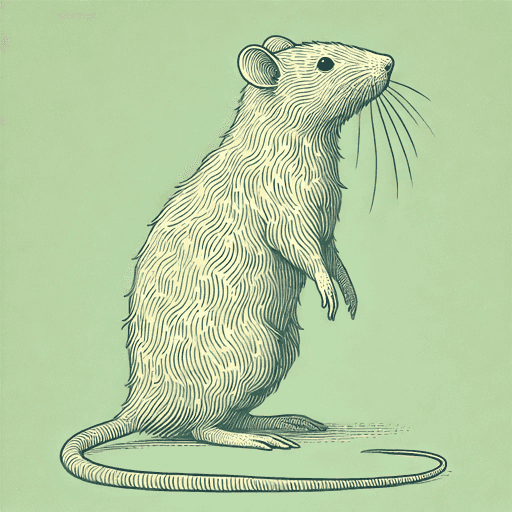
The rats don’t only play on Wilf’s conscience; they begin to infest the farm and damage his livestock, a symbolic representation of the rot and decay that will slowly take over as the novella continues. The first time Wilf checks Arlette’s body, he and Henry look down into the well, and the dirt begins to move. When rats emerge, Henry notes that “She sent [them…] The rats are hers, now” (51). The rats persist throughout the story, appearing first in the barn, then in Wilf’s home, and even following him in the years after. They are the analog of the sound of the beating heart beneath the floorboards in Edgar Allen Poe’s The Telltale Heart. King makes this connection explicit when the rats surging under the soil in the well remind Wilf of a beating heart. As the novella progresses, the rats destroy the farm and Wilf’s life, just as his subconscious emotionally destroys him following his act of murder.
King uses other animals, Wilf’s cows, Elphis and Achelois, to further emphasize the damage that is done to Wilf’s life. First, Wilf uses Elphis to break the top of the well, causing Elphis to fall in, cover Arlette’s body, and give him a reason to fill in the well that does not seem suspicious. Elphis’s name comes from the Greek goddess of hope. In the myth, after Pandora opened her box, releasing evil into the world, the only thing that remained inside was Elphis, or hope. As Wilf explains, the naming of Elphis was a “bad choice or ironic joke” (38). Wilf sacrifices his livestock, a source of income and pride in his life, to cover up the murder. In turn, he is also giving up “hope,” as Elphis’s death marks the beginning of his farm’s and his life’s destruction. Similarly, the second cow, Achelois, draws her name from Greek, and it, too, serves as a source of irony in the text. Achelois, translated as “she who washes away pain,” does the exact opposite. Her injury marks the first time that the rats leave the well and infiltrate Wilf’s life, as she is attacked by a rat in the barn. Although she survives, she becomes useless to Wilf, losing her ability to produce milk and, in turn, profit. Following Achelois’s injury, the rats appear in his home, biting him and foreshadowing his death at the end of the narrative.
Wilf’s life is further destroyed by the loss of his neighbors, Shannon’s family, and his son, emphasizing the theme of The Impact of Rural Isolation. Initially viewing the farm as a privilege and a source of pride, Wilf quickly learns that devoting his entire life to his land and his son can also leave him alone and isolated. By killing Arlette, Wilf believed that he could keep his farm, expand it, and live a comfortable life with Henry. However, this section begins the destruction of that life, with Arlette’s death serving the exact opposite purpose Wilf originally intended. After Henry impregnates Shannon, her father, Harlan, begins treating Wilf with “contempt,” ruining their friendship and causing Harlan to refuse to help Wilf with his farm in the future. At the same time, Wilf’s efforts to manipulate Henry fail. As Wilf can see that Henry is growing distant and is more impacted by the murder than he thought, he tries to manipulate Henry to control him. He encourages Henry’s relationship with Shannon to make his son happy, allows him to drive the truck to town, and begins letting him drive the truck to school. Instead of exerting physical dominance over Henry, he hopes that freedom and rewards will help Henry move on from the murder and continue to be close with Wilf. Instead, Henry takes advantage of the freedom, first impregnating Shannon, then taking Wilf’s truck to run away with her, abandoning Wilf and the farm life that they tried so desperately to maintain. The loss of his neighbor and friend, then Henry, highlights the isolation of rural life and the loneliness that Wilf’s act of evil caused.

Unlock all 45 pages of this Study Guide
Get in-depth, chapter-by-chapter summaries and analysis from our literary experts.
- Grasp challenging concepts with clear, comprehensive explanations
- Revisit key plot points and ideas without rereading the book
- Share impressive insights in classes and book clubs