1922
45 pages • 1-hour read
Stephen King1922
A modern alternative to SparkNotes and CliffsNotes, SuperSummary offers high-quality Study Guides with detailed chapter summaries and analysis of major themes, characters, and more.
Pages 82-129Chapter Summaries & Analyses
Content Warning: This section of the guide includes discussion of child death, death by suicide, suicidal ideation, animal cruelty, animal death, alcohol use and addiction, cursing, and death.
Pages 82-90 Summary
Over the next few days, Wilf does not hear anything about Henry. He continues to work on the farm, waiting for something new to happen. On Friday, Sheriff Jones arrives with Wilf’s truck. Jones tells him that someone found Wilf’s truck on the roadside, but there was no sign of Henry. He admonishes Wilf for not reporting it sooner and reveals that Henry has not yet shown up at St. Eusebia. He then tells Wilf that someone robbed a gas station in Lyme Biska, near where the truck was found. Wilf adamantly defends Henry, insisting that he would not do something like that.
After Sheriff Jones is gone, Wilf admits to himself that he knows that Henry is the one who committed the robbery. After murdering his own mother, Wilf reasons, robbery would be easy. He worries that Henry will try it again and get caught, and the truth about everything will come out.
Over the next few days, it rains, so Wilf spends time mostly reading. However, he keeps thinking about Arlette, wondering if she is somehow still “aware” in the well and happy at how things are turning out for him. One day, while reading in the sitting room, he panics, thinking that he feels Arlette touch him on the shoulder. However, he realizes that it is the roof leaking, dripping water on him. The next day, he drives to the bank, gets $750 from a second mortgage, and decides to work on home repairs to distract himself.
The narration shifts to Omaha. Henry goes into a pawnshop and buys a gun. He then goes into a bank and demands that the teller give him the money from her register. On his way out of the bank, the unarmed security guard tries to convince him to stop. In response, Henry fires his gun into the air, then flees with just over $200.
Pages 90-99 Summary
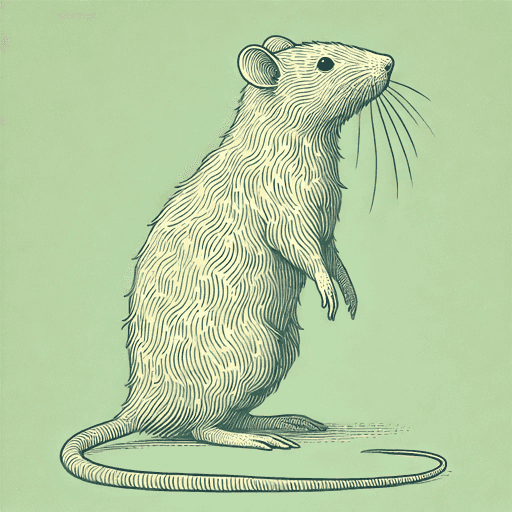
Wilf puts most of the money from the mortgage into a bank account but takes $200 with him. He buys supplies from the store and the lumberyard as well as groceries, then returns home. He decides to put the remaining money in the same hatbox in the closet where Arlette had kept hers. When he reaches inside, a rat bites him. It falls to the floor, and Wilf steps on it and kills it. He is convinced that it is the same rat that attacked Achelois.
Wilf picks up the rat, disposes of it in the ash bucket by the fireplace, then goes to the barn and checks the pipe. He is convinced that the rats must have gotten through the concrete, only to see that it is still sealed. He then realizes that he is naked, having taken off his clothes to bathe before being bitten.
Wilf returns to the bedroom to clean up the spot where he killed the rat. He becomes convinced that he can hear more rats moving in the walls. However, after a moment of panic, he realizes that it is just the sound of sleet hitting the roof. He finds a bottle of pain pills and takes some, then manages to fall asleep.
When Wilf wakes up, his hand is swollen and painful. He wraps it tightly, then struggles to start a fire. He knows he should see a doctor but can’t crank the car to start it on his own. He also realizes that it snowed heavily all night. As his hand continues to swell, forcing him to loosen the bandages, he takes three more pain pills and sits by the fire.
In the present, Wilf writes about the events of his son’s life after he left the farm, and how Henry traveled from Nebraska to Nevada with Shannon. Some of this Wilf learned from reading newspapers between 1922 and 1930, but he is also adamant that Arlette told him about these events, sometimes even presaging things before they happened. He notes that the reader likely doesn’t believe him, but this is his “confession,” and everything in it is true.
Wilf falls asleep by the fire. When he wakes up later, he hears more “scuttering.” At first, he thinks it is sleeting again, but then he realizes that the sound is coming from the porch. The latch on the door lifts up on its own, the door opens, and Arlette is standing in the doorway. The burlap sack is still on the top of her head, and she has a “knowing grin” (97). She is carried by the rats, who move her into the home, many of them looking to Arlette, their “queen,” with admiration. Wilf backs away, falling onto a wooden chest. The rats crawl up his body and onto his chest. Arlette leans over him, “whispering secrets that only a dead woman could know” (99). Wilf begs Arlette to leave him alone, promising to take her place in Hell if she does.
Pages 99-110 Summary
Arlette whispers about Henry’s activities to Wilf. After robbing the bank, Henry moves into a small shack near Omaha. He takes trips into Omaha, checking out St. Eusebia. He waits in an alley near a candy store for some of the girls. He pulls one, Victoria Stevenson, aside and offers her a cigarette. Victoria correctly guesses who Henry is and agrees to give a note to Shannon. In it, Henry tells Shannon that he will wait for her behind St. Eusebia every night for two weeks if she wants to join him. A few days later, Victoria returns with a note from Shannon. She promises to meet Henry the following night.
After getting Shannon’s note, Henry robs the bank in Omaha. He gets $800 but has to shoot the guard in the leg to escape. In 1925, Wilf met with the guard, Charles Griner. He had to have his leg amputated because of an infection. Wilf tried to apologize for what Henry did, but Griner insisted that he never should have approached Henry, then apologized to Wilf for Henry’s death.
Henry steals a car, then goes to St. Eusebia that night. He picks up Shannon, and they begin heading west. Wilf notes that they became known as the “Sweetheart Bandits,” gaining national news coverage. In the hills of Nebraska, one of the tires on the car goes flat. When Henry gets out to change it, two men come up to them with a shotgun and rob him. He and Shannon go to a farm nearby, and Henry robs a farmer of his car and all the money he has. They then continue to travel west, robbing several more banks along the way. When they rob one in Ogden, Utah, Henry shoots a man in the chest, then Shannon pushes him down the bank steps so they can escape.
In late November, Henry and Shannon arrive in Deeth, Nevada. They stop to eat at a diner, but the owner recognizes them. He pulls a gun on them and, when Henry tries to negotiate with him, the gun misfires. Henry grabs the gun, checks the bullets, and laughs about how old and rusted they are. He turns to leave with Shannon, but the owner fires again. He shoots Shannon in the lower back.
Henry drives with Shannon toward Elko. However, they never make it there, as Henry crashes the car into a ditch. He helps Shannon walk down the road toward an abandoned shack. He starts a fire for her, but Shannon dies in the night.
Wilf vividly remembers Arlette whispering all of this to him. He has since checked on the story, meeting with several people involved with the crimes. He is adamant that the end of Henry’s story had not happened yet; Arlette whispered it to him as a premonition. Wilf “begged” Arlette to kill him, but she refused, enacting her “revenge” by keeping him alive.
A while later—Wilf is unsure if it is one day or multiple times—Sheriff Jones comes to the door. He finds Wilf ranting about Shannon, Henry, and Arlette. Wilf begs him to go help Shannon and Henry, believing that it is not too late. He also confesses to Arlette’s murder, bringing him great relief, but Sheriff Jones is unsurprised to know she is dead. He drives Wilf to the hospital.
Pages 110-122 Summary
When Wilf wakes up, it is December 2. The doctor amputated his left arm to stop the infection, which saved his life.
Wilf explains why he was never arrested for murder. When he spoke with Sheriff Jones, instead of directly saying that he killed Arlette, he phrased it as a rhetorical question: “I killed her, didn’t I?” (111). Because Sheriff Jones already knew Arlette was dead, he assumed that Wilf was just delirious instead of confessing. Wilf credits his mother, who passed on the habit of speaking in rhetorical questions, for his survival.
Sheriff Jones comes to Wilf’s hospital room and apologizes for his loss. He tells Wilf that his reason for coming to the farm was that Arlette’s body had been found. A farmer near Lyme Biska saw coyotes off the road and investigated. He found the remains of a woman, with hair that was close to Arlette’s and pieces of her dress still on her. Sheriff Jones surmises that Arlette was robbed while hitchhiking, then killed.
When Wilf returns to the farm, all his animals are dead except for Achelois. He feeds her lovingly, commenting on the fact that his only remaining livestock is of no use to him since she can’t produce milk. Wilf thinks of how Harlan never once came to check on his farm, even through the sounds of his animals dying, though Wilf doesn’t blame him.
In mid-December, Sheriff Jones returns to the farm to inform Wilf that they found the bodies of Shannon and Henry. Shannon died of a gunshot wound, and Henry died by suicide. Even though he knew it was coming, Wilf is devastated by the news.
On December 18, Henry’s body is brought back. At the train depot, reporters take pictures of him and post new headlines about Henry and Shannon’s crime spree. Back at the funeral home, Wilf is devastated by the sight of Henry’s body: rats had eaten through his eyes, nose, and part of his mouth, leaving him with a “grim grin.” On December 24, Wilf holds his funeral. Arlette sits in the pew with Wilf and whispers to him, taunting him about how things turned out.
Wilf buys a bottle of whisky and returns to the farm. In the night, a storm hits, and it collapses part of the house’s roof as well as part of the barn’s. He brings Achelois, who survived again, into the house, thinking of them both as the only “survivors” of the events. When he counts his money on Christmas morning, he does not have anywhere near enough to fix the damage. However, he decides he is done with farming anyway.
Wilf realizes that, with Arlette officially declared dead, he now has the rights to the 100 acres she inherited. He goes to Harlan to try to sell the land, offering him a price significantly lower than it’s worth. To his surprise, Harlan declines. His wife left him, blaming him for Shannon’s death because he sent her away. He is adamant that Wilf’s land is cursed, and he wants nothing to do with it.
On December 31, Wilf goes to the bank to try to sell his land and the 100 acres to Stoppenhauser. Stoppenhauser refuses to buy it. Wilf becomes angry, accusing Stoppenhauser of having made a deal with Farrington. Security drags Wilf from the bank.
Back at home, Wilf finds Achelois lying in the yard. She ran from the porch, falling and breaking two legs. When Wilf goes in to get his gun, he finds three rats sitting there. He realizes that they scared Achelois and made her run from the porch. He angrily shoots the one in the middle, then the other two flee. He returns outside and kills Achelois.
Pages 122-129 Summary
Wilf notes that Achelois’s death marked the end of 1922 and the end of his story. Farrington refused to buy the farm, too, until Wilf’s buildings were completely destroyed and he could buy it for next to nothing. Wilf finds comfort in the fact that crop prices dropped significantly the following year and then only got worse by the mid-1920s; Harlan lost his own farm in 1925, as did most Midwestern farmers.
In the two years after 1922, Wilf spent the money he got for his land largely by drinking alcohol and visiting the places where Henry and Shannon went. He bought a pistol at the same pawn shop Henry did. He felt most connected to Henry while sitting in the alley two blocks from St. Eusebia, where Henry talked to Victoria.
Wilf has held two jobs since moving to Omaha. First, he worked in a clothing factory for a couple of years, teaching himself how to sew to get a better job. However, when he couldn’t stop seeing rats in the dark, he quit. For the last four years, he has worked as Omaha’s librarian, forging references to get the job. The rats eventually appeared there, too, showing up among the shelves. When he took out an Encyclopedia for a customer, a rat appeared in its empty slot. Wilf was convinced it was the same rat that bit Achelois. That was a week ago, and Wilf walked out immediately after and never went back.
Now, Wilf can feel the rats beginning to bite him. He hears shuffling feet in the hall, moving slowly toward his room. He knows that it is three corpses: Arlette, Shannon, and Henry. Wilf is adamant that he won’t let the rats or the corpses kill him. As the rats continue biting, becoming more aggressive, he searches for the gun. He fails to find it before the rats overwhelm him, writing the final line, “Oh make them stop biting m —“ (129)
A news article from the Omaha World-Herald dated three days later reports on Wilf’s death by suicide. There was no report of a gunshot, and the gun itself was unloaded. The security guard who found his body reports that he had “bitten himself” repeatedly, including chewing through his own wrists. The paper he was writing on is chewed into small pieces, similar to how a rat shreds paper to make its nest.
Pages 82-129 Analysis
The final section of the novella follows Wilf’s mental and physical decay as he becomes overwhelmed by The Psychological Consequences of Evil. Until now, the things from which he suffers are largely explained by reality: it is logical that rats would consume Arlette’s body, attack Achelois, and even bite his finger in the closet. However, when Arlette enters his sitting room and “whispers” to him, revealing the events of Henry’s crime spree, the story crosses into the supernatural. As is common with Gothic horror fiction, the protagonist loses touch with reality, blurring the line between the real and the imagined.
Whether the rats, Arlette’s presence, and the haunting are supernatural or psychological is deliberately left ambiguous. As the narrative progresses, King slowly erodes Wilf’s ability to explain his experiences through logical means. The Impact of Rural Isolation, illness, poverty, and the rats themselves, along with Wilf’s guilt and regret, all work to erase the line between hallucination and supernatural punishment. First, Wilf is convinced that “Arlette crept up behind [him], reached around the side of [his] head, and tapped the bridge of [his] nose with one cold, wet finger” (88). He believes Arlette touches him two more times, only to realize that it is simply water dripping from the ceiling. Then, he descends into chaos when the rat bites him, angrily killing it, going naked to the barn, and becoming convinced that the rats have somehow chewed through concrete. Finally, when he sits in the falling snow as the roof collapses around him, the crumbling building serves as a metaphor for his psyche. Just as his livestock has died and his land has come to ruin, so, too, has Wilf, as he finally succumbs to the haunting and convinces himself there is no escape.
Wilf’s physical relocation to Omaha reflects the psychological collapse that he has undergone throughout the text. The city, the very thing that Wilf once referred to as “Hell,” now becomes his only source of survival as he works first in the factory, then in the library. The things that he once saw as a sign of stability and success, like his livestock, land, crops, and Henry himself, no longer exist, emphasizing the destruction of Wilf’s life. As he endured each of the signs of physical collapse, like the destruction of his home, the collapse of the barn, and the death of his livestock, he ignored them, clinging to the idea that he could somehow maintain control over his life. However, when finally forced to sell, he is also forced to confront what he did, leaving him with only his guilt, regret, and lack of belonging.
While Wilf’s story unfolds, he recounts the events of the end of Henry’s life at the same time, often alternating between what happened to him and what happened to his son. This narrative structure serves to remind the reader of the interconnectedness of these events. After Wilf manipulates Henry and destroys his innocence, Henry is corrupted in a way that is different from his father. As Wilf notes, “After helping your father to murder your mother, what was stealing some new clothes and waving a crowbar in an old granny’s face?” (87). While Wilf’s fate serves as a form of retribution and punishment, Henry’s is distinctly tragic. The novella affirms that Henry was not inherently doomed, but instead, the murder fractured his morality. Wilf forced him into an act he was not mentally equipped to handle, warping Henry’s sense of morality and turning him into a criminal. Henry’s choices were his own, but they inevitably led to his and Shannon’s destruction. Ironically, Wilf justified his actions by claiming he was saving Henry, yet his actions destroyed Henry in ways that remaining with Arlette would not have.
The final moments of Wilf’s life, when he is alone and overwhelmed by visions, leave the reader with a sense of uncertainty and a lack of closure. This intentional ambiguity reflects Wilf’s journey throughout the text. Despite writing his entire “confession,” he never accepts responsibility for what he did or reflects on his actions honestly. Instead, he prides himself on his fortitude, celebrates his perceived success, and then laments his downfall as well as Henry’s. Thus, instead of receiving closure or redemption, Wilf’s story ends with an unfinished sentence, obscuring his death just as he obscured his story.
The narration shifts to a newspaper article reporting on Wilf’s death in the final pages of the novella, shifting the tone to one that is cold and impersonal, relaying a public account of Wilf’s final moments to evade any remorse or sympathy for what happened to him. It also provides a factual account of Wilf’s death from an outside perspective. At the same time, it does not clear up every mystery surrounding these events. The security guard notes the bite marks on Wilf’s body, stating they are his own, yet compares the bites on the paper to the way that rats chew and shred material to build a nest. This ambiguous ending leaves it up to the reader to decide whether rats played a part in Wilf’s demise or whether it was a result of his own grief. This technique of leaving ambiguity is often used by King, seen in short stories like “The Man in the Black Suit” (originally published in the collection Everything’s Eventual) and “Jerusalem’s Lot” (published first in Night Shift). In both stories, like in 1922, it is unclear at the end whether the events were real or invented, with the narrators recounting events that cause the reader to question their reliability.

Unlock all 45 pages of this Study Guide
Get in-depth, chapter-by-chapter summaries and analysis from our literary experts.
- Grasp challenging concepts with clear, comprehensive explanations
- Revisit key plot points and ideas without rereading the book
- Share impressive insights in classes and book clubs