1922
45 pages • 1-hour read
Stephen King1922
A modern alternative to SparkNotes and CliffsNotes, SuperSummary offers high-quality Study Guides with detailed chapter summaries and analysis of major themes, characters, and more.
Themes
Content Warning: This section of the guide includes discussion of gender discrimination, child death, death by suicide, animal death, and death.
The Psychological Consequences of Evil
1922 centers on a single act of evil, emphasizing its power to possess and corrode the mind and reality of the person who commits it. Through Wilf’s deteriorating mental and physical state, Henry’s tragic arc, the pervasive rats, and Wilf’s turn away from religion, King demonstrates that the mind cannot outrun evil actions.
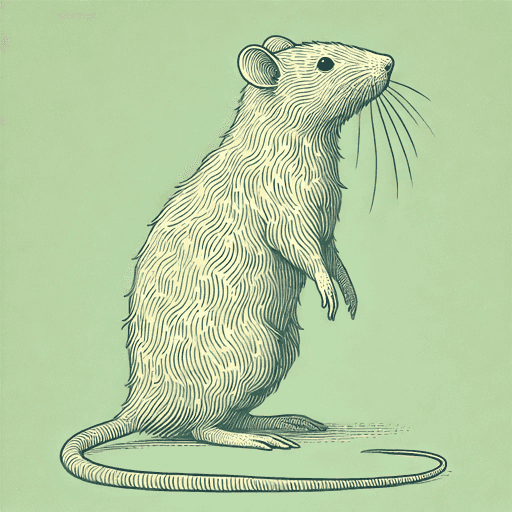
The psychological effects of Wilf’s actions manifest in the form of a haunting that blurs the line between real and supernatural. The rats, which infest Arlette’s corpse in the well, begin as scavenging animals that are attracted to death. However, they later appear in increasing numbers and invade Wilf’s home, symbolizing his psychological decay as his crime consumes him. The rats follow him for years, slowly eroding his sense of stability as he loses his son, his livestock, and his farm, the very things that Wilf committed his crime to protect. In this way, the rats serve not only as horror imagery but also as the psychological consequences of Wilf’s act. The self-mutilation that occurs in Wilf’s death by suicide emphasizes the horror of what he has been through.
Henry’s psychological descent, first shown in his bitterness toward Wilf, then leading to theft and murder, conveys a different trajectory of consequences than what Wilf experiences. Instead of internalizing his regret and being consumed by guilt, Henry externalizes it, spiraling into a life of crime and rationalizing his actions just as Wilf rationalized Arlette’s murder. Henry illustrates how the psychological effects of evil extend beyond the perpetrator and impact the lives of others. Henry’s tragic ending is a chain reaction that comes as a result of Wilf’s decision. The burden of the crime becomes too much for Henry to bear; like Wilf, he cannot live with himself. However, Arlette’s murder wasn’t his only motivation. Rescuing Shannon was supposed to free Henry from Wilf and redeem him for his mother’s murder, but his quest only ended up in more bloodshed. When Shannon dies, Henry can no longer justify his existence or live with his guilt. His death also serves as another source of guilt and regret that Wilf must suffer.
Wilf’s turn away from religion is another consequence of his evil actions. Instead of his faith influencing his conscience and leading him to confess, he alters his faith to rationalize the murder: “If God rewards us on earth for good deeds […] then maybe Satan rewards us for evil ones” (54). He’s still desperate to be rewarded—not punished—for his murder, and the persistence of this mindset makes his character irredeemable. Wilf’s failure to fully accept responsibility for what he did, making excuses and justifying it even in his self-proclaimed “confession,” emphasizes the need for acknowledgment, acceptance, and remorse when an evil act is committed.
The Violence of Patriarchal Control
Wilf’s character is an embodiment of patriarchal authority. He has built the American Dream for himself in rural Nebraska with a wife, son, farmland, livestock, and a living that he earns through hard work and dedication to his land. At the same time, he is trapped by the very thing that he seeks to maintain. When Arlette challenges his domain, he responds with his version of practicality and common sense, choosing to kill her to ensure he keeps the life he wants. The novella suggests that patriarchy not only enables acts of violence and domination, but that it, in turn, traps the men within the very structure they enforce.
In describing the events of 1922, Wilf frames himself as the rightful authority in his home. He believes that his way of life should be followed unquestioningly. Thus, when Arlette suggests selling the farm and moving to the city, Wilf perceives it not just as a marital disagreement but a threat to his masculine identity. He sees her actions as a betrayal and a willful dissolution of their marriage, finding no other solution than to kill her. Wilf’s narration repeatedly justifies and rationalizes his actions, introducing the idea that patriarchal violence can emerge as a result of a woman asserting her independence in ways that challenge male authority.
The grotesqueness and horror with which King describes Arlette’s murder underscore the brutality of Wilf’s need for control. First, he lures her into drunkenness, which he believes will make the murder simple. But instead of dying quickly and simply, Arlette fights for her life, and Wilf needs to stab her six times, nearly severing her hand and disfiguring her face to kill her. This scene is intentionally repulsive, revealing the cruelty embedded within Wilf’s entitlement. Wilf sees the murder as a triumph, despite its inherent evil and the traumatic effect it has on Henry. His lack of remorse and continued life on the farm as if things were normal highlight his deep-seated belief that his actions were justified. Law enforcement, embodied by Sheriff Jones, reinforces Wilf’s patriarchal beliefs, ensuring that he does not suffer legal consequences for his crime.
Henry’s relationship with his father illustrates how patriarchal control is inherited and internalized. Wilf manipulates Henry into helping with the murder, preying on his immaturity and their father-son bond. Wilf stresses the importance of masculinity to their perfect life, portraying Arlette as irrational and disruptive. Henry is drawn into this worldview and its violence, something that he later displays in his own crime spree that leads to his and Shannon’s deaths. His character emphasizes the fact that patriarchal control harms not only those being controlled but also the children who are being taught to uphold it.
The Impact of Rural Isolation
The Nebraska setting in the novella shapes the characters’ choices, psychology, and eventual destruction. In 1922, Rural isolation is both literal and metaphorical, creating the conditions under which violence thrives, guilt and regret become overwhelming, and human connections disappear.
From the opening pages, the emptiness and desolation of the rural landscape are emphasized. The death of Arlette’s father eliminates the only connection that Wilf and Arlette had to their extended family. The only neighbors that Wilf and his family are left with, the Cotterie family, are miles away. Wilf notes that “when summer comes to Nebraska, each farmhouse is a ship sailing a vast green ocean” (12). Wilf’s family takes infrequent trips into town, while their only visitors are brought by the milkman, one of the few people willing to navigate the rural Nebraskan roads. Ultimately, this isolation feeds Wilf’s fantasy of being the absolute authority of his land and allows him to exercise his perceived power over others’ lives.
Arlette’s murder is possible because the isolating landscape removes any checks on Wilf’s power. Wilf and Henry are able to kill Arlette, put her body into a well, and then clean up their home without any chance of anyone catching them. When Sheriff Jones finally visits, Wilf can see his truck approaching from miles away, giving him and Henry time to finish covering Arlette’s body. Sheriff Jones, a representation of law and order in rural Nebraska, puts little effort into finding Arlette or questioning Wilf. Instead, he reinforces Wilf’s authority over his family, encouraging Wilf to assert control over Arlette if she returns and reaffirming Wilf’s status as the only source of power in their rural Nebraskan land.
Isolation also reaffirms Wilf’s belief that preserving his farm and his lifestyle is worth any cost. The land, an important motif in the novel, is intertwined with his identity because it is the only source of success and purpose in his life. The fear of losing it drives Wilf to his extreme solution, underscoring how physical and social isolation warp his understanding. For Wilf, property, routine, and control become more important than any moral or emotional considerations. When Arlette threatens to sell his home, she threatens the fragile life he has built in the absence of community and other human connections.
After Arlette’s murder, rural isolation transforms into a source of psychological torment for Wilf. He has no meaningful support system, loses his family and friends, and has no world outside his farm. While this was once what he desired, it now serves as a way for his grief and regret to fester. The rats, once a normal occurrence on his farm, now turn into a source of torture, invading his home and psyche and nearly killing him with an infection when he is bitten. What was once a symbol of stability turns into a metaphor for Wilf’s decay, as the house and barn collapse and his livestock die. When Wilf sits alone in his destroyed home, with only Achelois as company, it is clear just how physically and emotionally isolated Wilf has become.

Unlock every key theme and why it matters
Get in-depth breakdowns of the book’s main ideas and how they connect and evolve.
- Explore how themes develop throughout the text
- Connect themes to characters, events, and symbols
- Support essays and discussions with thematic evidence