A Better Man
69 pages • 2-hour read
Louise PennyA Better Man
A modern alternative to SparkNotes and CliffsNotes, SuperSummary offers high-quality Study Guides with detailed chapter summaries and analysis of major themes, characters, and more.
Chapters 37-43Chapter Summaries & Analyses
Content Warning: This section of the guide includes discussion of graphic violence, physical abuse, child abuse, death by suicide, and death.
Chapter 37 Summary
While Lacoste reviews forensic evidence and Beauvoir examines Vivienne’s finances, Gamache takes his dogs for a walk to think. He stops at a bench on the hill overlooking Three Pines and acknowledges his own prejudices and mistakes. A car approaches, and someone joins him; Gamache recites the line that Ruth shared with Homer and the water and adds that the other person was between the bridge and the water, too.
In her studio, Clara confronts her miniature paintings and realizes her critics were right—the works are lifeless and shallow, a betrayal of her gift. She smashes them with a hammer and hangs them on the wall to remind herself of her mistake. She places a blank white canvas on her easel.
On the hill, Gamache tells Cameron to sit. Cameron realizes that Gamache knows about his connection to Vivienne. Gamache reveals that Cameron’s personal cell number is one digit off the number Vivienne called repeatedly the day she died. After Cameron admits he thought they would not discover the affair because of their focus on Tracey, Gamache demands his weapon.
Cameron surrenders it but insists he did not kill Vivienne. He describes how the affair began on a domestic violence call and how they met at the bridge on Saturday nights starting last July. Cameron claims he ended it in the fall to save his family and job. When Gamache accuses him of being at the bridge that night and pushing Vivienne when she threatened to expose him, Cameron denies it. Gamache deliberately causes Cameron to lose his temper, and when Cameron shoves Gamache, it shows that he had the strength to throw Vivienne from the bridge.
In the kitchen, Lacoste confronts Cloutier about her feelings for Homer. Cloutier recalls that after Kathy’s death, she and Homer admitted their feelings, but Homer said he needed to tell Vivienne first. Vivienne ordered him to break it off, and Homer chose his daughter. When Lacoste asks if Cloutier wished Vivienne dead, Cloutier admits that she did.
Chapter 38 Summary
Reine-Marie interrupts the interview and offers Lacoste and Cloutier the study for privacy. Beauvoir goes outside to search for Gamache. Walking toward the bridge, he sees Gamache and Cameron on the ridge and notices the dogs’ tense posture. Cameron shoves Gamache, and Beauvoir shouts and runs toward them.
After the confrontation, Gamache and Beauvoir step away from Cameron to confer. Beauvoir shows Gamache a printout of Vivienne’s bank statements: Homer had transferred $2,000 monthly into her account since last July, totaling $18,000 that remained untouched. When questioned, Homer confirms that he sent the money, saying Vivienne told him it was for the mortgage. Beauvoir theorizes that she was saving it to leave Tracey.
Lacoste asks Homer about his relationship with Cloutier. His story contradicts hers: He claims he saw her only as a friend and that she wanted more. In the incident room, the officers debate who is lying. Cloutier calls with a new report from forensic accountants: Homer took out a $20,000 mortgage loan in cash the Friday before Vivienne’s death. The team theorizes that Vivienne’s demand for more money was the final straw for Cloutier, who may have arranged to meet her. After reviewing all the evidence one last time and finding nothing new against Tracey, the officers go to question Homer.
At Gamache’s home, Reine-Marie tells them Homer went to his room over an hour ago, but Beauvoir finds it empty. They confirm that Homer is on foot since Reine-Marie has her car keys. Gamache calculates that Homer would be arriving at Tracey’s farm soon and discovers that his carving knife is missing. When Lacoste reports no answer at Tracey’s house, the team rushes out.
Chapter 39 Summary
The team arrives at Tracey’s farm, where the two Sûreté agents on duty report no activity and no answer at the door. Beauvoir decides to break in and take Tracey into protective custody. Lacoste and the agents accompany him, while Cloutier and Cameron stay by the road. Gamache remains outside, warning an agent not to underestimate Homer.
Gamache sends Cameron to one side of the property while he walks to the other. Near the studio, he discovers boot prints leading to and from the door. Realizing Homer has already been there and Tracey is likely dead or gone, he shouts for Cloutier to tell Beauvoir to get inside and begins running toward the bridge. Cameron arrives and uses his shoulder to break down the front door. In the studio, they find footprints and a small amount of blood but no body. The deeper return prints indicate Homer carried Tracey away.
Cloutier realizes that she missed part of Gamache’s message, and he will be expecting backup at the bridge. Beauvoir deduces that Homer is taking Tracey to the bridge and sends Lacoste with Cameron and Cloutier in the car, while he and the other agents follow on foot through the woods.
Chapter 40 Summary
Gamache follows the boot prints into the forest and finds Homer on the bridge with an unconscious Tracey slung over his shoulder. Homer backs toward the gap in the railing, clearly planning to throw Tracey into the river and follow him. Gamache sets his phone on the ground to record, though it cannot transmit from that location.
To stall Homer, Gamache asks why Vivienne did not take Fred with her or leave earlier that day. Gasping for breath, Homer says he must make amends for the pain he caused Vivienne. Gamache argues that following one terrible act with another will not balance the books, but Homer insists it is the one decent thing he can do.
Lacoste arrives by car; Beauvoir and agents arrive on foot. To stop Homer, Gamache bluffs that Tracey did not kill Vivienne. Homer stops, asking who did. Before Gamache can fabricate an answer, Cloutier steps forward and falsely confesses. She claims she arranged to meet Vivienne on the bridge to give her money, but they argued about Vivienne’s treatment of her mother, and Cloutier pushed her. As Cloutier speaks, Homer loosens his grip. Tracey regains consciousness, struggles, and kicks Homer in the chest, sending him stumbling backward.
Beauvoir lunges to grab Homer’s coat but is pulled over the edge with him. Gamache leaps after them, catching a wooden post with one hand and Beauvoir’s hand with the other. Realizing Gamache cannot hold him, Beauvoir tries to release his grip, but Gamache refuses and heaves him toward the riverbank, sending him splashing into the water near the shore. Gamache begins to fall, and Cameron catches Gamache’s arm, suspending him between the bridge and the water.
Chapter 41 Summary
Later, at the Gamache home, Gamache and Reine-Marie embrace. Beauvoir is safe but shaken, wrapped in a blanket by the fire. It is revealed that Tracey pulled Beauvoir from the water. Lacoste reports that Homer’s body was found at the bend in the river, the same place as Vivienne's.
When Cloutier and Cameron arrive, Reine-Marie thanks Cameron for saving Gamache. Beauvoir questions Cloutier’s false confession, noting there is no record of her calling Vivienne, and states plainly that she did not kill Vivienne. Cameron assumes it was Tracey, but Gamache confirms that Tracey is innocent.
Gamache explains that Vivienne’s not taking Fred and not leaving earlier that day were crucial clues: She was planning to meet someone, get money, then return home. They realize that Homer lied about her planning to come to him. Beauvoir, who now understands, reveals the key evidence: Vivienne called only one person that day—her father.
They turn to Cloutier and ask if she “suspected,” without offering specifics. Cloutier says that she did and explains that her suspicions began just before Kathy died; her friend begged her to protect Vivienne. Since Kathy died before Tracey entered Vivienne’s life, she must’ve been referring to something else. When she saw the monthly payments from Homer to Vivienne, she realized that the money was not a gift—it was restitution.
Homer had abused Vivienne as a child. He broke up with Cloutier when the payments started in order to keep her from learning the truth. Gamache notes that on the bridge, Homer never accused Tracey of killing Vivienne, only of abusing her. Homer had convinced himself that Tracey was indirectly responsible, but the truth was that Homer himself had killed his daughter.
Vivienne confronted her father on the bridge to free herself from her abuser before her own daughter was born. Something went wrong during that confrontation, and Homer pushed or threw her from the bridge. Gamache believes Homer was genuinely sorry and asked for forgiveness that night.
Chapter 42 Summary
In the bistro, villagers discuss the revelation that Homer killed Vivienne. That evening in Clara’s studio, Myrna, a retired psychologist, theorizes that Homer’s grief and guilt were real. She suggests that he projected his self-loathing onto Tracey, deciding that they both needed punishment, and she suggests that perhaps Homer genuinely wanted reconciliation when he agreed to meet Vivienne.
Clara struggles to reconcile Homer’s abuse with the possibility that he changed or loved his daughter. Myrna looks at Clara’s smashed miniatures, nailed to the wall as a reminder, and asks if Clara will paint a portrait of Dominica Oddly, the critic whose review derailed her career. Clara does not answer, staring at her blank canvas instead.
Gamache and Beauvoir visit Tracey. Beauvoir thanks him for saving his life, and Gamache apologizes for wrongly arresting him. Tracey is suspicious but seems to soften slightly as they watch him feed his donkeys.
A week later, Lacoste meets with Chief Superintendent Toussaint, who admonishes her for publicly supporting Gamache and tries to force her into retirement on medical grounds. Lacoste accuses Toussaint of leaking the doctored video and getting her job by agreeing not to defend Gamache.
Toussaint privately reflects that Gamache had instructed her not to defend him in order to protect her career, but she has grown to see him as a threat. Lacoste plays the video of the bridge rescue, recovered from Gamache’s phone. Toussaint is chastened by this perspective on the events of that night. Lacoste gives Toussaint an envelope containing her demand. Toussaint reacts with disbelief.
Chapter 43 Summary
At the airport, Gamache and Reine-Marie say goodbye to Beauvoir, Annie, and Honoré as they leave for Paris. Beauvoir gives Gamache an envelope containing his recommendation for second-in-command, saying the choice was inspired by a lesson about sometimes doing something “stupid.” Armand suspects it is Bob Cameron and puts the envelope in his pocket. The two men share a heartfelt goodbye.
The next morning, villagers dismantle the sandbag wall. Led by Myrna, they walk to the bend in the river and hold a cleansing ceremony with sage and candles. In the bistro afterward, Gamache quietly confronts Ruth, showing her the social media handle that includes the word “dumbass” and accusing her of being the anonymous defender who posted the real raid video. Ruth admits that she defended him online in the past, but she denies owning that account, and Gamache believes her.
In her office, Madeleine Toussaint deletes her social media posts from the account labeled “@dumbass.” It is revealed she posted the doctored video but then posted the real video under this account as an act of contrition, defying the Premier’s orders. She now feels she and Gamache are even. She looks at a poster Gamache left behind that reads “Noli timere.”
At the bistro, Gamache shows Reine-Marie Beauvoir’s recommendation for Gamache’s second-in-command. She reads the recommended name: Isabelle Lacoste. Reine-Marie feels a sense of relief, thinking everything might be all right after all.
Chapters 37-43 Analysis
The novel’s closing chapters conclude the theme of The Disparity Between Public Persona and Private Reality, revealing that although the most significant truths are deeply concealed, they manifest in public performance. Homer’s public role as the grief-stricken father masks a private history of abuse and murder. His anguish is genuine, yet it stems not from loss but from the consequences of his own actions, a complexity that deceives the investigators. This dynamic is inverted in Chief Superintendent Toussaint. Publicly, she is a political adversary who benefits from Gamache’s downfall; privately, she is his anonymous online defender, leaking the true video of the raid as an “act of contrition” (432). Her actions reveal a hidden integrity that contradicts her public and very political persona. Similarly, Tracey, previously established as a violent man, subverts this image by pulling Beauvoir from the river. These revelations demonstrate that public identity is an unreliable metric for moral character and that true motivations often reside in deeply private, contradictory spaces.
This exploration of interiority is framed through further allusion to Herman Melville’s Moby Dick. Gamache’s reflection on the novel reframes the central investigation as a confrontation with internal corruption rather than a hunt for an external monster. He contemplates the “subtle demonisms of life and thought” that can turn “a crime into a punishment” (370), making a horrific act seem acceptable. This passage becomes the key to understanding Homer, who is consumed by a self-deception so profound that it allows him to project his own culpability onto Tracey. Gamache’s ability to recognize these same potential demonisms within himself—his prejudices and blunders—is what distinguishes him. This intertextuality elevates the narrative beyond a simple mystery, recasting the central conflict as a philosophical struggle against the internal forces that corrupt truth and rationalize evil.
With the formal justice system having failed after Tracey’s acquittal, the resolution explores Competing Notions of Justice When Institutions Fail. Instead of a courtroom, the climax unfolds on the broken bridge, where characters pursue extra-legal forms of reckoning. Homer’s plan to kill Tracey and then die by suicide is a form of personal, vigilante justice, a desperate attempt to “balance the books” for a lifetime of pain that he himself caused. In contrast, Cloutier’s false confession is a preventative and sacrificial act, an attempt to stop further violence by redirecting Homer’s rage. The resolution is ultimately achieved through restorative, rather than retributive, actions. Beauvoir thanking Tracey, Gamache apologizing to him, and Lacoste using the bridge video as political leverage against Toussaint are all acts that restore a moral and professional order outside the confines of the law. This pattern suggests that when legal frameworks prove inadequate, true justice requires personal accountability, moral courage, and direct confrontation.
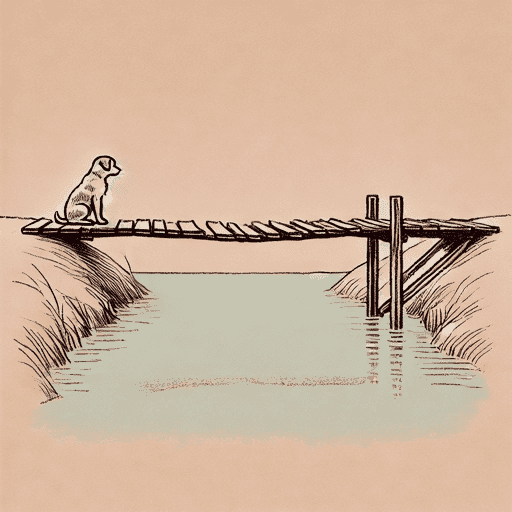
The physical setting of the climax—the broken bridge over the Bella Bella river—continues the use of bridges as a symbol for these themes of judgment, transition, and moral reckoning. This particular bridge is a liminal space, physically and metaphorically unstable, where secrets are kept, and fatal confrontations occur. It is the site of Vivienne’s death and Homer’s attempted murder and death by suicide, representing a threshold between life and death, guilt and innocence. The river below operates with a similar duality; it is a grave that carries away both Vivienne and Homer, yet it is also a crucible for redemption. Tracey’s rescue of Beauvoir from its waters is a form of baptism, or rebirth, that allows for a re-evaluation of his character. Gamache is literally suspended “between the bridge and the water” (408), a physical manifestation of the precarious moral and professional position he occupies. The villagers’ final cleansing ceremony at the river’s bend transforms this site of trauma into one of communal healing, symbolizing the community’s capacity for renewal.
The narrative also uses character foils to explore complex ideas of fatherhood and the legacy of violence. Homer represents a failure of the paternal role, a father who abuses rather than protects and whose final act is driven by destructive guilt. In contrast, Gamache functions as a surrogate father to his team, embodying a form of protective leadership that culminates in his willingness to sacrifice himself for Beauvoir. Agent Cameron exists between these two poles. A survivor of abuse, his ingrained need to protect is both a professional asset and a personal flaw, leading him to an illicit affair and violent confrontations. However, this same instinct is ultimately redeemed when he saves Gamache’s life. This act resolves his character arc, transforming his trauma-driven impulse into a moment of heroism. The juxtaposition of these three men illustrates how the mantle of protection can lead to damnation, leadership, or a difficult but achievable redemption.

Unlock all 69 pages of this Study Guide
Get in-depth, chapter-by-chapter summaries and analysis from our literary experts.
- Grasp challenging concepts with clear, comprehensive explanations
- Revisit key plot points and ideas without rereading the book
- Share impressive insights in classes and book clubs