A Better Man
69 pages • 2-hour read
Louise PennyA Better Man
A modern alternative to SparkNotes and CliffsNotes, SuperSummary offers high-quality Study Guides with detailed chapter summaries and analysis of major themes, characters, and more.
Chapters 9-15Chapter Summaries & Analyses
Content Warning: This section of the guide includes discussion of substance use, physical abuse, graphic violence, and death.
Chapter 9 Summary
Gamache inspects the Tracey farmhouse bedroom, finding it filthy, with days of dirty clothing on the floor. Carl Tracey claims that the marijuana and rolling papers found in the bedside table belong to Vivienne. While Tracey’s belongings are strewn everywhere, Vivienne’s closet and drawers contain clean, orderly clothes. Gamache notes inexpensive jewelry on her dresser but no photographs.
Agent Cloutier reports no sign of Vivienne, but they find what appears to be blood on the living room sofa. Tracey admits it could be blood from a fight where both struck each other, claiming he left Vivienne alive.
Gamache enters a converted outbuilding serving as Tracey’s pottery studio. The extraordinary heat comes from a recently fired kiln, which is filled with ash. Tracey asks if Gamache suspects he cremated Vivienne, dismissing it as too much work.
The search yields nothing conclusive. As rain begins, Gamache declares Vivienne missing. As they are leaving, Tracey appears on the porch with a rifle. Gamache buys the dog, Fred, to save him from being shot.
Chapter 10 Summary
Gamache directs Cameron to return to his station for flood duties while he and Agent Cloutier head to Montréal.
In Three Pines, Ruth oversees villagers filling sandbags along the river to prevent it from rising into their yards. Children are moved to the local St. Thomas’s Church as the evacuation center. Villagers, including Gabri, Olivier Brulé, Monsieur Béliveau, and Sarah the baker, distribute food and drinks. Billy Williams, who is in love with Myra Landers, offers his sandwich to her. Myra, who doesn’t know about Billy’s feelings, declines, making him believe she is unattainable.
Driving toward Montréal, Gamache struggles not to micromanage the emergency response, reminding himself it is no longer his responsibility. He calls his wife Reine-Marie, who is disappointed to learn he is heading away from Three Pines. Gamache phones Homer to inform him that the search for Vivienne is temporarily suspended. Homer threatens to go to Tracey’s house, but Gamache persuades him not to travel by suggesting that Vivienne might call his home.
On the Champlain Bridge, Gamache fights his vertigo to look over the edge. He sees ice heaving against the pylons and witnesses a frost quake rupture the ice.
At Sûreté headquarters, Gamache leaves Fred with Beauvoir and attends Toussaint’s emergency meeting. Senior officials from the military, the Royal Canadian Mounted Police (RCMP), Hydro-Québec, and Environment Canada are present, along with the Deputy Premier. The chief meteorologist presents an animation showing catastrophic flooding if the northern hydroelectric dams burst.
When others instinctively look to Gamache, he defers to Toussaint. After prompting, however, he proposes digging diversionary runoffs for southern rivers and taking a calculated risk by moving equipment from the northern dams south, where flooding is already occurring. He also advises opening the dam’s sluice gates immediately. The Deputy Premier accuses Gamache of proposing a plan to save his own village, Three Pines. After a heated exchange, Toussaint dismisses Gamache from the meeting.
Gamache collects Fred and decides to take Agent Cloutier to interview Homer. Superintendent Lacoste asks to join them.
Chapter 11 Summary
Gamache, Lacoste, and Cloutier arrive at Homer’s home in Sainte-Agathe-des-Monts as nearby Lac des Sables breaks up rapidly. Gamache phones in a report about the accelerating thaw. Homer emerges and breaks down upon seeing Fred, his daughter’s dog. He introduces himself and says that her disappearance is all his fault.
Inside, Homer explains that Tracey prevented him from visiting and said Vivienne hated her husband. Homer admits he was not a good father and should have intervened when Vivienne became engaged to Tracey. He reveals that he knew Tracey was beating Vivienne but failed to stop it. On Saturday morning, Vivienne called, saying that she was pregnant and finally planning to leave Tracey. She told him she would arrive Saturday night or Sunday morning and made him promise not to come for her. Homer expresses profound regret for not going to get her.
When asked about a possible lover, Homer angrily insists that Tracey kept Vivienne isolated. He threatens to beat Tracey until he reveals Vivienne’s location and then kill him. To prevent this, Gamache invites Homer to stay with him and Reine-Marie in Three Pines and help organize a search. Homer agrees. Lacoste questions Gamache’s offer, which brings Homer closer to Tracey’s home, but Gamache argues that it is the only way to maintain control.
Chapter 12 Summary
Clara Morrow stands in her studio, wondering which paintings she would save in an evacuation. The villagers have run out of sandbags and sand. It begins to snow.
Gamache arrives in Three Pines with Homer and Fred. On the way, they stopped in Montréal, where Beauvoir promised to help find Vivienne after the crisis. Homer asked about the northern hydro dams and sensed that Beauvoir’s reassurance was a grim half-truth.
At home, Agent Cloutier drinks wine and feels immense guilt. She reflects that although she is Vivienne’s godmother, she failed to protect her. Searching online, she discovers that Tracey has a website and an active Instagram account to sell his pottery, despite having no internet at home. She calls Superintendent Lacoste and reports her findings. Cloutier has deduced that Tracey has a webmaster named Pauline and might maintain a private Instagram account for secret communication. Lacoste instructs Cloutier to do nothing until morning, but Cloutier disregards this advice.
In Three Pines, villagers gather at Clara’s house. Gamache goes outside to check the sandbag wall, instructing Reine-Marie to keep Homer under watch and away from the car keys. Olivier joins him outside. Leaning over the wall, Gamache discovers an ice jam forming downstream, putting the village in imminent danger. Billy Williams explains he can dig a diversion trench with his backhoe, but the ground must freeze first—sometime after midnight.
Beauvoir calls, reporting that authorities plan to dynamite the St. Lawrence ice jams. He decides to drive to Three Pines before the bridges close.
Chapter 13 Summary
Ruth organizes sentry duty on the stone bridge. Armand and Reine-Marie take the first shift, watching the river as it breaches its banks. Reine-Marie asks about Vivienne’s case. Armand confirms that Tracey was abusive. They discuss whether using force to extract a confession could ever be justified, with Reine-Marie suggesting that everyone has situational ethics.
At home, Agent Cloutier discovers the IP address for Tracey’s website, determining how he manages it remotely. Agent Cameron conducts an unauthorized stakeout of Tracey’s house, waiting for him to flee.
In Three Pines, Billy Williams periodically tests the frozen ground with a stick to see if it has hardened enough. The temperature plummets, and the sleet stops. Beauvoir’s headlights appear on the hill. After Billy tests again, Reine-Marie tells Gamache the ground has finally frozen solid.
Chapter 14 Summary
Billy, Gamache, and Reine Marie take a backhoe to Tracey’s farm field, upriver from Three Pines, to dig a diversionary trench. Reine-Marie receives updates from the bridge in Three Pines. Myrna spots the sandbags shifting, and Gabri urgently relays this to Reine-Marie.
A drunken Tracey confronts them, brandishing his .22 rifle and demanding they leave his land. When Gamache creates a diversion by shouting and pointing at the river, Beauvoir disarms Tracey and knocks him down. Tracey breaks free and runs toward the backhoe, screaming at Billy to stop. Billy ignores him, focused on saving the village, and continues digging. The Bella Bella breaks through and pours into the newly dug trench. At the bridge, villagers see the river level drop and cheer with relief.
Gamache suddenly shouts for Billy to stop. The backhoe’s light illuminates the excavated debris, revealing a bright pink duffel bag with a name tag showing the letter V.
Chapter 15 Summary
Gamache confronts Tracey about the bag. Tracey shows dread but denies knowledge of how it got there. Beauvoir searches the riverbank for Vivienne’s body. Billy suggests the bag came from upriver, near an old logging bridge.
Over Tracey’s objections, they open the bag while Reine-Marie records. Inside are clothing and a bottle of pills, labeled Mifegymiso. They lock Tracey’s unloaded rifle in the trunk and drive to the old logging road with Tracey seated between Billy and Gamache. When the car gets stuck, they proceed on foot.
They discover Vivienne’s car blocking the road. Gamache and Beauvoir find blood smears on the steering wheel and gearshift, and cigarette stubs of Tracey’s brand. They see a missing section of the bridge’s handrail and the churning river 20 feet below. The bridge is too dangerous to search until morning. Gamache gasps in sudden realization and tells Beauvoir that Vivienne is not here, but he knows where she is.
Chapters 9-15 Analysis
Tracey’s character is developed in these chapters through the introduction of his personal and professional spaces. The gap between the two establishes the theme of The Disparity Between Public Persona and Private Reality, highlighting the contrast between his home and his cultivated online presence. The farmhouse’s filth and chaos function as an objective correlative for the dysfunction within his life and marriage. This physical reality stands in opposition to the professional website and Instagram account Agent Cloutier discovers, which present Tracey as a legitimate artist. This duality explores how a respectable online façade can mask a very different private life. Tracey’s kiln, a tool for professional creation that is situated in his personal space, represents the blurring of the lines between artist and abuser. His pragmatic admission that avoiding a property settlement “would be a good reason” (72) to kill his wife reveals a cold logic beneath the veneer he projects.
This section develops Gamache’s character by exploring Empathy as a Professional Liability. His decision to buy Fred, Vivienne’s neglected dog, is not a calculated investigative tactic but a compassionate one, demonstrating an emotional response within a crime scene. His handling of Homer further complicates this theme. By inviting the grieving, vengeful father to Three Pines, Gamache blurs the line between professional duty and personal responsibility. He chooses a strategy of empathetic containment over procedural distance, wagering that personal connection can prevent more violence. This compassionate approach defines his methods but also creates vulnerabilities for him and those around him. Reine-Marie is left in charge of Homer, further obscuring those boundaries between personal and professional and putting her directly at risk.
The escalating flood crisis provides another, larger perspective of the novel’s examination of Competing Notions of Justice When Institutions Fail. The emergency meeting at Sûreté headquarters demonstrates a bureaucracy hindered by political infighting and professional calculation. Gamache’s strategic advice for managing the flood is dismissed due to personal animus from the Deputy Premier and professional jealousy from Chief Superintendent Toussaint. They prioritize politics over public safety, as both characters are reluctant to make a choice that could lead to tragedy. When faced with a decision in which either choice could be the wrong one, they choose not to make it. The decision of the other officials in the meeting to take Gamache’s advice shows a willingness to risk their professional careers to save lives, and Gamache’s willingness to take the blame for the decision illustrates his characteristic prioritization of moral behavior over political appeasement. This institutional failure is contrasted with the pragmatic solution effected by the Three Pines community. Despite the fact that they don’t have permission to diversionary trench on Tracey’s property, the villagers, particularly Billy, are willing to accept the legal consequences later, acting in what they deem to be the best interests of the community. This act of civil disobedience and the acceptance of potential consequences foreshadow how what is just and what is legal will directly conflict later in the novel.
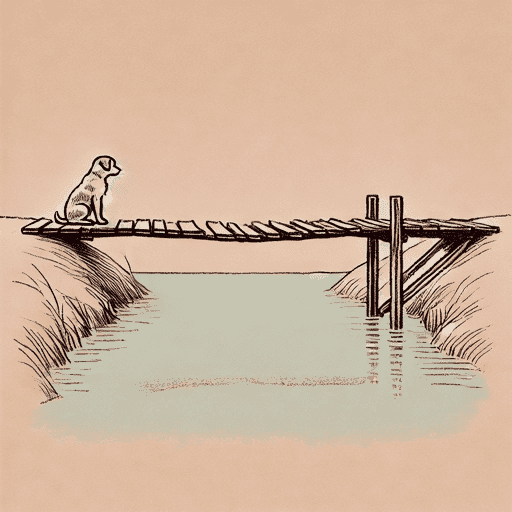
These early chapters feature foreshadowing and symbolism that create an atmosphere of dread through the natural disaster that is running parallel to the mystery. The Bella Bella River, described as “black” and “violent,” symbolizes the destructive emotional forces of grief and rage unleashed by Vivienne Godin’s disappearance. As the floodwaters dredge up sediment, the narrative signals that the investigation will uncover buried secrets. This is reinforced by the chief meteorologist’s reference to Moby Dick, which will become a motif adopted by several characters, framing the crisis as a confrontation with an unstoppable natural force. The broken bridge on the abandoned logging road symbolizes severed connections and failed protection, and the unearthing of the pink duffel bag functions as a misdirection, a piece of evidence that appears to confirm Tracey’s guilt but ultimately redirects the investigation, as well as the first concrete evidence that Vivienne’s disappearance is definitely foul play.

Unlock all 69 pages of this Study Guide
Get in-depth, chapter-by-chapter summaries and analysis from our literary experts.
- Grasp challenging concepts with clear, comprehensive explanations
- Revisit key plot points and ideas without rereading the book
- Share impressive insights in classes and book clubs