A Better Man
69 pages • 2-hour read
Louise PennyA Better Man
A modern alternative to SparkNotes and CliffsNotes, SuperSummary offers high-quality Study Guides with detailed chapter summaries and analysis of major themes, characters, and more.
Summary and Study Guide
Overview
Louise Penny’s A Better Man (2019) is a mystery novel and the 15th installment in her internationally bestselling Chief Inspector Gamache series. Penny, an acclaimed Canadian author, has multiple Agatha Awards and has been appointed a Member of the Order of Canada for her contributions to culture. The novel opens with Armand Gamache returning to the Sûreté du Québec after a controversial suspension. As a hostile social media campaign undermines his authority and catastrophic spring floods threaten the province, Gamache is assigned to investigate the disappearance of a young pregnant woman, Vivienne Godin. The novel examines The Distortion of Truth by Public Opinion, The Disparity Between Public Persona and Private Reality, Empathy as a Professional Liability, and Competing Notions of Justice When Institutions Fail.
This guide refers to the 2020 Minotaur Books paperback edition.
Content Warning: The source material and guide contain depictions of substance use, physical abuse, emotional abuse, child abuse, graphic violence, death, pregnancy termination, animal cruelty, animal death, and cursing.
Plot Summary
Armand Gamache returns to the Sûreté du Québec after a nine-month suspension. He is facing a vicious online campaign against him, based on a manipulated video of his previous case. He has been demoted from Chief Superintendent to Chief Inspector of Homicide, a position he now nominally shares with his son-in-law, Jean-Guy Beauvoir. Beauvoir is leaving in two weeks for a new job in Paris, at which time, Gamache will take over the position. When Agent Lysette Cloutier reports that a friend’s pregnant 25-year-old daughter, Vivienne Godin, is missing, Beauvoir assigns the seemingly low-priority case to Gamache and the inexperienced Cloutier.
Alongside this investigation, the novel traces the struggles of Clara Morrow, an artist and resident of Gamache’s home of Three Pines. She is facing online backlash over her latest work and a resulting artistic crisis. When fellow resident and poet Ruth Zardo invites famous art critic Dominica Oddly to Three Pines, Clara is forced to confront the truth about her work.
Gamache and Cloutier travel to the Eastern Townships as a severe spring flood begins to threaten the province. At the local Sûreté detachment, they learn from Agent Bob Cameron that Vivienne’s husband, Carl Tracey, has a history of domestic violence complaints. Cameron admits to having threatened Tracey, an act for which Gamache sternly reprimands him. At the remote Tracey farm, a hostile Carl Tracey confronts them with a pitchfork. Gamache calmly de-escalates the situation and uses Tracey’s phone to request a search warrant. Tracey claims Vivienne left him for a lover and shows no concern for her or her pregnancy.
The search of the squalid farmhouse reveals a recently used kiln in Tracey’s pottery studio but no body or conclusive evidence. Before leaving, Gamache buys Vivienne’s old dog, Fred, whom Tracey was planning to shoot. A province-wide state of emergency is declared due to the flooding, and Gamache is recalled to Montréal for a crisis meeting, where his strategic suggestions for managing the flooding are rejected by newly promoted Chief Superintendent Madeleine Toussaint and a hostile Deputy Premier. In his home of Three Pines, the Rivière Bella Bella rises dangerously, forcing villagers to build sandbag walls.
Gamache interviews Vivienne’s distraught father, Homer Godin, who confirms that Tracey abused Vivienne, and she had planned to escape on the Saturday night she disappeared. Fearing Homer will seek revenge on Tracey, Gamache persuades him to stay in Three Pines. As the Bella Bella breaches its banks, the Sûreté team, with local help, decides to dig a diversionary trench on Tracey’s upstream property. While digging, a rifle-wielding Tracey confronts them. Beauvoir disarms Tracey.
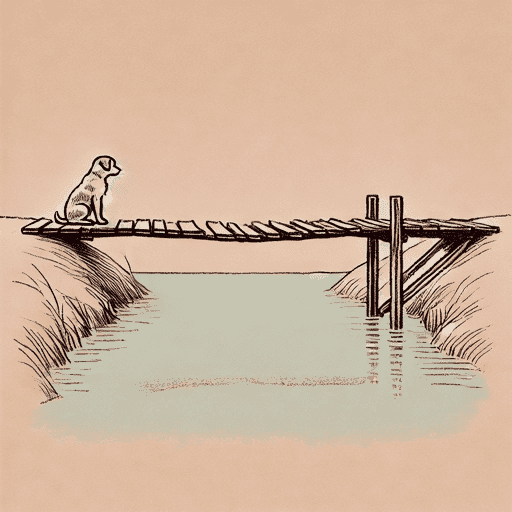
The backhoe then unearths Vivienne’s duffel bag. This discovery prompts them to search a nearby abandoned logging road, where they find her car near a broken, disused bridge. They soon find Vivienne’s body caught in a jam of ice and debris in the river. Upon seeing his daughter, a grief-stricken Homer runs into the freezing water and must be rescued by Gamache and Beauvoir.
An incident room is established in Three Pines with Beauvoir as the lead investigator. To prevent Homer from attacking Tracey, Gamache arrests him after he accidentally hit Gamache’s wife, Reine-Marie. Meanwhile, Cloutier, with Lacoste’s support, has gone undercover online and made contact with Tracey’s social media manager. By accessing their private Instagram account, she gains evidence that they are having an affair, giving the investigators new reasons to pursue Tracey as the killer. When they receive the results of the autopsy, they know that Tracey is the father of Vivienne’s baby girl and that spores from the bridge railing are embedded in a wound on her hand, confirming that her death was a murder.
However, at Tracey’s arraignment, the case collapses. The judge rules the duffel bag evidence is “fruit” of a “poisonous tree” because it was opened without a warrant (292). She also deems the undercover Instagram investigation that Cloutier instigated an illegal search, making the incriminating statement from Tracey’s lover, Pauline Vachon, inadmissible. All charges are dropped, and Carl Tracey walks free.
In the aftermath, Beauvoir assigns an agent to follow Tracey constantly. The team re-examines the admissible evidence, which points to other potential suspects, including Pauline Vachon and Agent Lysette Cloutier. Agent Bob Cameron is also questioned, and Gamache provokes a reaction from him to confirm his volatile temper.
Gamache realizes a key inconsistency: Vivienne, a dog lover, would not have left Fred behind. Homer, who is staying at Gamache’s home under careful supervision, escapes with a carving knife, heading for Tracey’s nearby farm. Gamache follows him through the woods to the broken bridge, where he finds Homer with an unconscious Tracey slung over his shoulder, preparing to kill him and then die by suicide.
To stop him, Gamache bluffs that Tracey is innocent. Cloutier arrives and, to stop Homer from killing Tracey, falsely confesses to the murder. As Tracey regains consciousness and struggles, Homer stumbles backward. Beauvoir lunges to save Homer but is pulled over the edge. Gamache leaps after them, grabbing a post and Beauvoir’s hand. As his grip fails, he throws Beauvoir toward the shore. Tracey, in a surprising act, helps pull the half-drowned Beauvoir from the water, while Cameron, who has just arrived, saves Gamache. Homer drowns.
The team pieces together the final truth and discovers that Homer Godin was the murderer. He had been abusing Vivienne since she was a child, and she was extorting him for money to escape Tracey. She met Homer on the bridge to confront him, and in the ensuing struggle, he pushed her to her death. Homer’s intense grief was real but was driven by guilt; he had projected his self-loathing onto Tracey.
Clara continues to seek out opinions about her recent art to offset the psychological effects of the negative social media campaign that she is facing. When even her closest friends are unable to fully embrace her work, she is forced to reassess it as well. She slowly begins to realize that, although painful, Oddly’s criticism of the work as cowardly and superficial, not true to her artistic vision, has merit. She takes a hammer to the work, destroying it, and then hangs it on the wall to remind herself to stay true to her art and not compromise her vision.
Beauvoir and his family depart for their new life in Paris, leaving Gamache a letter recommending Isabelle Lacoste as his replacement. Chief Superintendent Toussaint attempts to pension Lacoste off due to her old injury, concerned that Gamache will have too many valuable allies. Lacoste confronts Chief Superintendent Toussaint, using a video of what happened at the bridge rescue as leverage. Toussaint is revealed to be the anonymous online source who both started the viral online campaign against Gamache and then, in a moment of remorse, defended Gamache online by leaking the real video of a past raid. Gamache sits with Reine-Marie on the village green, contemplating the future.

Unlock all 69 pages of this Study Guide
Get in-depth, chapter-by-chapter summaries and analysis from our literary experts.
- Grasp challenging concepts with clear, comprehensive explanations
- Revisit key plot points and ideas without rereading the book
- Share impressive insights in classes and book clubs