A Better Man
69 pages • 2-hour read
Louise PennyA Better Man
A modern alternative to SparkNotes and CliffsNotes, SuperSummary offers high-quality Study Guides with detailed chapter summaries and analysis of major themes, characters, and more.
Symbols & Motifs
Content Warning: This section of the guide includes discussion of cursing and death.
The Flooding River
The overflowing Rivière Bella Bella is a central symbol in the novel, representing the overwhelming and uncontrollable forces of grief, rage, and chaos that mirror the characters’ internal turmoil. As Vivienne Godin’s murder unleashes a torrent of destructive emotions, the river’s spring flood provides a physical manifestation of this breakdown. The villagers, who have always seen the river as a “friendly, gentle presence,” now find that “it was as though someone they thought they knew well, someone they loved and trusted, had turned on them” (79). This transformation symbolizes how the foundations of community and personal relationships can be eroded by tragedy when familiar figures turn into unpredictable, dangerous forces.
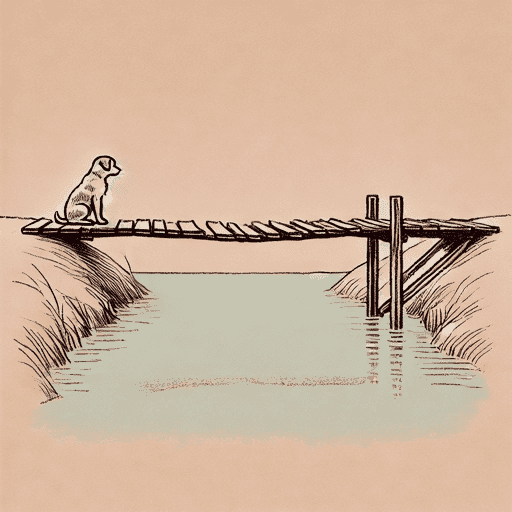
The flood also threatens or compromises bridges—the rotten logging bridge where Vivienne’s life ends, the massive Champlain Bridge under assault from ice, and the stone bridge in Three Pines—which symbolize points of connection and vulnerability. As the river overwhelms these structures, it underscores how emotional deluges can sever ties and destroy the very pathways meant to ensure safety and connection, reflecting the thematic concern with the failure of personal and institutional safeguards. The search for justice for Vivienne becomes inseparable from the physical struggle against the flood, linking the external chaos to the internal moral crisis.
Social Media Feeds
The recurring motif of social media feeds, introduced in the opening chapter with the hashtags #MorrowSucks and #SûretéSux, represents the corrosive power of public opinion in distorting truth and manufacturing shame, developing the theme of The Distortion of Truth by Public Opinion. Through its representation of tweets, blog posts, and viral videos, the novel critiques a contemporary culture where anonymous, often malicious, commentary creates powerful but false narratives with tangible consequences.
The online attacks on Clara Morrow and Gamache run parallel, illustrating how public humiliation can damage both personal and professional integrity, regardless of factual reality. One post about Gamache’s return exemplifies this distortion: “This is Armand Gamache’s first day back at the Sûreté du Québec after a suspension of nine months following a series of ill-advised and disastrous decisions” (3). This statement, described by another agent as “bullshit retweeted by hundreds,” demonstrates how a partial truth can be weaponized into a widely accepted lie (3). The doctored video of Gamache and the later release of the real footage further highlight the uncontrollable nature of online information, suggesting that once a malicious narrative is released, the truth becomes almost irrelevant in the court of public opinion.
Moby Dick
Allusions to Herman Melville’s Moby Dick function as a symbol of an obsessive and potentially self-destructive quest. This symbol manifests in multiple character arcs, framing their intense pursuits as dangerous voyages. Homer Godin’s single-minded hunt for vengeance against Carl Tracey mirrors Captain Ahab’s destructive obsession, a quest that consumes his morality and reason. Similarly, Clara’s desperate need for validation from the elusive critic Dominica Oddly is framed by Ruth as the pursuit of a “white whale,” an all-consuming drive to secure the approval of an elusive critic that ultimately threatens her artistic confidence.
Even Gamache and Jean-Guy Beauvoir are susceptible, driven by empathy for a grieving father to push the boundaries of institutional protocols. The symbolic core of this motif is the recurring quote from Melville’s novel, “All truth with malice in it” (115), which various characters return to throughout the novel. This phrase illuminates how the pursuit of a singular “truth”—whether it is justice, critical validation, or revenge—can be corrupted by malicious intent. The novel uses this symbolic framework to explore the theme of Competing Notions of Justice When Institutions Fail, questioning whether a quest, even for a noble end, can remain pure when fueled by the “subtle demonisms of life and thought” (370).

Unlock the meaning behind every key symbol & motif
See how recurring imagery, objects, and ideas shape the narrative.
- Explore how the author builds meaning through symbolism
- Understand what symbols & motifs represent in the text
- Connect recurring ideas to themes, characters, and events