A Christmas Memory
A Christmas Memory
A modern alternative to SparkNotes and CliffsNotes, SuperSummary offers high-quality Study Guides with detailed chapter summaries and analysis of major themes, characters, and more.
Important Quotes
“A woman with shorn white hair is standing at the kitchen window. She is wearing tennis shoes and a shapeless gray sweater over a summery calico dress. She is small and sprightly, like a bantam hen; but, due to a long youthful illness, her shoulders are pitifully hunched. Her face is remarkable—not unlike Lincoln’s, craggy like that, and tinted by sun and wind; but it is delicate too, finely boned, and her eyes are sherry-colored and timid.”
(Page 4)
Buddy’s initial description of his best friend draws a portrait of both her appearance and her character. Her white hair and weathered face indicate her age, and her “shorn” hair and shabby clothes suggest that she is careless of her appearance. At the same time, Buddy perceives his friend as energetic (“sprightly”) and even heroic, comparing her face to President Lincoln’s. Although she is described as “pitiful,” “delicate,” and “timid,” the description paradoxically suggests a “remarkable” underlying strength to her character.
“Other people inhabit the house, relatives; and though they have power over us, and frequently make us cry, we are not, on the whole, too much aware of them. We are each other’s best friend.”
(Page 4)
This early description of Buddy’s other relatives establishes the household power dynamics. Buddy and his friend are dependent on these relatives but also alienated from them. The central characters’ devoted friendship contrasts with these distant but threatening “others” who appear only as a collective dispenser of punishment rather than as individual characters. The words “we” and “us” throughout this passage reinforce both Buddy’s identification with his friend and his alienation from his other relatives.
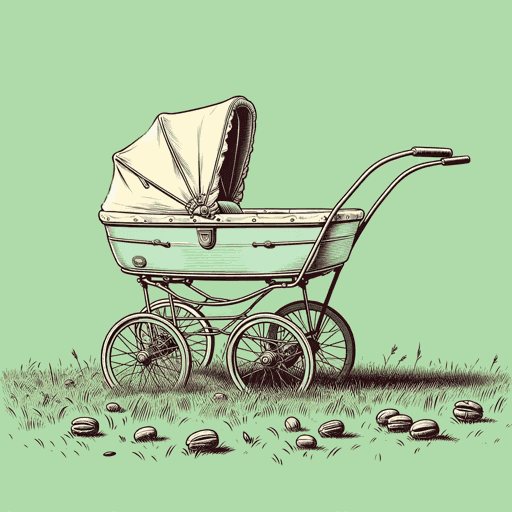
“Together, we guide our buggy, a dilapidated baby carriage, out to the garden and into a grove of pecan trees. The buggy is mine; that is, it was bought for me when I was born. It is made of wicker, rather unraveled, and the wheels wobble like a drunkard’s legs. But it is a faithful object; springtime, we take it to the woods and fill it with flowers, herbs, wild ferns for our porch pots; in the summer, we pile it with picnic paraphernalia and sugar-cane fishing poles and roll it down to the edge of a creek; it has its winter uses, too: as a truck for hauling firewood from the yard to the kitchen.”
(Pages 5-6)
This passage establishes the rural Southern setting, and the detailed description of the pair’s seasonal activities reveals their close connection to the natural world. In addition, the buggy suggests the pair’s power to transform even the most humble and “dilapidated” of objects into beloved companions, and it reinforces the childlike nature of the characters. The wheels “wobbl[ing] like a drunkard’s legs” even foreshadows their later adventures with whiskey.
“Caarackle! A cheery crunch, scraps of miniature thunder sound as the shells collapse and the golden mound of sweet oily ivory meat mounts in the milk-glass bowl.”
(Page 6)
Figurative language and sound effects produce a vivid impression of the de-shelled pecans. In addition to onomatopoeia, a word imitating a sound (“Caarackle!”), the author employs alliteration (“meat mounts in the milk-glass bowl”) to create a musical sentence that conveys the joy that Buddy and his friend take in the pecans.
“But before these purchases can be made, there is the question of money. Neither of us has any. Except for skinflint sums persons in the house occasionally provide (a dime is considered very big money); or what we ourselves earn from various activities.”
(Page 7)
“The question of money” is a primary motivation and obstacle driving the action of the first half of the story. Buddy and his friend must acquire the ingredients for their fruitcakes despite limited funds. Buddy’s friend’s attitude toward money contrasts with the attitudes of the other “persons in the house”: She values money because it allows her to make and give away her homemade fruitcakes as gifts, while Buddy’s “skinflint” relatives are reluctant to part with their money.
“In addition to never having seen a movie, she has never: eaten in a restaurant, traveled more than five miles from home, received or sent a telegram, read anything except funny papers and the Bible, worn cosmetics, cursed, wished someone harm, told a lie on purpose, let a hungry dog go hungry.”
(Page 9)
This passage contributes to the characterization of Buddy’s friend. The syntax takes the form of a long catalog of details seemingly listed at random, emulating a child’s rambling speech. However, as the sentence continues, its meaning transforms: It starts as a list of all the ways in which Buddy’s friend is removed from the modern world, but it ends as a list of her most positive qualities (kindness, truthfulness, and generosity). This sentence-level plot arc suggests that Buddy’s friend is not provincial or insular but instead remarkable and imaginative.
“Silently, wallowing the pleasures of conspiracy, we take the bead purse from its secret place and spill its contents on the scrap quilt. Dollar bills, tightly rolled and green as May buds. Somber fifty-cent pieces, heavy enough to weight a dead man’s eyes. Lovely dimes, the liveliest coin, the one that really jingles. Nickels and quarters, worn smooth as creek pebbles. But mostly a hateful heap of bitter-odored pennies.”
(Page 10)
This rich figurative language highlights just the preciousness of each of these hard-earned coins. The descriptive language conveys a child’s point of view as the two friends survey this secret hoard, with each coin described almost as a magical token. At the same time, Buddy’s frustration with his lack of money appears in his hatred of the “bitter-odored pennies.”
“Thirty-one cakes, dampened with whiskey, bask on window sills and shelves. Who are they for? Friends. Not necessarily neighbor friends: indeed, the larger share are intended for people we’ve met maybe once, perhaps not at all. People who’ve struck our fancy. Like President Roosevelt. Like the Reverend and Mrs. J. C. Lucey, Baptist missionaries to Borneo who lectured here last winter. Or the little knife grinder who comes through town twice a year. Or Abner Packer, the driver of the six o’clock bus from Mobile, who exchanges waves with us every day as he passes in a dust-cloud woosh.”
(Pages 14-15)
This passage clarifies the meaning and importance of the Christmas fruitcakes. Buddy’s friend’s determination to bake over 30 fruitcakes to give to near strangers likely appears strange to her family, but for Buddy and his friend, the fruitcakes are a means of connecting with the people who bring them pleasure (who “struck their fancy”) or treat them with kindness (like the bus driver who acknowledges them). Disregarded by their relatives, Buddy and his friend create an alternative community with whom to celebrate the Christmas season.
“But I can dance: that’s what I mean to be, a tap dancer in the movies. My dancing shadow rollicks on the walls; our voices rock the chinaware; we giggle: as if unseen hands were tickling us. Queenie rolls on her back, her paws plowing the air, something like a grin stretches her black lips. Inside myself, I feel warm and sparky as those crumbling logs, carefree as the wind in the chimney. My friend waltzes round the stove, the hem of her poor calico skirt pinched between her fingers as though it were a party dress.”
(Page 16)
Buddy, his friend, and even Queenie dance and sing after drinking some of Haha’s whiskey. The syntax—a series of short, linked phrases—imitates the swaying movements of a dance or waltz. The whiskey provides Buddy and his friend with a moment of imaginative pleasure; Buddy can picture himself as a “tap dancer in the movies” while his friend’s threadbare clothes transform into “a party dress.”
“Enter: two relatives. Very angry. Potent with eyes that scold, tongues that scald. Listen to what they say, the words tumbling together into a wrathful tune: ‘A child of seven! whiskey on his breath! are you out of your mind? feeding a child of seven! must be loony! road to ruination! remember Cousin Kate? Uncle Charlie? Uncle Charlie’s brother-in-law? shame! scandal! humiliation! kneel, pray, beg the Lord!’”
(Pages 16-17)
In contrast to the long, swaying sentences describing the dance in the kitchen, these short, sharp sentences convey the party’s sudden interruption by disapproving relatives. These sentences also lack clear subjects; Buddy’s other relatives appear not as individuals but as an overwhelming torrent of cruel words (a “wrathful tune”). These lines are the relatives’ only dialogue in the story, and they reveal why Buddy and his friend are outsiders in their own family. These relatives view Buddy’s friend disparagingly, and the lines express the relatives’ punitive theology; from their perspective, “the Lord” is harshly legalistic and must be begged for forgiveness after an infraction.
“A mile more: of chastising thorns, burs and briers that catch at our clothes: of rusty pine needles brilliant with gaudy fungus and molted feathers. Here, there, a flash, a flutter, an ecstasy of shrillings remind us that not all the birds have flown south. Always, the path unwinds through lemony sun pools and pitch vine tunnels.”
(Pages 18-19)
As Buddy and his friend journey through the woods to acquire a Christmas tree, the narration at first emphasizes the obstacles they encounter: “chastising thorns” that mirror the scolding relatives of the previous night. However, unlike the relatives, the natural world ultimately rewards the efforts of Buddy and his friend; the farther they walk, the more beautiful the path becomes, revealing “ecstatic” birds (a symbol of hope) and “lemony sun pools.” This landscape is a metaphor for the happiness that the friends gradually recover as they distance themselves from the oppressive environment of the household.
“Once a car stops and the rich mill owner’s lazy wife leans out and whines: ‘Giveya twobits cash for that ol tree.’ Ordinarily my friend is afraid of saying no; but on this occasion she promptly shakes her head: ‘We wouldn’t take a dollar.’ The mill owner’s wife persists. ‘A dollar my foot! Fifty cents. That’s my last offer. Goodness, woman, you can get another one.’ In answer, my friend gently reflects: ‘I doubt it. There’s never two of anything.’”
(Page 21)
This passage juxtaposes two attitudes toward money and value. For the rich mill owner’s wife, everything is for sale (she assumes that Buddy’s friend will easily give up her tree for “twobits”) and thus interchangeable and replaceable (she assumes that Buddy and his friend can simply “get another one,” as though the tree were a product in a store). In contrast, Buddy’s friend, who carefully selected and then worked all day to cut down the tree, views the tree as priceless and irreplaceable. Buddy’s friend perceives and appreciates the unique value of every object and experience in a way that the wealthy mill owner’s wife cannot.
“The wind is blowing, and nothing will do till we’ve run to a pasture below the house where Queenie has scooted to bury her bone (and where, a winter hence, Queen will be buried too). There, plunging through the healthy waist-high grass, we unreel our kites, feel them twitching at the string like sky fish as they swim in the wind. Satisfied, sun-warmed, we sprawl in the grass and peel Satsumas and watch our kites cavort. Soon I forget the socks and hand-me-down sweater.”
(Page 26)
This passage represents a moment of triumph for the two friends, as their loving friendship and the beauty of the natural world render all their previous disappointments unimportant. The two kites symbolize the two friends, as the kites “cavort” in the sky while the friends cavort in the pasture below. However, this moment of perfect happiness is interrupted by a piece of foreshadowing; in an abrupt aside, the narrator shares that his beloved dog, Queenie, will be dead in a year. This introduction of death into an otherwise idyllic scene suggests that the friends’ shared happiness is fragile and temporary.
“‘I’ve always thought a body would have to be sick and dying before they saw the Lord. And I imagined that when He came it would be like looking at the Baptist window: pretty as colored glass with the sun pouring through, such a shine you don’t know it’s getting dark. And it’s been a comfort: to think of that shine taking away all the spooky feelings. But I’ll wager it never happens. I’ll wager at the very end a body realizes the Lord has already shown Himself. That things as they are’—her hands circle in a gesture that gathers clouds and kites and grass and Queenie pawing earth over her bone—‘just what they’ve always seen, was seeing Him. As for me, I could leave the world with today in my eyes.’”
(Pages 26-27)
The story’s climax occurs as Buddy’s friend experiences a religious epiphany. In the Christian church, Christmas is also known as “Epiphany,” a word that can refer to the experience of divine presence or to a sudden insight. Here, Buddy’s friend shares a realization about the nature of God. While she once imagined God as a beautiful but distant figure, she now believes that God reveals himself in everything, including ordinary things (“her hands circle in a gesture that gathers clouds and kites and grass and Queenie”). She suddenly perceives the presence of God in her everyday life, elevating the natural and humble to the status of the divine. The nature of this religious epiphany reinforces the story’s celebration of those who, like Buddy’s friend, are typically devalued and disregarded. Although she is considered “loony” by others, this passage portrays Buddy’s friend as capable of profound wisdom.
“And when that happens, I know it. A message saying so merely confirms a piece of news some secret vein had already received, severing me from an irreplaceable part of myself, letting it loose like a kite on a broken string. That is why, walking across a school campus on this particular December morning, I keep searching the sky. As if I expected to see, rather like hearts, a lost pair of kites hurrying toward heaven.”
(Pages 28-29)
Buddy expresses the deep importance of his connection with his friend by describing her death as though it were an amputation, a “severing.” After this metaphor, he imagines this lost part of himself as “a kite on a broken string.” The death of Buddy’s friend represents the loss of not only the most important relationship in his life but also his childhood identity (it was his friend, after all, who named him “Buddy”). The image of a kite, joining his friend’s spirit in its heavenward journey, symbolizes Buddy’s multiple losses.

Unlock every key quote and its meaning
Get 15 quotes with page numbers and clear analysis to help you reference, write, and discuss with confidence.
- Cite quotes accurately with exact page numbers
- Understand what each quote really means
- Strengthen your analysis in essays or discussions