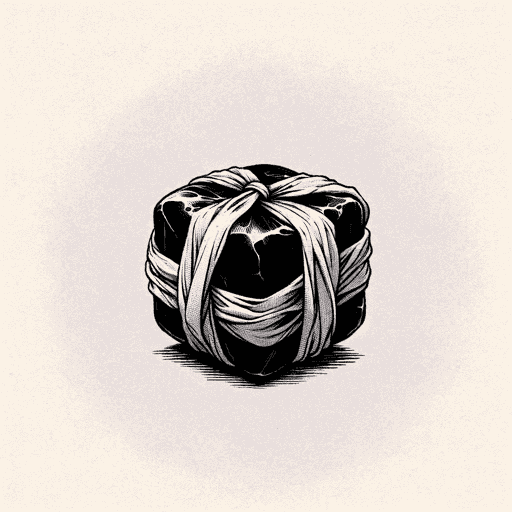
A Darker Shade of Magic
A Darker Shade of Magic
A modern alternative to SparkNotes and CliffsNotes, SuperSummary offers high-quality Study Guides with detailed chapter summaries and analysis of major themes, characters, and more.
Summaries & Analyses
Quizzes
NEWReading Tools
Chapters 7-9Chapter Summaries & Analyses
Chapter 7 Summary: “The Follower”
Lila is furious about losing the black stone to Kell, and she goes to a tavern frequented by criminals to cope with her frustrations. Holland tracks Lila down, uses magic to inflict horrible pain on her, and orders her to call for Kell. Lila protests that Kell won’t come for her, but the agony is so intense that she does as Holland commands. To her astonishment, Kell appears and tells her to run.
Kell runs toward Lila’s screams even though he knows he’s walking into “a blunt and obvious trap” because part of him believes her predicament is her own fault (167). Holland releases Lila and tells Kell to give him the stone. Kell urges the other Antari to resist the Danes’ hold over him, but Holland shows Kell the mark Athos’s binding spell left on his chest and explains that the spell is unbreakable. Holland uses elemental magic to knock the black stone out of Kell’s grip and then draws on the stone’s dark power to make Kell cough up blood at an alarming rate. Lila knocks Holland out cold while his focus is on Kell, retrieves the stone, and helps a barely conscious Kell to the Stone’s Throw.
With Barron’s help, Lila carries Kell up to her room. She tells Barron all about her experiences with the two magicians and is surprised to learn that the innkeeper already knows about Kell and his magic. Lila burns some herbs in the hope that the smell will cover up the scent of Kell’s magic, which smells like flowers and earth, and the stone’s power, which smells like smoke. Unlike the last time Kell was unconscious in her room, Lila doesn’t tie him up or take his knife. She keeps watch over the sleeping magician, determined to defend him if Holland reappears.
Chapter 8 Summary: “An Arrangement”
When he awakens, Kell thinks longingly of his home in Red London’s palace and wonders if his family is worried about him. Lila asks Kell why he came back for her, and he answers that he doesn’t know. Kell explains all he knows about the Antari, the four Londons, and the black stone. He resolves to return the stone to Black London so it can never be used again. To do this, he must first travel through Red London and White London and find a way to unseal the door to Black London. Despite Kell’s protests, Lila insists on accompanying him. He continues pressing her for her reasons until she snaps, “Because I want to see the world, even if it’s not mine. And because I will save your life” (197). Kell decides to accept her help because he feels afraid and physically weak. Additionally, he doesn’t expect to return from Black London and wants someone to tell his family what happened to him. Kell fears death, but Lila would “rather die on an adventure than live standing still” (199). Kell suggests that Lila tell Barron goodbye. When she declines, he doesn’t press the issue because he doesn’t plan to see his family either. Before they exit the Stone’s Throw, Lila leaves all of her money and the silver pocket watch behind as repayment for Barron’s help.
Kell doesn’t want to reappear at the Ruby Fields in Red London in case an ambush is waiting for him, so he and Lila walk a few blocks away from the tavern before he marks a wall with his blood. Kell worries that attempting to travel between worlds will prove deadly for Lila, but she confidently declares that the stone will see her through safely and gives Kell a kiss for good luck.
The narrative moves to Barron at the Stone’s Throw. He wakes up when Lila leaves with Kell, but he doesn’t try to stop her. Later, he hears someone moving in her room and senses magic and danger. Barron finds Holland with Lila’s silver pocket watch and attempts to shoot him, but Holland wrests the weapon from him. Holland uses magic to compel Barron to answer his questions and slits his throat when he learns that the man doesn’t know where Lila and Kell have gone.
Chapter 9 Summary: “Festival and Fire”
The stone allows Lila to travel to Red London, but she and Kell arrive in separate locations. Lila admires the ships on the luminous red Isle River and joins a crowd gathered to celebrate Prince Rhy’s birthday. As the royal family passes in a carriage, Rhy gives Lila a curious look, “as if he [knows] she [doesn’t] belong, as if he look[s] at her and [sees] something else” (219). Lila visits a market and attempts to steal a blue-green stone that reminds her of the sea, but the vendor catches her. Kell arrives before the man can summon the guards, and the vendor lets Lila go with a humble apology. Kell scolds Lila for getting herself into trouble so quickly and admits that he’s terrified of the danger the black stone could bring to his world.
A man named Fletcher owns a pawn shop near Red London’s docks. Criminals often use his store to move rare and dangerous items. Years ago, Fletcher broke the city’s most important rule of magic by using his power to control another person. As punishment, he was branded with marks that cut off his magic, but he eventually found a way to restore his power. Fletcher once lost a high-stakes card game to Kell, and he keeps a white rook that Kell gave him as a reminder that Fletcher has a debt to repay.
As Lila and Kell walk through Red London, he can feel the stone calling to him from her pocket and does his best to ignore it. The magician feels guilty about missing Rhy’s birthday, but he reasons that his brother will forgive him when Lila explains that he had to take the stone to Black London. Kell hides from the royal guards, prompting Lila to ask if he’s an outlaw. He reluctantly explains that he’s more like a possession of the royal family rather than a prince. Lila coldly retorts that he should be grateful because, although he lacks the familial love he desires, he has a safe, warm home. Kell realizes that she has “frozen and starved and fought—and almost certainly killed—to hold on to some semblance of a life” (235), and he tells her that she’s right. Kell plans to leave Lila at the Ruby Fields, but the inn—and everyone who was inside—has been incinerated. Kell can tell that the fire was a deliberate act of magic because none of the neighboring buildings were touched by the blaze.
Kell needs a token from White London to travel there. With his treasure trove in ashes, he must find a token elsewhere. Holland approaches the inn’s ruins, and Kell uses the stone to conceal himself and Lila. Holland senses his quarries and tries to lure them out by casting the silver pocket watch to the ground and saying that Barron died because of Lila’s cowardice. A weeping Lila struggles against Kell, but he prevents her from leaving their magical concealment. After Holland departs to search elsewhere, Lila picks up the blood-stained watch and tells Kell that she wants to kill Holland.
Chapters 7-9 Analysis
As Lila and Kell set out on a daring plan to return the stone to Black London, the consequences of their choices put them and their families in grave danger. In Chapter 7, the novel’s two main characters become unlikely allies. Kell demonstrates what will quickly become his characteristic self-sacrificial behavior by knowingly walking into a trap. This decision reflects Kell’s protective personality, and it is all the more selfless because he does it to help someone who stole from him and held him captive. Similarly, Lila rescues Kell later in the chapter even though she could have left him to contend with Holland on his own. However, unlike Kell, Lila is surprised by her sudden display of altruism: “She hadn’t lived this long and stayed this free by stopping to help every fool who got himself into trouble” (177). Although Lila often makes snap decisions, attacking Holland is a different sort of recklessness because it goes against her survival instincts. This shows that Kell’s influence is already changing Lila.
As the relationship between Lila and Kell shifts, feelings begin to develop between them. In Chapter 7, Lila takes Kell back to her room, and she trusts him enough to leave him unbound and in possession of his knife. In Chapter 8, Kell reciprocates her trust by telling her everything he knows about the black stone. The characters’ growing interest in and care for one another suggests the incipient spark of a romance. Lila confirms this by kissing Kell before they travel to Red London. However, the guarded Lila gives herself an alibi by claiming that the kiss was simply for good luck rather than openly acknowledging her desires. Kell and Lila’s decisions to help one another have the positive result of earning them each an ally with the potential for more. Unfortunately, not all of the consequences of their choices are so favorable. A growing number of people lose their lives because Kell and Lila took the stone, with Barron and everyone in the Ruby Fields tavern joining the list of casualties in this section.
The theme of The Nature of Family receives significant developments in these chapters. Kell longs to return home to Red London’s royal family. His misgivings and feelings of being an outsider remain unresolved, but they pale after his brush with death. In Chapter 9, Kell tells Lila about his complicated home life, and she makes him aware of his privilege: “Love doesn’t buy us anything, so be glad for what you have and who you have because you may want for things but you need for nothing” (235). Kell takes these words to heart. Though he is not oblivious to others’ circumstances, Lila is the first person with whom he interacts who drives home the vast chasm between someone of his status, with a family that takes care of him, and someone of hers. Whether or not his adoptive parents love him the way he wishes they would, Kell loves the king and queen, and he resolves to sacrifice himself to protect them and everyone else in Red London.
Further developing the theme of family, Lila and Barron’s relationship becomes central to the plot. Barron offers Lila and Kell a place to hide and heal after their encounter with Holland. Lila feels a great weight of guilt over her father figure’s actions: “Barron’s kindness was like a curse, because she knew she had done nothing to deserve it. It wasn’t fair. Barron did not owe her anything. Yet she owed him so much” (181). Because Lila’s life is a bitter fight for survival, she loathes showing vulnerability and doesn’t understand relationships that aren’t based on debts and obligations. As a result, she struggles to accept Barron’s unconditional love. Another parallel between the protagonist and deuteragonist emerges in Chapter 8: Neither Kell nor Lila wants to face their loved ones and tell them goodbye. Barron wakes up when Lila leaves with Kell, but he doesn’t try to stop her: He “had long since learned that it was futile to try, and had long since resolved to be instead an anchor, there and ready when she wandered back, which she invariably did” (208). Barron understands that trying to hold onto the independent young woman would only drive her further away. Instead, he expresses his love by patiently waiting to welcome her back with open arms. This solidifies his personality as a kind and caring parental figure who genuinely has Lila’s best interests at heart.
Barron’s death marks a key moment for both the themes of family and of consequences. In Chapter 9, Lila learns that Holland killed Barron because of her, and this is the first time that she is shown shedding tears. The usually survival-minded young woman is so distraught that Kell has to physically restrain her from revealing their location to their enemy. This confirms that Lila’s insistence on refusing to think of Barron as family was a method of protecting herself from getting attached to him—one that failed, as she cared deeply for him anyway.
The novel’s motifs also play a major role in this section. In Chapter 8, Lila leaves the pocket watch behind for Barron, intending to show her gratitude and her desire to repay him for all he’s done for her. Holland takes the silver watch before he kills Barron, and he uses the object to taunt Lila, tarnishing the object’s significance in her mind. The watch returns to Lila’s possession and becomes a powerful reminder of the consequences of her actions.
The black stone’s importance as a motif for the theme of Power as a Path to Corruption grows as well. The stone’s small size belies the fact that it’s “capable of creating anything and razing everything” (213). Kell knows that the stone is trying to overpower his will and that the danger of losing himself to corruption increases every time he uses the stone. Relying on the stone’s strength is particularly tempting because he feels weak and afraid at this point in the novel. Kell, already powerful in his own right, is able to withstand its lure for now, but the fact that even Kell struggles proves the stone’s potent magic. Later, once it’s revealed the Danes have the other piece of the stone, these scenes will provide context as to why their hold over Rhy and Holland is so strong. As Lila and Kell’s quest continues, it remains to be seen how long the magician can resist the stone’s power.

Get in-depth, chapter-by-chapter summaries and analysis from our literary experts.
- Grasp challenging concepts with clear, comprehensive explanations
- Revisit key plot points and ideas without rereading the book
- Share impressive insights in classes and book clubs