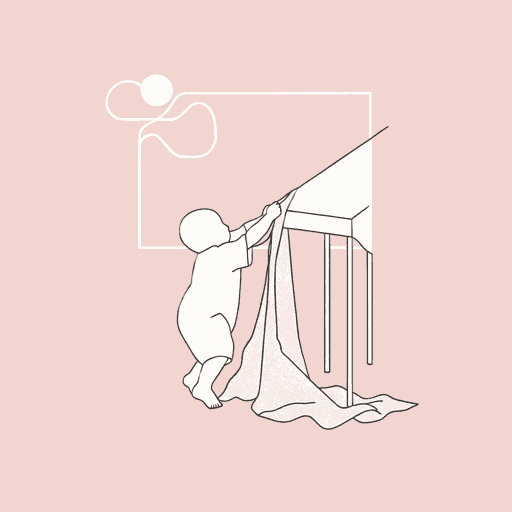
A Little Girl Tugs at the Tablecloth
A Little Girl Tugs at the Tablecloth
A modern alternative to SparkNotes and CliffsNotes, SuperSummary offers high-quality Study Guides with detailed chapter summaries and analysis of major themes, characters, and more.
Literary Devices
Form and Meter
Reading poetry in translation necessarily means missing some of the rhythm and acoustic effects achieved by the poet in the original form. Great translators balance rendering meaning, tone, and form when they reinterpret a poet’s work in a new language. Barańczak and Cavanagh not only translated Szymborska’s work; they interpret the works of many other Polish poets as well. A longstanding team with a proven understanding of the nuances of the poet and of the language, their translation is as faithful to the experience of “A Little Girl Tugs at the Tablecloth” as is possible in English.
The poem’s free verse varies between longer lines with four to five stressed syllables and shorter lines with two stressed syllables. More than half of the lines in the poem begin with a trochaic foot. Polish poets often favor trochaic meter because the stress in many Polish words falls on the next-to-last syllable. That effect might be difficult to sustain throughout the poem in English, but lines like “manifests a willingness to travel” (Line 13) and Lines 23 and 24, beginning with “Mr. Newton” and “Let him look,” begin with trochaic feet, preserving some cadence of the original language.
Anthropomorphism
The speaker employs anthropomorphism through attributing intentions and emotions to household objects. The premise of the poem—the “experiment” (Line 25) the speaker imagines the child conducts—assumes that objects “don’t move by themselves” (Line 5), but that some items harbor “a willingness to travel” (Line 13) when dislodged. The speaker adopts a sophisticated tone and advanced diction to explain a childlike sentiment: the idea that objects might want to move. The speaker maintains a distance, an alliance with the reader who also knows that the child’s real experiment pertains to her own agency. She sees the effect she can have on her environment, and she responds to this power. By giving the “creamer, spoons, bowl” (Line 15) the capacity to be “shaking with desire” (Line 16), the speaker introduces the concept of responsible action. Once the child realizes her actions have consequences for these objects, she might choose to be either benevolent or brutal. Existing in a world where “Mr. Newton still has no say” (Line 23), the child senses no accountability yet. Through the speaker’s interpretation of her actions, the child only wonders “what form of motion” (Line 18) the objects will choose, as if the objects also have agency. Toward the end of the poem, the objects sit “trembling on the brink” (Line 19), with excitement or fear. The speaker invites the reader to sympathize with the objects on the table as they await their fate, in the hands of a little girl unburdened with rules or knowledge.
Irony
The speaker occupies a space like the plates and bowls on the edge of the table, waiting to crash. The speaker brings the reader along to this place of uncertainty and minor peril, one where the menace encroaches as more interpretations unfold in the narrative. The voice’s ironic distance emerges early; once the speaker identifies the subject of inquiry as the idea that “things don’t move by themselves” (Line 5), the reader can see that at least two kinds of context exist for the speaker’s narrative. Like the child, the speaker may choose to illuminate or to crush, and nothing ensures one path over another. The language of the poem suggests education and sophistication, which implies the speaker’s acceptance of and adherence to certain aspects of common knowledge and behavior. However, the speaker’s alignment with the child’s mind, as when she finds it “fascinating” (Line 17) to wonder whether the objects will “hop onto the windowsill” (Line 22), teeters between playful and reckless. Szymborska’s use of irony in this speaker’s tone raises questions about the virtue associated with childhood and childlike views of the world. On the one hand, the sense of childlike wonder makes even the most trivial objects the subject of inquiry. On the other hand, the absence of the social contract and rules of nature make for an anarchic world, where the tablecloth can be tugged out from under us at any moment.

Get in-depth, chapter-by-chapter summaries and analysis from our literary experts.
- Grasp challenging concepts with clear, comprehensive explanations
- Revisit key plot points and ideas without rereading the book
- Share impressive insights in classes and book clubs