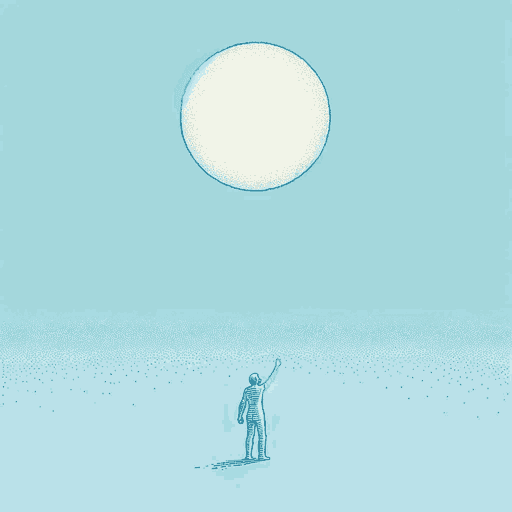
A Man Said to the Universe
A Man Said to the Universe
A modern alternative to SparkNotes and CliffsNotes, SuperSummary offers high-quality Study Guides with detailed chapter summaries and analysis of major themes, characters, and more.
Background
Literary Context
Crane’s poetry has a reputation for defying established literary contexts. Crane added to this legacy by referring to his poems not as poems but as “lines” or “pills” (Auster, Paul. Burning Boy. Macmillan, 2021. p. 196). Yet Crane’s poetry is not that difficult to categorize. The poem fits in with the ethos of Modernism, which developed around the same time Crane published War Is Kind. As with Modernism, “A man said to the universe” emphasizes the fragmented, belligerent aspects of the world. For many Modernists, the world was not glorious or romantic but gloomy and nerve-racking. Fast-paced contemporary life could leave a person feeling like they did not matter, which is what the universe all but tells the man in Crane’s poem. For Modernists and Crane, the world is not necessarily a bountiful, beautiful place.
The Imagists provide another context for Crane’s poem. Early 20th-century Imagists like Ezra Pound, Amy Lowell, and William Carlos Williams used exact language to create a vivid picture for the reader. Crane uses sharp words to illustrate the interaction between the man and universe. Neither Crane’s poem nor Imagist poetry tolerated much verbosity or excess words. Both are relatively bare and aimed to get right to the point.
Crane’s poetry is also viewable in the context of a slew of misanthropic poems that crisscross literary movements, time, and continents. French poets like Arthur Rimbaud (1854-1891), Paul Verlaine (1844-1896), and Chares Baudelaire (1821-1867) wrote about the meanness of the world and the insignificance of existence. In “Spleen (IV)," Baudelaire compares the sky to an oppressive “lid.” Meanwhile, in 19th-century America, the poet Emily Dickinson compared people publicly proud of their existence to frogs and swamps in “I’m Nobody! Who are you?" (c. 1861). Romantic poets, too, delivered work about the terrifying aspects of the world. Much like Crane’s universe, William Blake’s city of London is hostile to its inhabitants, as every person the speaker meets there has “marks of woe” in “London” (1794).
Historical Context
Crane wrote “A man said to a universe” during a time of remarkable historical change. Advances in technology and communications were reshaping the world and showing people how big, strange, and unforgiving it could be. In Burning Boy (2021), Auster lists the numerous things that came about during Crane’s lifespan, including the electric chair, the electric phone, color photography, the fly swatter, the smoke detector, and the mousetrap. In the context of these countless new inventions and products, it is possible to see why Crane might write a poem about the smallness of humankind. Also influencing Crane’s point of view is his relationship with the impoverished parts of New York City. Crane lived in and reported on many of the historically substandard parts of Manhattan. What he observed might have shown him the apathy of the universe.
Although Crane never fought in a war, he covered two wars as a journalist. He wrote about the 1896 war between Turkey and Greece over disputed territory. According to Crane, the scenes from the war made a “man hate himself for being well-fed and having a place to go” (Auster 492). In other words, the war made him feel guilty for having a prosperous existence. Later, Crane reported on the 1898 Spanish-American War, where the United States ostensibly fought against Spain for Cuba, the latter of which wanted independence from Spain. Crane describes “[t]he noise; the impenetrable darkness; the knowledge from the sound of the bullets that the enemy was on three sides of the camp” (Auster 624). Once again, Crane presents a hostile universe and disposable humans. Historical events like these two wars help contextualize the harsh, cold tone of “A man said to the universe.”

Get in-depth, chapter-by-chapter summaries and analysis from our literary experts.
- Grasp challenging concepts with clear, comprehensive explanations
- Revisit key plot points and ideas without rereading the book
- Share impressive insights in classes and book clubs