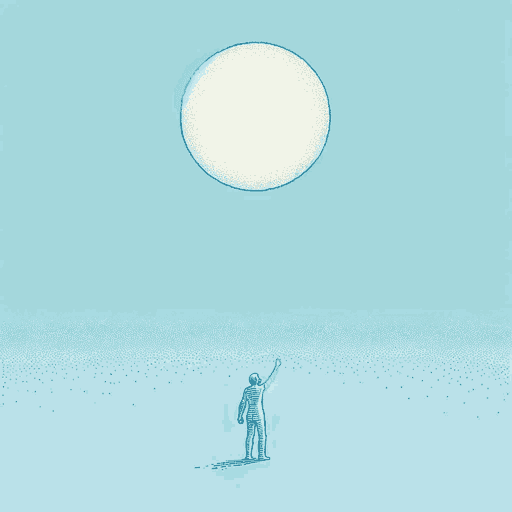
A Man Said to the Universe
A Man Said to the Universe
A modern alternative to SparkNotes and CliffsNotes, SuperSummary offers high-quality Study Guides with detailed chapter summaries and analysis of major themes, characters, and more.
Literary Devices
Form and Meter
Crane’s poem is an example of free verse, which means Crane does not use a meter or include rhymes. Without a formal meter, the lines can have as many or as few unstressed and stressed syllables as the poet wants, and it can sound discordant. The lack of meter manifests in the varying line length. Line 2 is only three words, while Line 4 extends to seven words. The absence of rhymes produces a flat sound. The poem does not have a musical quality but sounds more like prose broken up into lines.
Free verse links to the man's freedom. Since the universe does not feel responsible for the man, the man is free to experience the world and its sundry dangers. Here, freedom is not such a positive thing. The lack of rhyme connects to the unpleasant themes of the poem. The poem does not sound mellifluous when read out loud because Crane’s idea of the world is severe. The universe is a strident not a sweet-sounding place. Finally, the overall size of the poem reflects the universe’s attitude towards humans. The universe feels no “obligation” (Line 5), so it cuts the conversation short; the universe does not have to share its attention or time, just as Crane does not have to supply the reader with a longer poem.
Symbolism
Symbolism is a literary device that allows the poet to tackle complex issues by packaging them into people, things, or entities. In “A man said to the universe,” Crane addresses the perplexing idea of existence through two symbols “A man” (Line 1) and “the universe” (Line 1, 3). The man symbolizes humanity, as humans exist and generally try to make the most of their time on the planet. The universe symbolizes the harsh and unpredictable nature of existence. Additionally, the universe can symbolize the antagonistic and unforgiving traits of gods and religion or, conversely, the absence of gods and religion in modern life. If God and religion were present in the poem, the man could speak to them, and perhaps they would feel “[a] sense of obligation” (Line 5) toward humanity, as they do in Greek myth and Judeo-Christian texts. Since Crane puts the man in dialogue with the universe, Crane arguably advances the notion that the gods have left the world, since he uses the secular symbology of the universe. The universe can either represent any number of gods and faiths or no gods and religious faiths.
Allusion
Allusion is a literary device a poet uses to reference several things or ideas without explicitly naming them. Crane does not come right out and say that the world can be a brutal, uncaring place where people die and suffer every day. Rather, Crane provides a civilized dialogue between the man and universe. Yet the universe’s mannered diction—its thoughtful words—nods toward savagery. With allusion, Crane implies that humans are alone and isolated. The world does not care about them, so they will have to figure out how to deal with a fast-paced, violent environment on their own. Yes, humans “exist” (Line 2), but that does not mean that their life requires special care or attention. Humans are disposable and interchangeable; they are “a man” (Line 1) and not “the man.” Crane’s poem does not say any of this, but he strongly gestures to the vulgar situation through the dispassionate and strangely polite conversation between the man and the universe.

Get in-depth, chapter-by-chapter summaries and analysis from our literary experts.
- Grasp challenging concepts with clear, comprehensive explanations
- Revisit key plot points and ideas without rereading the book
- Share impressive insights in classes and book clubs