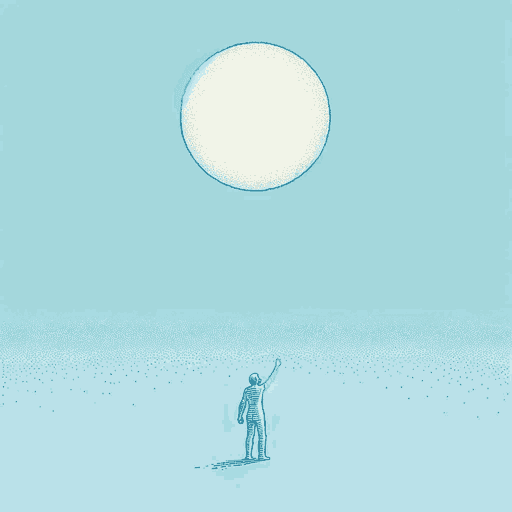
A Man Said to the Universe
A modern alternative to SparkNotes and CliffsNotes, SuperSummary offers high-quality Study Guides with detailed chapter summaries and analysis of major themes, characters, and more.
Symbols & Motifs
How a Man Symbolizes Humankind
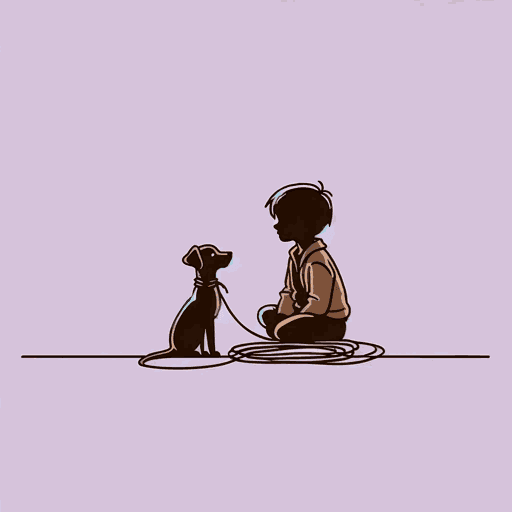
In the poem, the man, since he’s “a man” (Line 1), symbolizes humankind. As the man lacks a definite article, Crane is not talking about a specific person. The universe does not feel apathetic to one individual in particular but individuals in general, as the indefinite article means that the man could be one of many men or people. “A man” (Line 1) is representative of humans, their pride in existence, their excitement to be alive, and their role in a dangerous universe.
The phrase “a man” (Line 1) also symbolizes humankind because “man” in this context is not automatically gender-exclusive. In the 19th century when Crane wrote, the term was used to refer to humanity as a whole. In his blog “You’ll be a man, my son. Part 1” (OUPblog, 2015), the etymologist Anatoly Liberman argues the word man has origins in a “collective noun” that did not automatically denote gender. Previously, poets of different genders used “man” to mean humans. In Emily Dickinson’s poem “A Man may make a Remark” (ca 1864), the “man” symbolizes humans, just as a man can represent all humans in Crane’s lyric.
How the Universe Can Symbolize the Presence and Absence of God and Religion
As the man symbolizes humankind, “the universe” (Lines 1, 3) arguably represents God or a godlike figure. Like a god, the universe possesses an extraordinary amount of authority. The conversation between the person and the universe suggests that the universe could—if it felt like it—take an interest in the man’s life and help him prosper. Like a god, the universe can intervene in people’s lives and help them. The universe has an almighty aura, choosing to assist people or let them suffer. Such an attitude aligns with common representations of God and gods. In the Book of Job, God lets Job suffer. God also lets Adam, Eve, and all humans struggle by banishing them from the Garden of Eden. The universe is ready to let people face the world on their own. It does not feel as if it must protect or look after them. In contrast to the dominant Christian beliefs of Crane's world, for example, the poem puts forth a theology that is not based in compassion or charity, but is instead apathetic and cold.
Conversely, it is possible to read the universe as representing a world deprived of gods and religion. The universe does not symbolize God or religion but their absence. If God and religion were present, the man could speak to an actual god instead of the secular universe. Instead, a man is left to survive on his own in the face of an indifferent universe.
The Underlying Idea of Civility
Beneath the lack of concern, the poem maintains the idea of civility. Although the poem alludes to the savagery of the universe, the motif of courtesy remains. The man is respectful as he calls the universe “Sir” (Line 2). The universe, despite its avowed apathy, stays polite. Yes, the universe all but tells the man that it does not feel a duty to care about him. Yet the universe coveys this indifference thoughtfully. That is, the universe articulates its apathy with consideration. It conceals the severity with words like “[h]owever” (Line 3) and “[a] sense of obligation” (Line 5). The universe’s reply does not make it seem like a heartless entity but an intellectual. Its vocabulary suggests an educated, civilized respondent who is engaged in an interaction with another well-behaved person. Neither the man nor the universe exhibits the coarse attributes of the word, so, in a sense, Crane creates a juxtaposition—a literary device that compares two different things. In the poem, Crane places the civil words next to the cruelness of the universe, and the contrast helps show how frightening the world can be.

Unlock the meaning behind every key symbol & motif
See how recurring imagery, objects, and ideas shape the narrative.
- Explore how the author builds meaning through symbolism
- Understand what symbols & motifs represent in the text
- Connect recurring ideas to themes, characters, and events
Related Titles
By Stephen Crane