A Marriage Proposal
40 pages • 1-hour read
Anton ChekhovA Marriage Proposal
A modern alternative to SparkNotes and CliffsNotes, SuperSummary offers high-quality Study Guides with detailed chapter summaries and analysis of major themes, characters, and more.
Play AnalysisStory Analysis
Content Warning: This section of the guide includes discussion of mental illness and illness.
Analysis: “A Marriage Proposal”
Anton Chekhov’s A Marriage Proposal functions as farce while also considering complex social and psychological themes, revealing Chekhov’s ability to combine popular entertainment with artistic seriousness. Chekhov employs a carefully constructed set of symbols, characterizations, and thematic explorations to critique the social world of the Russian landed gentry while also commenting on human nature and relationship dynamics.
The play’s central irony lies in the intersection of property law and the economic motivations driving the marriage proposal. Struggling with new economic stresses in this period of Russian history, many landed gentry were seeking practical marriage alliances to consolidate estates in ways that would make them economically sustainable. While Russian law allowed married women to retain their own property rights, a marriage between Lomov and Nataliya would functionally result in the shared management of their lands, including the disputed Bullock Fields. The precise allocation of land ownership within the extended family would thus become a matter of minimal practical consequence, yet both Lomov and Nataliya are willing to destroy their engagement over this distinction, which reveals the absurdity of their stubbornness and pride.
The irony deepens as it emerges that the marriage itself is entirely motivated by a concern for stability—as Lomov puts it, for “an orderly, well-regulated life” (437). Economic stability is undoubtedly part of that hope, and from an economic standpoint, the marriage achieves exactly what both parties should want: the effective joining of their land holdings under family control. Yet they nearly sabotage this arrangement by arguing over the very property matters that supposedly justify the marriage in the first place. Lomov’s desire for an orderly life also includes his hope for household stability and a caring presence to help alleviate the suffering caused by his symptoms. The entire play revolves around this irony because, far from providing stability and a caring presence, Nataliya’s personality interacts with Lomov’s so chaotically that it nearly kills him. An orderly, well-regulated life is the exact opposite of what the play reveals their union will likely bring.
Chekhov employs two primary symbols and a significant motif throughout the play, each serving distinct dramatic and thematic purposes. The land—specifically the Bullock Fields—functions as a symbol of family honor, historical precedent, and social identity. The fields themselves are acknowledged to be worth relatively little, approximately 12 acres of modest value. However, the land represents the family’s historical claim to status and position. In a world where the gentry class is gradually losing its economic foundation, every acre becomes symbolically important as a marker of who one is and where one belongs in the social hierarchy. The obsessive concern with property boundaries reflects the gentry’s desperate attempt to maintain clear definitions of identity and status in a period of social flux.
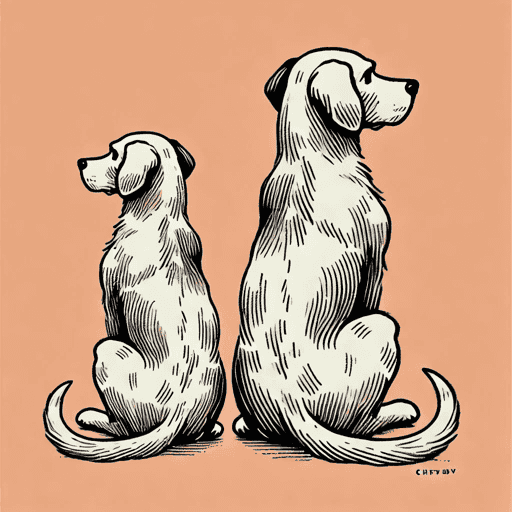
The hunting dogs serve a related but distinct symbolic function. Hunting was a traditional aristocratic pastime, a leisure activity that distinguished the gentry from peasants and merchants. The dogs represent not just property but participation in a particular way of life—the country gentleman’s existence of field sports and rural pursuits. The vehemence with which both Lomov and Nataliya defend their respective dogs’ superiority reveals how much of their self-conception remains tied to these traditional status markers. The argument over whether Dasher or Splasher is the better dog becomes a proxy for the deeper question of which family better embodies the proper values and characteristics of the gentry class. The dogs symbolize authentic aristocratic identity, and the dispute over their relative merits reflects anxiety about maintaining that identity in changing times.
Like many 19th-century texts, A Marriage Proposal treats “hypochondria” (a condition widely recognized at the time, though it no longer exists as a discrete diagnosis) as a source of comedy, but it also serves a thematic purpose. The motif functions as both a character trait and a window into broader class anxieties. Lomov’s catalog of ailments—palpitations, insomnia, trembling, muscular spasms, numbness—manifests physically the psychological stress afflicting the gentry class. His body rebels against the pressures he faces, unable to maintain the calm dignity that aristocratic self-presentation traditionally required. The escalating physical crises he experiences during each argument dramatize the unsustainability of his situation. He cannot successfully navigate even a simple social transaction without his body breaking down. This physical fragility speaks to the fragility of the gentry class itself, which lacks the resilience to adapt to new social and economic realities.
Chekhov’s characterization of the three figures demonstrates his attention to both psychology and social type. Lomov is defined by his nervous anxieties and his pragmatic approach to marriage. In the context of 19th-century European gender norms, he represents a kind of failed masculinity—unable to propose effectively, unable to control his emotions, and unable even to control his own body. He seeks marriage as a solution to his problems, a way to establish order and regularity, but the implication is that his personality traits make him incapable of achieving the harmonious domestic life he imagines.
Nataliya is characterized by her intelligence, her quickness to take offense, and her fierce pride. She is neither the romantic heroine nor the submissive daughter. She has opinions, she understands estate management, and she will not be condescended to or treated as inferior. Her character reveals both the progressive elements of Russian society—educated women with real knowledge of property and business—and the limitations of that progress, as her education and capability serve primarily to make her a more effective defender of traditional class prerogatives. She is competent and formidable, yet she deploys these qualities in service of petty disputes over status symbols.
Chubukov functions as both mediator and instigator. His character is defined by his garrulousness, his shifts between hospitality and hostility, and his ultimate pragmatism. He wants the marriage to occur, yet he cannot resist taking his daughter’s side in disputes even when doing so threatens the engagement. His verbal habits—the numerous tags he uses to add various “et ceteras” to his statements—suggest a certain intellectual laziness or inability to articulate ideas precisely. In this, he represents an older generation of gentry, less educated and less refined than the younger characters but more realistic about what matters. His final intervention to force the marriage through shows a willingness to override emotional obstacles in favor of practical necessity.
The theme of Marriage as Social Transaction pervades the play from Lomov’s opening soliloquy through the final scene. Chekhov presents marriage stripped of romantic illusion. Lomov evaluates Nataliya according to practical criteria: housekeeping ability, acceptable appearance, and basic education. Chubukov’s immediate enthusiasm for the match, before even consulting his daughter, reveals his own economic calculation. The play never suggests that any of the three characters considers emotional compatibility, shared interests, or genuine affection relevant to the marriage decision. Yet Chekhov’s treatment of this theme is not simply cynical. The play demonstrates that even purely transactional marriages require some level of civility and cooperation to function. Lomov and Nataliya cannot successfully complete their business arrangement because they cannot control their emotional responses long enough to finalize the deal. The play thus suggests that the reduction of marriage to an economic transaction or a social support structure may be self-defeating. If marriage is purely business, it should be conducted with business-like efficiency. However, the play’s action suggests that human beings are not capable of such pure rationality, and the attempt to treat marriage as a mere transaction collides with the emotional realities of human interaction.
Indeed, the theme of Pride and Ego Disrupting Relationships drives the plot at every stage. Neither Lomov nor Nataliya can tolerate being wrong or being seen as inferior; their egos require constant validation and defense. Lomov cannot simply concede the fields to maintain peace because doing so would mean accepting Nataliya’s claim over his own. Nataliya cannot acknowledge that Dasher might be a decent dog because doing so would mean granting Lomov a victory. Chekhov thus shows how pride operates independently of rational self-interest. Both characters presumably want the marriage to occur—it serves their practical purposes—yet both are willing to destroy it rather than suffer a blow to their pride. The comic element emerges from the disproportion between the trivial matters under dispute and the intensity of emotional investment they generate. However, the underlying insight is serious: Human beings will sabotage their own interests to protect their sense of self-importance.
The theme of The Shallowness of Class and Property Obsession manifests through the characters’ inability to discuss anything without reference to ownership, pedigree, or social position. Every topic becomes an occasion for asserting superiority. The fields matter not because of their economic value but because ownership establishes historical precedent and family honor. The dogs matter not for their actual hunting ability but because they represent proper aristocratic pursuits and bloodlines. Chekhov’s treatment of this theme reveals the emptiness of a life organized entirely around property and status. The characters have no interests beyond their estates and their position. They cannot engage in meaningful human connection because every interaction becomes a competition for dominance. The shallowness of their concerns reduces them to comic figures, yet Chekhov suggests that this shallowness is tragic as well. They are incapable of the very human fulfillment they claim to seek through marriage because they have no internal resources beyond property consciousness and social anxiety.
The final major theme is that of The Instability of Civility Under Emotional Strain. The play begins with elaborate courtesy—formal dress, polite greetings, and proper address. Within minutes, this veneer cracks as disagreement arises. The progression from civil discourse to shouting personal insults occurs with alarming speed. Chekhov demonstrates that civility is a thin overlay on deeper emotional forces, easily stripped away when pride or anxiety are engaged. The escalating pattern repeats twice, suggesting that this instability is characteristic rather than exceptional. The first argument over the fields devolves into family insults and Lomov’s collapse. After reconciliation, the second argument over the dogs follows an identical trajectory—initial disagreement, escalating assertions, personal attacks, and physical crisis. The pattern reveals that the characters are incapable of learning or controlling themselves. They will continue to repeat this cycle indefinitely.

Unlock all 40 pages of this Study Guide
Get in-depth, chapter-by-chapter summaries and analysis from our literary experts.
- Grasp challenging concepts with clear, comprehensive explanations
- Revisit key plot points and ideas without rereading the book
- Share impressive insights in classes and book clubs