A Marriage Proposal
40 pages • 1-hour read
Anton ChekhovA Marriage Proposal
A modern alternative to SparkNotes and CliffsNotes, SuperSummary offers high-quality Study Guides with detailed chapter summaries and analysis of major themes, characters, and more.
Summary and Study Guide
Summary: “A Marriage Proposal”
A Marriage Proposal (sometimes translated as The Proposal) is a one-act farce written by Anton Chekhov in 1888-1889 that premiered in 1890. Chekhov was a major literary figure in late 19th-century Russia, a winner of the Pushkin Prize, and is considered a founder of the modern theater. A Marriage Proposal depicts the near-failure of a landowner’s attempt to wed his neighbor’s daughter, the conversation continually reverting to arguments over trivial side-issues. In addition to exploring Marriage as Social Transaction, the play considers themes of Ego and Pride Disrupting Relationships, The Shallowness of Class and Property Obsession, and The Instability of Civility Under Emotional Strain. It is a popular representative of Chekhov’s lesser-known one-act comedies, which also include The Bear (1888) and The Wedding (1889). These works stand alongside Chekhov’s major contributions to world literature, exemplified by plays like The Seagull (1895) and The Cherry Orchard (1904) and short stories like “The Bet” (1889). This study guide uses the Laurence Senelick translation of the play from the 2006 Norton volume of Anton Chekhov’s complete plays.
Content Warning: The source material and guide include depictions of substance use, addiction, mental illness, illness, death, death by suicide, gender discrimination, and graphic violence.
Plot Summary
The play opens with Ivan Vasilyevich Lomov, a Russian landowner in his mid-thirties, arriving at the neighboring Chubukov residence dressed in formal evening attire. Stepan Stepanovich Chubukov greets him warmly but with evident confusion about the formality of the visit. Lomov is visibly nervous, struggling to explain his purpose and repeatedly asking for water. His opening remarks are filled with false starts and nervous circumlocutions regarding his health. When Lomov finally reveals that he has come to ask for the hand of Chubukov’s daughter, Nataliya Stepanovna, Chubukov’s response is immediate and overwhelming. He embraces Lomov, declaring, “I’m dazed with delight, quite dazed!” (436). Chubukov rushes off to fetch his daughter, leaving Lomov alone.
Left to himself, Lomov delivers a soliloquy concerning his reasons for proposing. He assesses Nataliya as an excellent housekeeper, not bad-looking, and educated—sufficient qualifications. His urgent need to marry stems from his age and health: At 35, he feels he must establish a quiet and regular life. He experiences severe palpitations and describes his insomnia in vivid detail.
Nataliya—as yet unaware of the purpose of Lomov’s visit—enters and greets him pleasantly, chatting about the weather and farm work. Lomov struggles to steer the conversation toward his proposal. He begins by noting that he has known her family since childhood and emphasizes the long friendship between the families. In attempting to illustrate this neighborly connection, he mentions that his Bullock Fields touch her birch grove. This casual reference triggers immediate contradiction. Nataliya interrupts to question his claim that the fields are his, asserting that they belong to the Chubukov family.
Lomov offers to show her the documents proving his ownership and explains the history: His aunt’s grandmother gave the fields to the peasants of Nataliya’s great-grandfather for their free use in perpetuity in exchange for brick-making services. The peasants used the fields for 40 years and came to regard them as their own, but the land actually remained Lomov’s family property. Nataliya rejects this interpretation, maintaining that both her grandfather and great-grandfather considered their land to include the Bullock Fields. The fields are worth relatively little—they only amount to about 12 acres—but Nataliya declares, “Say what you will, but I cannot put up with unfairness” (439). The argument escalates as both parties become increasingly emotional. Nataliya recounts how her family lent Lomov their threshing machine the previous year, forcing them to delay their own threshing. When Lomov offers to just give her the fields, she finds the idea particularly offensive. Both begin shouting, with Nataliya threatening to send her mowers to the fields that very day and Lomov responding that he will break their necks if they trespass. His heart begins palpitating violently, and he clutches at it while continuing to shout.
Chubukov enters, drawn by the shouting, and immediately sides with his daughter. He claims that the peasants did not pay Lomov’s grandmother precisely because the fields were in dispute and that everyone knows the fields belong to the Chubukovs. When Lomov insists that he will prove ownership, Chubukov threatens that he would sooner give the fields to the peasant-farmers than let Lomov have them. Lomov, outraged, accuses Chubukov of thinking him a fool and declares that Chubukov is a land grabber, not a good neighbor. The argument transforms into an exchange of personal insults and attacks on family honor. Lomov points out that Chubukov’s grandfather was arrested for embezzlement. Chubukov retaliates by calling all the Lomovs “crazy” and noting that Lomov’s grandfather had an addiction to alcohol and that his younger aunt ran away with an architect. These familial aspersions continue for several more rounds before Lomov, in the middle of a full-blown medical crisis, finally decides to leave. He declares that his left foot is paralyzed and that his eyes have gone blurry. He staggers toward the exit while Chubukov shouts after him never to set foot in their house again.
After Lomov’s departure, Chubukov and Nataliya continue to pace excitedly, calling Lomov names. Chubukov refers to Lomov as an “overstuffed dummy” and a hobgoblin who had “the unmitigated gall to propose marriage and so forth!” (443). Nataliya is stunned, uncertain what he is referring to. When Chubukov explains his initial interaction with Lomov, Nataliya falls into a chair and begins moaning, demanding that her father bring Lomov back. She becomes distraught, and Chubukov, realizing what has happened, blames himself before rushing out to retrieve Lomov.
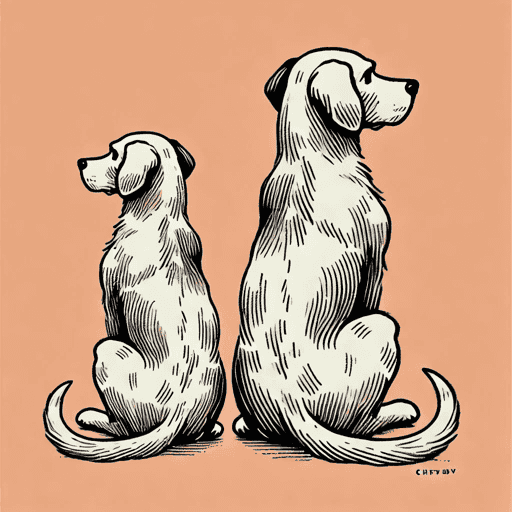
Lomov returns at their bidding, but he is still suffering from various symptoms. Nataliya immediately attempts to smooth things over, apologizing and conceding that the Bullock Fields really are his. Lomov acknowledges the concession but insists that he was acting on principle—the land is worth little to him. Nataliya agrees and suggests they talk about something else. Lomov, attempting to find a neutral topic, mentions that he is thinking of going hunting after the harvest and adds that his dog, Dasher, has gone lame. He notes that Dasher is his very best dog and that he paid 125 rubles for him.
Nataliya declares that Lomov was robbed, as her father only paid 85 rubles for his hound, Splasher, and Splasher is much better than Dasher. Lomov laughs at this suggestion, and the argument begins anew. Nataliya insists that Splasher is superior in points and pedigree. Lomov objects that Splasher has an underslung jaw, which makes him a bad hunter. The argument gains momentum as both parties become more invested, each raising points in favor of their own dog and casting aspersions on the other’s dog. Nataliya accuses Lomov of being deliberately obnoxious, insisting that she does not like people who refuse to face facts. They fall into a pattern of alternating accusations until Lomov complains that he cannot continue because he is having heart palpitations again.
Chubukov enters to find them arguing, and both appeal to him to settle the question of which dog is superior. Chubukov attempts a diplomatic response, acknowledging that Dasher has good points but admitting that the dog has two defects: He is old, and his bite is too short. This assessment fails to satisfy Lomov, who reminds them that at a previous hunt, his Dasher ran neck-and-neck with the Count’s dog while Splasher was far behind. The dispute escalates into personal attacks once more. Chubukov suggests that Lomov is not a real hunter at all. Lomov accuses Chubukov of not being a genuine hunter either, claiming that Chubukov only goes hunting to get in with a count and his wealthy friends. He calls Chubukov a sneaky social climber. Chubukov explodes, and they exchange insults until Chubukov threatens to shoot Lomov like a partridge. Lomov cries out that his heart has burst and that his shoulder has detached. He collapses unconscious into an armchair.
Chubukov and Nataliya panic, with the latter convinced that Lomov is dead. Chubukov calls for water and a doctor, attempting to get Lomov to drink. He laments that he deserves to die and asks for a knife or a pistol. However, Lomov then stirs, and Chubukov realizes he is coming around. Lomov, dazed and confused, asks where he is. Chubukov seizes this moment of confusion to resolve the situation quickly. He puts Lomov’s hand in Nataliya’s and announces that she is willing to marry him, gives them his blessing, and asks them to please just leave him in peace.
Lomov, still disoriented, slowly grasps what is happening. Nataliya confirms that she is willing. Lomov expresses happiness and kisses Nataliya, all while still listing his continuing symptoms. Even as the newly engaged couple kiss, Nataliya cannot resist insisting that Splasher really is better than Dasher. Lomov immediately contradicts her. They continue arguing as Chubukov comments ironically, “Now, domestic bliss is off to a running start!” (450). He calls for champagne as the play ends.

Unlock all 40 pages of this Study Guide
Get in-depth, chapter-by-chapter summaries and analysis from our literary experts.
- Grasp challenging concepts with clear, comprehensive explanations
- Revisit key plot points and ideas without rereading the book
- Share impressive insights in classes and book clubs