A Short Stay in Hell
33 pages • 1-hour read
Steven L. PeckA Short Stay in Hell
A modern alternative to SparkNotes and CliffsNotes, SuperSummary offers high-quality Study Guides with detailed chapter summaries and analysis of major themes, characters, and more.
Symbols & Motifs
Content Warning: This section of the guide includes discussion of death and graphic violence.
Books
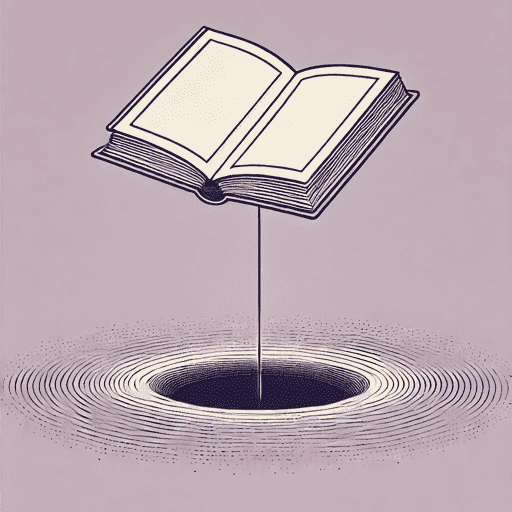
Books are the most abundant items in the library and the key to escaping it. However, most of the books are filled with randomly generated gibberish. They thus symbolize the central theme of Searching for Meaning in Randomness; traditionally vehicles of meaning, the books in A Short Stay in Hell are, for the most part, impediments to it.
This makes Soren’s millennia-long search for his book not only difficult but also boring. He describes his boredom vividly: “I pick up another book. Open it. See a page of random characters. Toss it over the edge. Pick up another. Repeat. Repeat. Repeat. Repeat…on and on the dots signify. On and on I go, light-year after light-year, eon after eon” (95-96). The books, therefore, are the instruments of torture utilized in this version of Hell. Because books are frequently understood to be objects of leisure and enjoyment, this cruel use of them is highly ironic. Indeed, Xandern’s decision to send Soren to the library is based purely on that irony, as he dryly remarks, “Now, what Hell for you? Let’s see, you liked to read…in fact it seems you loved books. Interesting” (11).
The ironic use of books to torment former book lovers is an example of a trope often utilized in depictions of Hell: a punishment that ironically mirrors the sin being punished. In the Inferno, for instance, those who committed violence against others during their lives are tortured by being submerged in a river of boiling blood. Dante scholars even have a word for this trope: contrapasso. Besides tying the novella to this literary tradition, Peck’s invocation of contrapasso underscores the senselessness of his particular iteration of Hell, as the punishment does not correspond to any sin on Soren’s part.
Floors
The floors of the library resemble the rings of Hell in Dante’s Inferno, and much like the Inferno follows Dante as he descends toward the heart of Hell, A Short Stay follows Soren as he descends in search of the library’s bottom floor. As such, the floors come to symbolize Soren’s progress toward finding the book that will set him free. At the same time that Soren gets closer to finding his book, however, he also becomes increasingly detached from his own humanity. By the time he reaches the bottom floor, he remarks, “My earth life was so long ago that by now trillions of universes like the one in which I lived on earth have come and gone […] After this long I am not bitter—I barely feel at all. Now I only search” (11-12). Since his descent through the floors has completely isolated him from other people and from his own feelings, the floors additionally come to symbolize the dehumanizing power of the library.
Kiosks
The kiosks that provide the residents of the library with food are a motif associated with memories of home and access to the world beyond Hell. One of the first things that Soren orders from them is a vanilla milkshake, “Like the kind at the Purple Aardvark on Second South in Mountain Grove, Utah” (21). This request ties Soren’s meal directly to the memory of a beloved place from his life, and the taste of the milkshake allows him to relive that memory more vividly. Other characters also order meals that remind them of their lives on Earth. Rachel, for example, always requests hummus and falafel, although the story behind her love of the dish is never explained.
The kiosks are also the only things other than other residents that those in the library can have a two-sided interaction with. The act of asking for something from the kiosk and receiving a delivery from it creates the illusion of accessing the outside world. In one conversation, Rachel alludes to the mystery of where the food comes from: “At least I can enjoy a steak. I’m pretty sure it has nothing to do with a cow. How could it?” (65). Soren and the other residents of the library can never be sure how the kiosks function, but interacting with them clearly brings a sense of hope and comfort.

Unlock the meaning behind every key symbol & motif
See how recurring imagery, objects, and ideas shape the narrative.
- Explore how the author builds meaning through symbolism
- Understand what symbols & motifs represent in the text
- Connect recurring ideas to themes, characters, and events