A Swiftly Tilting Planet
48 pages • 1-hour read
Madeleine L'EngleA Swiftly Tilting Planet
A modern alternative to SparkNotes and CliffsNotes, SuperSummary offers high-quality Study Guides with detailed chapter summaries and analysis of major themes, characters, and more.
Chapters 3-5Chapter Summaries & Analyses
Content Warning: This section of the guide includes depictions of violence, illness, and death.
Chapter 3 Summary: “The Sun With Its Brightness”
In her attic bedroom, Meg wonders what is happening as Ananda thumps her tail and wakes the kitten. She notices her clock’s hands have barely moved. Touching Ananda, Meg feels her hand glow with warmth and realizes the dog enhances her ability to kythe, a form of deep, telepathic communication. She closes her eyes and experiences a vision of total Nothingness, followed by a surge of joy as light and darkness dance together in harmony. The vision shows a star that swallowed darkness and became corrupted, breaking harmony with cacophony. Meg understands she is experiencing Charles Wallace’s vision.
The vision travels through space to a molten planet, where rain eventually cools the burning world and oceans and land emerge. Life emerges with giant plants and prehistoric creatures, followed by an ice age and eventual return to green. The vision ends, revealing Charles Wallace and Gaudior in a green glade.
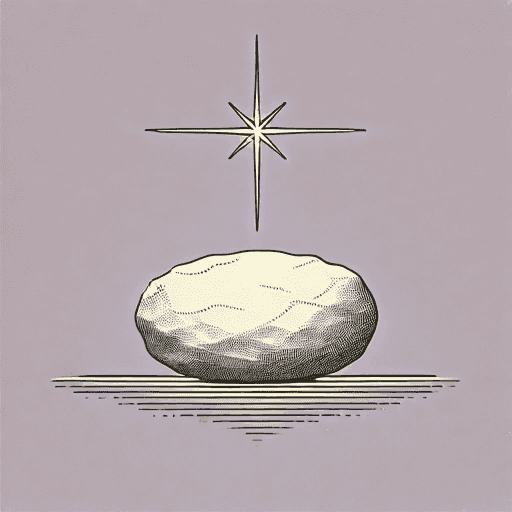
Gaudior explains they are in Charles Wallace’s physical location (his Where) but a different time (a different When), and that Charles Wallace must go Within people to find a key moment, a Might-Have-Been, that could change the future. Though frightened, Charles Wallace agrees to proceed for the sake of his pregnant sister, Meg, and the power of the rune Mrs. O’Keefe gave him. They travel to an earlier time, before humans learned to kill. A dark-haired boy named Harcels sits on the rock, and Meg realizes Charles Wallace is Within him.
Harcels lives joyfully among the peaceful People of the Wind. He calls a dolphin-like creature named Finna from the lake and plays with her. After helping heal a wounded hunter, Harcels discovers his gift for healing. He befriends Eyrn, a giant bird he can ride. When Harcels asks the Teller of Tales about other tribes, the elder warns him away, having witnessed murder. Charles Wallace-within-Harcels gently steers his host’s thoughts from visiting these tribes. Meg kythes approval from her attic as she continues to witness the events through Charles Wallace. Charles Wallace eventually returns to his own body on Gaudior’s back, thanking the unicorn. Gaudior warns that future Within-ings will require deeper surrender and that the Echthroi, destroyers of harmony, pose dangers ahead. From her attic, Meg remains an unseen witness and anchor as her clock barely moves.
Chapter 4 Summary: “The Snow With Its Whiteness”
As Gaudior and Charles Wallace soar through space, an icy Echthroid wind attacks them with a death stench. They are blown down onto a desolate plain of what appears to be solidified lava under a flickering pink sky. Gaudior explains they have been blown into a Projection, a possible destructive future the Echthroi want to make real. They must do nothing, as any action could solidify this nightmare. A monstrous, one-eyed creature approaches. Terrified, Charles Wallace recites the rune, calling on the sun’s brightness and snow’s whiteness. Pure white snow begins falling, covering the wasteland as the creature stops and stares upward at the falling flakes. A cool wind rises, and Gaudior launches them back into space, escaping the Projection.
They ride the wind safely again, singing together with the music of the spheres. In her attic, Meg wraps herself and Ananda in an eiderdown against the cold and closes her eyes to kythe. Gaudior lands in a new When. The valley is now a larger lake, the rock flatter, the forest familiar. A golden-haired, blue-eyed young man stands on the rock at dawn, and Meg knows Charles Wallace is Within him. As Meg drifts to sleep, Charles Wallace realizes the young man is Madoc, a character from a novel he struggles to remember clearly.
Gaudior commands him to stop trying to remember and fully surrender to Madoc; he must not bring his own knowledge into this life. The young prince, dressed in flowers and ferns, sings a greeting to the sunrise. An old man named Reschal emerges from the forest and joins the song. Madoc helps him onto the rock, calling him his to-be-father. Today is Madoc’s wedding day; he will marry Zyll and become Madoc, son of Reschal. Reschal questions Madoc’s commitment, and Madoc recounts leaving Gwynedd in Wales to escape his brothers’ war over their father’s throne. His brother Gwydyr supposedly died from a snakebite. The wedding ceremony begins with singing. Children and tribe members arrive, followed by Zyll, who performs the ritual Wedding Dance. Madoc joins her, and they sing and dance together. The Wind People gradually accepted Madoc after he refused to be worshipped as a god. As Reschal prepares to join the couple’s hands, the sound of distant war drums grows loud and threatening. Three dugout canoes arrive, and Madoc recognizes his supposedly dead brother Gwydyr standing in the lead canoe.
Chapter 5 Summary: “The Fire With All the Strength It Hath”
Meg kythes the events from her attic as Charles Wallace-within-Madoc experiences them. Gwydyr leaps ashore, cold and hostile, wearing a golden crown. He claims kingship over the lake lands and demands Zyll for himself. When Zyll says she and Madoc are already joined, Gwydyr’s warriors brandish spears. Madoc challenges Gwydyr to single combat after declaring that there will be no bloodshed because of the sons of Owain. Reschal reveals the Wind People are also armed, having heard war drums since the previous evening. Both sides lower their weapons at Madoc’s insistence.
Gwydyr chooses fire as their weapon. When Gwydyr shoves Reschal to the ground, Madoc helps the old man and becomes transfixed by a vision in a puddle of water. Time freezes as the scrying pool shows a baby whose mother calls him “Madog,” who later becomes a destructive man associated with fire and mushroom-shaped clouds over the Earth. Madoc stamps out the vision. Water seeps back, showing a second vision a blue-eyed baby called El Zarco, whom his mother describes as a token for peace. Madoc gathers flower garlands, and the entire tribe adds their crowns to build a pyre over the puddle. Reciting the rune’s invocation, ending with fire’s strength, Madoc calls on the sun, which ignites the roses. He throws Gwydyr’s heated spear into the lake and wrestles his brother until sunset. Madoc forces Gwydyr underwater until he struggles for mercy, then banishes him and throws his crown into the lake. Madoc and Zyll reunite in song. Reschal says their dreams may be stronger than Gwydyr’s nightmare, but Madoc shudders at the memory of destruction.
Charles Wallace returns to his own body beside Gaudior as the scene changes. Gaudior confirms the fire and scrying were real for Madoc, suggesting that the destructive vision is connected to the Projections of the Echthroi. The scene transforms to the present-day, snow-covered rock. Gaudior reveals that Gwydyr traveled to South America; Charles Wallace connects this to Patagonia and Vespugia from a book he struggles to remember. He realizes the Echthroi are blocking his memory of the book and resolves to find the connection between Madoc, Gwydyr, and Mad Dog Branzillo.
Meg awakens, understanding through their kythic link that Charles Wallace needs her to find a connection between Branzillo and Wales. She goes to her brothers’ room. Sandy researches Vespugia, confirming it was part of Patagonia and that a Welsh group settled there in 1865. He lists numerous 1865 events, including the publication of Matthew Maddox’s first novel, Once More United. Dennys recalls reading Maddox’s second and final book, The Horn of Joy, about a Welsh prince shipwrecked in the New World. Meg returns to her attic, having found the author and book for Charles Wallace and the 1865 Wales-Vespugia connection. She notes only 15 minutes have passed on her clock and wonders how any of this connects to Mrs. O’Keefe.
Chapters 3-5 Analysis
These chapters establish a dual perspective that separates the protagonist’s physical and metaphysical journeys, anchoring the fantastical elements in a stable present. Meg’s experience in the attic, where time is nearly arrested, functions as a control center and anchor for Charles Wallace’s travels through time. Her kything becomes active participation; her sensory world merges with his, allowing her to feel the “radiant warmth of the day” in Harcels’s When despite the cold of her room (63). This collapse of the distance between observer and participant makes Meg a component of the quest even while she remains stationary, yet her stillness is also essential; it provides the point of stability from which Charles Wallace can venture into the past to locate and alter a pivotal moment. This manipulation of time—swiftly passing seasons for Charles Wallace while Meg’s clock barely moves—develops The Interconnectedness of Past, Present, and Future by underscoring that time is not simply linear.
The theme of Dealing with Existential Threat is established through contrasting visions and experiences. The section opens with a vision of cosmic genesis where “light and darkness [dance] together […] in joyful rhythm” (52) before corruption by an Echthroi introduces a “hideous, horrendous cacophony.” This abstract battle is mirrored in the locations Charles Wallace visits. His time Within Harcels represents a world in an Edenic state of harmony. This existence is juxtaposed with the Echthroid Projection, a potential future of desolation and mutation that represents a possible outcome of destruction within the novel’s cosmic struggle. Charles Wallace’s recitation of the rune, which conjures a purifying snow, becomes an act of restoring harmony that counters the Echthroid threat, demonstrating that the cosmic battle is fought through individual acts of will.
Charles Wallace’s character develops as he grapples with the metaphysical demands of his quest. The process of “going Within” is an exercise in empathy and the dissolution of ego, forcing him to move beyond intellectual confidence toward vulnerability. Gaudior’s instruction that “[he] must lose [himself] as [he does] when [he kythes] with [his] sister” and “become [his] host” outlines a discipline requiring complete surrender (64). His journey Within the innocent Harcels serves as an initiation, while his experience as Madoc demands a deeper fusion of identity to navigate complex conflict. This process reinforces the interconnectedness of past, present, and future, as Charles Wallace must enter the lives of earlier figures in order to influence events whose consequences extend into the present. His struggle to recall the details of Matthew Maddox’s novel—a memory actively blocked by the Echthroi—reveals his limitations and shows that his mission requires more than individual knowledge and depends on shared understanding between him and Meg.
The recurring use of music and harmony highlights the forces of creation, while dissonance signifies the destructive influence of the Echthroi. The universe is described as born from ancient harmonies, and the stars produce a cosmic singing. This celestial order is reflected in the lives of the People of the Wind, who sing to heal and celebrate. Madoc is also a singer, his songs articulating his connection to the world. In contrast, Gwydyr’s presence is announced by the threatening beat of war drums, a sound of discord that disrupts the wedding ceremony. This sonic contrast frames the conflict within the novel’s larger struggle with Dealing with Existential Threat, where harmony represents the sustaining order of creation and violence threatens to fracture that balance. The harmony of creation is participatory, while the dissonance of Uncreation is an invasive force.
Literary and mythic elements are woven together to explore the nature of reality and narrative. The scrying scene in the puddle functions as a symbolic crossroads, presenting visions of two possible futures: the destructive baby Madog and the peaceful baby El Zarco. This makes the theme of choice tangible, positioning Madoc’s actions as the fulcrum on which the future pivots and reinforcing the interconnectedness of past, present, and future. His choice to confront Gwydyr with a fire born of flowers rather than a weapon of war demonstrates a rejection of the Echthroid path. Furthermore, the introduction of Matthew Maddox’s novel, The Horn of Joy, creates a layer of intertextuality that blurs the lines between legend, fiction, and the reality of Charles Wallace’s experience. This suggests that stories and myths are active forces that shape how past events continue to influence the present and future.

Unlock all 48 pages of this Study Guide
Get in-depth, chapter-by-chapter summaries and analysis from our literary experts.
- Grasp challenging concepts with clear, comprehensive explanations
- Revisit key plot points and ideas without rereading the book
- Share impressive insights in classes and book clubs