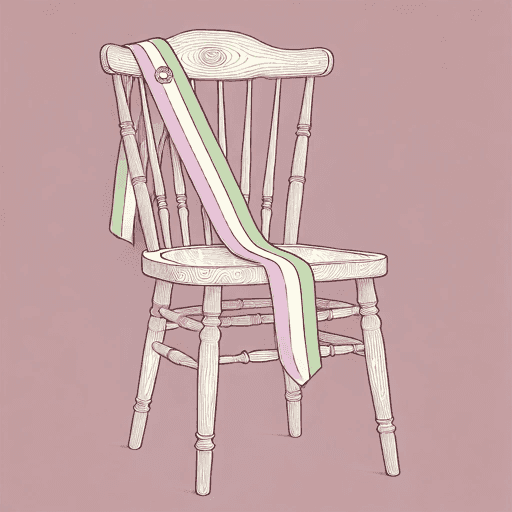
A Well-Behaved Woman: A Novel of the Vanderbilts
54 pages • 1-hour read
Therese Anne FowlerA Well-Behaved Woman: A Novel of the Vanderbilts
A modern alternative to SparkNotes and CliffsNotes, SuperSummary offers high-quality Study Guides with detailed chapter summaries and analysis of major themes, characters, and more.
Symbols & Motifs
Content Warning: This section of the guide includes discussion of sexual content.
Classic Literature
Throughout A Well-Behaved Woman, classic literature is a motif, as Alva uses it as a way understand her life and her experiences. She references works like Charlotte Brontë’s Jane Eyre, Jane Austen’s Pride and Prejudice, and Henry James’s The Portrait of a Lady. Despite her overall sensible nature, Alva occasionally imagines herself as the hero of one of these works, relating her life to theirs. When reflecting on her lack of affection for her then-fiancé William Vanderbilt, she thinks to herself that “only when passionate Mr. Rochester had been tamed by grave injury was he worthy of sensible Jane Eyre’s affection and commitment” (41). As a sheltered young woman, Alva relies on these fictional, romantic portrayals of love and relationships for her understanding of the world.
In middle age, Alva reads The Portrait of a Lady by Henry James and uses its tale of “an anti-marriage plot” as a way of understanding her own life (375). She finds herself frustrated with the hero, Miss Archer, and her “inability to see what was going on around her” (375). The narrative highlights the irony of this view when Alva realizes that she was unable to recognize that her husband was having an affair with her best friend. Later, she blames “Henry James for exciting her imagination” by inspiring her with the desire to see his “titular lady” make better choices (378), inspiring the changes she instigates in her own life. There is a metafictional aspect to these literary references as well, which Fowler recognizes in the Author’s Note: “The fiction of Edith Wharton and Henry James also helped to inform the story; they were there, after all” (547).
Food
Food is used as a motif to represent Alva’s relationship to Using One’s Privilege to Support Progressive Politics. At the beginning of the novel, Alva is starving. Her family is forced to cut back on food expenses, and “they were subsisting mainly on potatoes, cheese, eggs, and bread” (56). She is so hungry that she begins to lose weight. When she considers marriage to William, she thinks that it would mean “she could have not only butter but raspberry jam, too” (25). Alva learns from this experience to never take the fine meals for granted, and her hunger provides her with a concrete reason to become engaged to William despite their lack of feeling. This connection continues well into her marriage; when considering divorce, she reflects, “Roasted duck, with stuffed figs and sliced carrots and a lovely frisée surround. If she failed with William, she would dearly miss eating so well” (426-27). For her, access to food is an essential part of her sense of security.
When Alva becomes one of the wealthiest women in the world, she never forgets this time of deprivation. She uses it to guide her charity work, recognizing that had she not married into a wealthy family, she would’ve been in the position of those she wants to help, reflecting her understanding of the importance of using one’s privilege to support progressive politics. She resolves to “look into ways to improve the everyday lives of those who had no prospects of ever being rescued from their poverty by millionaire husbands” (154). Alva never accepts the conventional wisdom of her class that the poor deserve to be poor. Rather, she feels they are the victims of circumstance, much as she once was.
Dreams
Dreams are used as a motif in A Well-Behaved Woman to represent The Hollowness of Marriage as an Economic Contract. Alva strives to be sensible and to keep her emotions at bay, putting the practical necessities of her life ahead of love. She agrees to marry William as part of an economic contract: She requires money, and he is willing to provide it in exchange for the high society access that Alva’s name will provide him. However, try as she might, her true desires for love and sexual satisfaction filter through in her dreams throughout the narrative, offering insight into an alternate life and the truth of her emotional state.
Shortly after meeting Oliver Belmont, Alva dreams about him in graphic detail. She dreams that “he puts his arm around her waist and turns her to face him, pulls up her skirt and pushes his hand between her thighs” (250). She is disappointed when Mary wakes her up from this dream, reflecting that “her mind betrayed her in her sleep” (251). These dreams prove to be recurring. She later confesses to Lady C. in a letter that she “dream[s] of him sometimes, and in [her] dreams [they] have a passion that [she] never experienced in [her] waking life” (334). Eventually, Alva resolves this problem by making her dream a reality: she leaves William and marries Oliver. This reflects the novel’s overall view that it is better to marry for love and romance than for wealth, as Alva finally listens to her inner voice, speaking to her through her dreams.

Unlock the meaning behind every key symbol & motif
See how recurring imagery, objects, and ideas shape the narrative.
- Explore how the author builds meaning through symbolism
- Understand what symbols & motifs represent in the text
- Connect recurring ideas to themes, characters, and events