A Witch's Guide to Magical Innkeeping
48 pages • 1-hour read
Sangu MandannaA Witch's Guide to Magical Innkeeping
A modern alternative to SparkNotes and CliffsNotes, SuperSummary offers high-quality Study Guides with detailed chapter summaries and analysis of major themes, characters, and more.
Chapters 7-12Chapter Summaries & Analyses
Content Warning: This section of the guide includes discussion of ableism.
Chapter 7 Summary
Magic wants to be loved, and it repays and rewards the love that a witch gives it. This is what happened when Sera cast her spell on the inn years ago, making it a haven for those who need love and a warning to those who abuse vulnerable people. Albert Grey cannot understand the spell, especially because he treats his magic the way he treats everyone else: lovelessly.
When Luke and Posy arrive at the address that Verity gave him, it doesn’t take long for Luke to realize that she lied, but he is not sure why. He starts the return drive, but his GPS suddenly shuts off, and he feels drawn in a particular direction. When he sees the skeletal chicken standing in the road and realizes where he is, he immediately recognizes Sera.
Chapter 8 Summary
Luke is surprised to learn that Sera really did reanimate a dead chicken. Sera remembers Luke from school and is struck by how handsome he is. She wonders why he is here, and it occurs to her that the spell must have brought him. When Luke claims not to need anything, Sera suggests that Posy might. Luke explains that Posy doesn’t understand that she ought to hide her magic, and Sera realizes that he must constantly justify Posy’s existence and behavior to others; this makes her angry on behalf of them both. She explains that the spell invited them to the inn, so they get to stay. When Posy asks for chocolate cake, Luke explains that she has autism, and Sera tells him that he needn’t explain. She leads them to a bedroom and promises to return with the cake.
Chapter 9 Summary
A woman from the Medieval Fair calls to ask Sera to pick Nicholas up because he sustained a head injury while jousting and isn’t allowed to drive. When Sera and Nicholas return to the inn, Luke asks to stay for a few more days, even though he insisted earlier that he and Posy would stay for one night only. Luke and Posy’s mother doesn’t think it would be a good idea to bring Posy home. Although their home would be the safest place for her, both she and their parents would hate the arrangement. Luke notices the swan pendant that Sera wears, and she explains that when she lost her magic, Albert called her a “swan who had clipped her own wings” (102). She tells Luke that he and Posy can stay as long as they want.
Chapter 10 Summary
Luke asks Sera about the vegetables in the garden, and she admits that she spells them regularly to keep them alive. He thought that she had been left with no magic at all, and he cannot understand why her magic refuses to replenish itself. Sera believes that it is because she created “exit wounds” in her night sky when she pushed too hard.
When Luke tells Clemmie that he is a historian who works for Verity Walter, Sera realizes that Verity must have been the one to help Theo and Clemmie enter the archives. Clemmie suggests that the spell brought someone that Sera needs, so Sera asks if Luke can translate the restoration spell. He can, and he does, but the three ingredients that the spell calls for—“a strand of sunset,” “a phoenix feather,” and “a thorny heart” (113)—seem utterly impossible to retrieve.
Chapter 11 Summary
After Luke texts Verity to let her know that he has translated the restoration spell for Sera, she finally takes his call. She explains that she couldn’t tell him the truth about why she was sending him to the country because the spell doesn’t work on those who expect it. Albert made her sign a contract promising that she would never tell anyone the contents of the book that Theo stole, so Verity used Luke to circumvent this clause. She says that she’s obeying the laws of physics and that Sera’s magic is “an equal and opposite” to Albert’s (116), as his power must have an equal to check it.
Luke has told Sera that he doesn’t want to be involved in her spell and that he and Posy will leave soon. However, he ends up explaining to Sera that the spell isn’t likely to be literal. They discuss the different kinds of spells: Inanimates, which work on nonliving things; Animates like the resurrection spell, which work on living things; Bindings, which are extreme Animates, like the one Clemmie tried; and Adaptables, which, like the restoration spell, are the least understood and most uncommon. Luke explains that “rigid, literal thinking” won’t work with an Adaptable spell (122), so when it calls for a phoenix feather, for example, the spell does not actually require a feather from a bird that does not exist. Sera will have to think creatively in order to fulfill the requirements of the spell.
Chapter 12 Summary
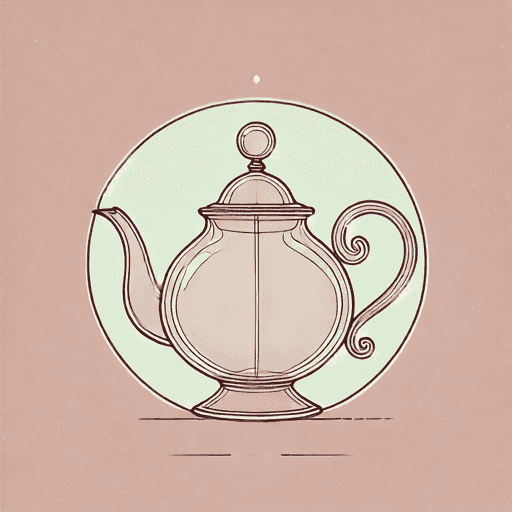
Sera finds, washes, and enchants the glass teapot that she needs for the spell. In an attempt to create a metaphorical “phoenix” feather, she finds a feather in the yard, lights it on fire, and drops it into the teapot, but the vessel spits it back out.
That night, Jasmine makes Nicholas’s favorite foods, and Posy demands that Luke play “Dragon” with her. He resists, but she insists, so he chases her around the inn, to her delight. Soon, Theo takes over, which thrills the girl. When Luke apologizes for her behavior, Matilda and Jasmine assure him that there is no need.
Chapters 7-12 Analysis
Mandanna continues to use figurative language to illustrate characters’ identities and relationships within this magic-based world. For example, Luke describes Albert as the “Great and Powerful Wizard” of Oz (83), and with this allusion, he makes it clear that he greatly dislikes Albert and finds his public persona to be unnecessarily dramatic and fearsome. In The Wonderful Wizard of Oz, the wizard himself has political power that stems from his deceptive performance of what the people perceive to be magic. Because the people fear him, he exploits their fear for his own ends. Likewise, Albert’s own daughter suggests that many witches fear him but will never like him. Although Albert certainly does have real power, he uses it to bend others to his will rather than to benefit his community. In this, he clearly stands as Sera’s foil, as she dedicates her efforts to creating a safe, welcoming space in the inn.
Within the world of the novel, magic is frequently personified, and it displays an almost sentient ability to discover what lies within a witch’s heart and respond accordingly. As the narrative states, “What it wanted was to be loved” (77), and it also repays a witch’s demonstration of love. In this light, magic is portrayed as having the ability to want, seek, and reward those who act out of love, and this dynamic explains the long-term potency of the spell on the inn despite the loss of Sera’s magical talents.
This idea also suggests that Albert’s relationship with his magical talents goes against the very essence of true magic, for rather than acting out of love, he “rule[s]with a boot on the neck of anything and anyone he [is] ruling, including his own formidable magic” (78). Thus, because his magic acknowledges “that it [is] not and [has] never been loved by the man who wield[s] it, [it] simply decide[s] not to play along” (78). Ironically, this description suggests that Albert could achieve the power he seeks if he were to show kindness rather than cruelty, but as it stands, his inability to comprehend love limits his abilities and prevents him from grasping the essence of Sera’s spell on the inn.
The issue of ableism takes center stage with the arrival of Luke and Posy, as it is clear that he and his sister have struggled to find a place where they feel accepted as their authentic selves. Their battle against the world’s ableism is particularly intense given that even their own parents would rather not have to navigate the two siblings’ magic or Posy’s autistic traits. Because Luke has long felt the need to adapt himself to fit into the magical world, he recognizes and sympathizes with Posy’s inability to follow the rules of mainstream, neurotypical society. For this reason, he has developed a very practiced defense of his sister. When Sera invites them to stay in the inn, she notes that Luke “sound[s] tired, like it [i]sn’t the first, second, or even hundredth time he’[s] had to explain his sister. Justify her” (88). Realizing how hard Luke and Posy have had to work to gain even a modicum of acceptance, Sera feels “suddenly, utterly furious for both of them” (88), and her vehement reaction reveals her true kindness and inspires her to offer them The Healing Power of Love via an indefinite stay at the inn.
In this safe space, Luke doesn’t need to adjust himself to fit others’ expectations, nor is he required to rationalize Posy’s behavior. Instead, Sera ensures that both guests are welcomed just as they are. As she tells Luke after Posy asks for chocolate cake, “You really don’t have to explain […] And yes, there’s always cake” (90). The other lodgers affirm Sera’s statement; Matilda says to Luke, “If you’re worried about her manners, don’t be […] No one here has any. It’s grand” (127). These encounters reinforce the reality that no one at the inn judges others based on their ability, ethnicity, country of origin, or the color of their skin; it is truly a place of acceptance and love.

Unlock all 48 pages of this Study Guide
Get in-depth, chapter-by-chapter summaries and analysis from our literary experts.
- Grasp challenging concepts with clear, comprehensive explanations
- Revisit key plot points and ideas without rereading the book
- Share impressive insights in classes and book clubs