Abandoned Farmhouse
Abandoned Farmhouse
A modern alternative to SparkNotes and CliffsNotes, SuperSummary offers high-quality Study Guides with detailed chapter summaries and analysis of major themes, characters, and more. For select classroom titles, we also provide Teaching Guides with discussion and quiz questions to prompt student engagement.
Symbols & Motifs
Earth
Earth appears in several forms in “Abandoned Farmhouse.” First, it is the earth of the farm. The fields “cluttered with boulders” (Line 8) and “Stones in the fields” (Line 18) tell us the man “was not a farmer” (Line 19). In his hands, the earth remains a hard, rocky place yielding only a “weed-choked yard” (Line 18). There’s no harmony between man and farm, here. Instead, earth becomes more closely identified as a symbol of infertility, futility, and separation.
The other examples of earth in the poem further the connection between earth and futility. The upstairs floor is “dusty with sun” (Line 6). Those fine, dry particles revealed in the light are signs of neglect. There is no one there to clean or care. The last connection is a “sandbox made from a tractor tire” (Line 12). The pulverized rock is there to enrich a childhood—the sandbox is a sweet, homelike detail that highlights the child’s absence. Taken together, farm, field, stone, dust, and sand all build a combined symbol of loss.
Preserves
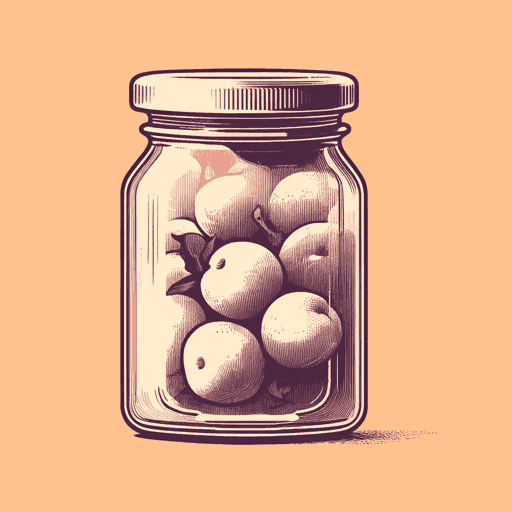
The jars of plum preserves and the canned tomatoes (Lines 13-14) help introduce the woman and the house’s deprivations. Those jars say, “Money was scarce” (Line 13). The family had to use whatever they could to survive. The stores indicate some ingenuity, and as the name suggests, a need to preserve. They symbolize, in part, our attempts to prepare for the uncertainties of the future. They are also, in a concrete sense, sustenance. So, it is particularly telling that perfectly good food in “still-sealed jars” (Line 19) has been abandoned along with things like the “pile of broken dishes by the house” (Line 2). The jars “say she left in a nervous haste” (Line 20).
The poem presents many details as practical objects. The jars are filled with plum preserves. They are also symbols of hard work, planning, and struggles of life on the farm. In works like Susan Glaspell’s play Trifles (1916), preserves are symbols closely associated with women because they are traditionally tied to female labor. The preserves in “Abandoned Farmhouse” are not an allusion to the play, though they exist in a shared rural and cultural context.
Toys
The toys in the poem are another symbol of loss. By their nature, toys are tied to childhood and imaginative play—they can embody dreams. Children are often given toys that mirror pieces of their lives. They reenact dramas and try on grown-up roles. Kitchen toys, little vehicles, toolboxes, doctor’s bags, and baby dolls are designed for that kind of play. The cow, tractor, and “doll in overalls” (Line 24) would allow a child to play farmer. Given the description of the man as “not a man for farming” (Line 7), he may have been playing at it, too.
The toys are battered, “rusty” and “broken” (Line 23). The farmer doll’s tools are inadequate and symbolize failure.
In “Abandoned Farmhouse” toys represent the ending of dreams and the death of at least one possibility. The farm toys were left scattered around the yard “like branches after a storm” (Line 22). Whether the reader chooses to interpret this image as violent tragedy or as an indicator of a particularly panicked flight—one part is clear: Farm life is over. The dream is done.

Unlock the meaning behind every key symbol & motif
See how recurring imagery, objects, and ideas shape the narrative.
- Explore how the author builds meaning through symbolism
- Understand what symbols & motifs represent in the text
- Connect recurring ideas to themes, characters, and events