Abuelito Who
Abuelito Who
A modern alternative to SparkNotes and CliffsNotes, SuperSummary offers high-quality Study Guides with detailed chapter summaries and analysis of major themes, characters, and more.
Symbols & Motifs
Rain & Coins
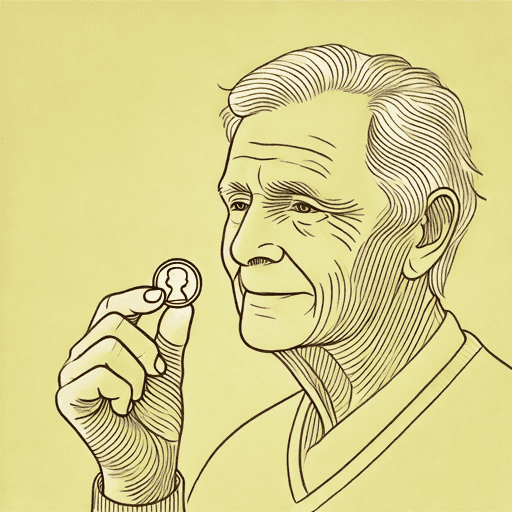
Rain and coins appear—symbolically and literally—at the poem’s beginning and the end, first in Lines 1-2, “Abuelito who throws coins like rain / and asks who loves him,” and again in Line 21, “is the rain on the roof that falls like coins.” Just as the memory of her grandfather asking who loves him frames the poem, so does this image of rain and coins. At the beginning of the poem, the speaker makes the simile about her grandfather showering coins, raining them from above, implying that he was willing to spend his money on the people whom he loved. Much as rain is a blessing, the coins her grandfather showered down were blessings too. Therefore, when the speaker hears the rain by the poem’s end, it reminds her of her grandfather’s generosity and kindness. The rain is a bittersweet reminder of the joyous and loving way her grandfather lived his life, and she can imagine his voice in the sound of it falling on the roof, “asking who loves him / who loves him who?” (Lines 22-23).
Dough & Feathers
The young speaker describes her grandfather with vivid, associative imagery. One of her first metaphors is her assertion that her Abuelito is “dough and feathers” (Line 3). Dough is soft and sweet and rises with heat, turning into bread, cookies, or other delicious treats. Feathers are also soft, but they are lightweight and associated with freedom, flying, and birds. Feathers can also be used to stuff pillows or toys, suggesting the idea that her grandfather is a stuffed teddy bear. This reinforces that the speaker has trouble understanding change, growing old, and sickness, and is still too young to understand death and its permanence. This specific association to dough and feathers objectifies her grandfather in a very innocent and childlike way. It allows him to exist for her as ageless and timeless—a fantasy that is transmuted by the end of the poem, as Abuelito is gone but remains present and alive in the speaker’s memory.
Blankets & Spoons
Just after the speaker announces that she can sense her grandfather under the bed or talking to her in her head, she again describes her Abuelito in the continuous present tense as “blankets and spoons and big brown shoes” (Line 19). Because the reader knows that he “doesn’t live here anymore” (Line 16), the items’ connotations are very different than for the poem’s other metaphors. The items now represent suffering and absence. The blankets are associated with the state of being bedridden—which was obliquely alluded to earlier with the metaphor “watch and glass of water” (Line 4), items commonly seen on a bedside table, and which may also call to mind a scheduled pill regimen. The blankets are further associated with chills or fevers, coldness due to frailty, malnutrition, hunger. The spoons are also associated with medicines and liquefied food for easy ingestion. The big brown shoes not only imply that he once walked around in these shoes that now sit empty, but also perhaps his immobility at the end of his life, as the speaker describes earlier, “can’t come out to play” (Line 10).

Unlock the meaning behind every key symbol & motif
See how recurring imagery, objects, and ideas shape the narrative.
- Explore how the author builds meaning through symbolism
- Understand what symbols & motifs represent in the text
- Connect recurring ideas to themes, characters, and events