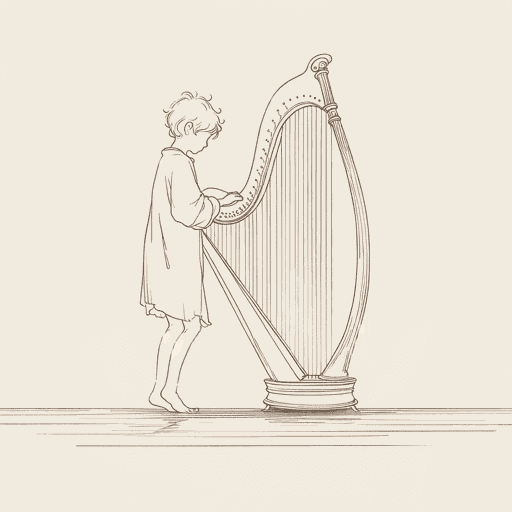
Adam of the Road
Adam of the Road
A modern alternative to SparkNotes and CliffsNotes, SuperSummary offers high-quality Study Guides with detailed chapter summaries and analysis of major themes, characters, and more.
Summaries & Analyses
Quizzes
NEWReading Tools
Games
Symbols & Motifs
The Road
The road is the most important recurring symbol in the book. It represents home and is connected to the themes of Losing Childlike Innocence and Coming of Age and Searching for a Sense of Home, Belonging, and Fulfillment. At the beginning of the book, Roger speaks the book’s most frequently quoted lines:
“A road’s a kind of holy thing,” Roger went on. “That’s why it’s a good work to keep a road in repair, like giving alms to the poor or tending the sick. It’s open to the sun and wind and rain. It brings all kinds of people and all parts of England together. And it’s home to a minstrel, even though he may happen to be sleeping in a castle” (52).
Roger, a well-traveled minstrel, has a deep understanding of a minstrel’s place of belonging on the road. At the beginning of the book, Adam doesn’t understand this and is daunted by the length and breadth of the road ahead of him (52). When he is separated from his father, Adam remembers that his father said the road is home to a minstrel, but he asks himself, “Which road?” (164). This demonstrates that he doesn’t understand Roger’s definition of home. However, as the story progresses, Adam begins to establish his own definition of home and creates his own relationship with the road.
Adam spends most of the book on the road, and though he is often discontented and frustrated with his situation, he is even less happy when he has to stay in one place for a long period. This is true at the beginning of the novel when he is a student at St. Alban’s and later when he spends the winter in the de Lisle house: “Idling about the great, empty house when the de Lisles were away was no life for a minstrel. His place was on the road” (280). Without his father and Nick, Adam is forced to find his own sense of home and belonging, and he finds them out on the road, like a true minstrel.
When Adam returns to the road after the long winter months in the empty de Lisle house, he sings:
The highway is the minstrel’s home,
He’s working when he’s playing;
He’s never lost if far he roam –
He wanders when he’s staying (279).
Adam is given multiple opportunities to make his home elsewhere—in the de Lisle house; with Perkin’s family; at Oxford—but each time, he chooses to return to the road. This demonstrates that Adam has come of age and can make his own decisions, and he knows that his true place of belonging and fulfillment is the road: “His heart was filled with a deep content to be out on the road once more. He sang over the song that he had made about it. A road – how clearly he remembered Roger’s saying it – was a kind of sacred place” (282). Each time Adam begins to feel restless, the road returns as a symbol of home and belonging. The road becomes a part of Adam, prompting the title Adam of the Road.
Untrustworthy People
Adam’s experience with untrustworthy people is a recurring motif that plays a significant part in his losing his childlike innocence and coming of age. At the beginning of the book, Adam innocently believes that the world is as pure and good as he is. For example, when he first meets the antagonist, Jankin, “Adam liked him because he had smiled at Nick and leaned down to scratch behind his ears” (91). Adam naively forms a judgment about Jankin simply because Jankin was kind to Nick. Later, Adam decides he does not like Jankin based on something similarly trivial (105). Not until the end of the book does Adam learn to question these judgments and think about the answer: “Adam’s eyes searched Jankin’s thin, dark, vivid face. Could he believe him?” (275).
Similarly, Adam decides to trust the de Vesey family simply because they are minstrels (231). He soon regrets this decision when he judges them as “the wrong kind of minstrels” (251). Had Adam stopped to consider his options more carefully, he could have avoided nights of sleeping on the cold ground and going hungry, as well as nearly being arrested with that family (237, 245). However, these experiences with untrustworthy people are essential in allowing Adam to lose his childlike innocence and gain wisdom, which prepares him to think and act like an adult.
Minstrel Song Lyrics & Stories
The songs and stories Adam and Roger tell throughout the book are a motif that explains Adam’s journey to becoming an adult. They reflect Adam’s feelings and his core desires and demonstrate where he is in the process of coming of age. When the book opens, Adam frequently sings for his classmates and tells them the stories his father taught him (15). He spends time in the de Lisle house learning the newest songs and stories from Roger (78). Minstrelsy is a core facet of Adam’s personality, but he doesn’t write his own songs in the book’s early chapters. He simply repeats what Roger taught him, demonstrating that his distinct identity is still underdeveloped.
However, later in the story, Adam writes a song about his misfortunes and sings it while traveling. He writes about losing his money, his harp, his dog, and his father and about feeling hungry (254-57). His ability to put his experiences into music shows that he is finding his own voice and style. He later writes another song about returning to the road, and the lyrics confirm Adam’s discovery of who he is and what he wants. He writes:
I’ve gathered rust and dust too long,
I need the wind and rain!
I’ll tell my tale and sing my song
Out on the road again! (279).
The stories Adam and Roger tell often reflect Adam’s internal state. When Adam is hiding beneath the bridge after nearly being arrested with the de Vesey family, he tells himself the story of the Duke of Havelok, a young prince who loses his father and is then locked away. A fisherman is hired to kill the young prince, but he comforts and cares for the prince. This story, especially the last line, “Sleep, son, sleep tight and fear nothing. Your sorrow has turned to joy” (253), reflects Adam’s deep desire to be taken care of and reunited with his father and Nick.

Unlock the meaning behind every key symbol & motif
See how recurring imagery, objects, and ideas shape the narrative.
- Explore how the author builds meaning through symbolism
- Understand what symbols & motifs represent in the text
- Connect recurring ideas to themes, characters, and events