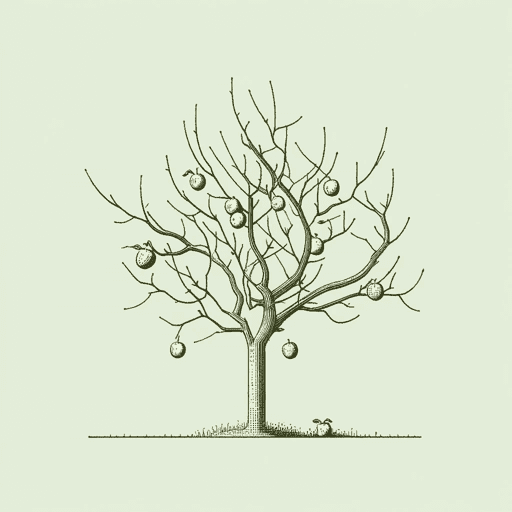
After Apple-Picking
A modern alternative to SparkNotes and CliffsNotes, SuperSummary offers high-quality Study Guides with detailed chapter summaries and analysis of major themes, characters, and more. For select classroom titles, we also provide Teaching Guides with discussion and quiz questions to prompt student engagement.
Themes
Opportunity and Choice
With its memorable opening depicting a “long two-pointed ladder sticking through a tree” (Line 1), Frost’s poem transports readers to an idyllic space. The ladder points “[t]oward heaven still” (Line 2), communicating to the reader that the speaker did not bother to remove the ladder from the tree before leaving the orchard. While the apples in the poem can be interpreted as symbols for sin, wisdom, or knowledge, they can further represent opportunities available, taken, and not taken. The apples may also symbolize choices available, made, and not made and the ever-unfolding consequences that decision-making harbors.
Every apple picked is an opportunity taken, and every apple not picked is an opportunity not taken. The ladder left unclimbed at the day’s end is like an available opportunity not revisited. Readers can interpret the remaining apples as opportunities available but not yet taken. Lines 25-26—”The rumbling sound / Of load on load of apples coming in”—represent the many daily opportunities and choices presenting themselves and requiring a decision to take them or let them pass. Lines 27-28 show the speaker’s exhaustion with having to continually make decisions and the wear and tear decision-making causes in life: “For I have had too much / Of apple picking: I am overtired.” Near the poem’s end, the speaker considers the choices made or not made and the opportunities taken or not taken: “For all / That struck the earth, / No matter if not bruised or spiked with stubble, / Went surely to the cider-apple heap / As of no worth” (Lines 32-36). In Lines 37-38, this inaction and indecision plagues the speaker as they struggle to fall asleep: “One can see what will trouble / This sleep of mine, whatever sleep it is.” By the poem’s conclusion, the speaker is ambiguous about their contentment and dissatisfaction, which some scholars interpret as the speaker weighing the difference between a full life and an empty one. Ultimately, the speaker asks if they have worked and lived to the best of their ability, or did they waste opportunities, make poor choices, and not work to their full potential.
Balance of Life and Death
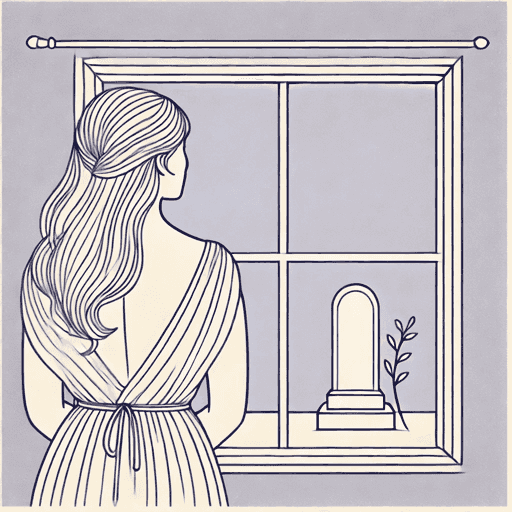
Frost’s poem is frequently interpreted as an old man reflecting on his life as he faces death. Lines 1 and 2 portray uncertainty about whether or not the speaker is facing death. “But I am done with apple-picking now” (Line 6) portrays the labor of apple-picking and gathering the harvest as a metaphor for the old man living a long life and the recognition that his life is over or nearly over. The “strangeness” (Line 9) the old man cannot rub from his sight is Frost’s way of portraying the old man’s disbelief at facing his mortality. The old man’s observation of the ice he “skimmed this morning from the drinking trough” and “the world of hoary grass” (Lines 11-12) combine with the action “I let it fall and break” (Line 13) to convey the unstoppable nature of life and aging. The double meaning of the declaration “[b]ut I was well” (Line 14) acts as a tenuous balancing point not only in the poem, but also in the old man’s life as he acknowledges that no matter what he did, he would not have stopped death from coming. The old man implies that he knows death is coming: “And I could tell / What form my dreaming was about to take” (Lines 16-17). Later in the poem, death’s nearness becomes even more evident as the old man recalls “the rumbling sound / of load on load of apples coming in” (Lines 25-26). From this point, the old man’s preoccupation with death (represented by sleep) overwhelms him, and the poem tips into the old man’s somber acceptance of the end of his life.
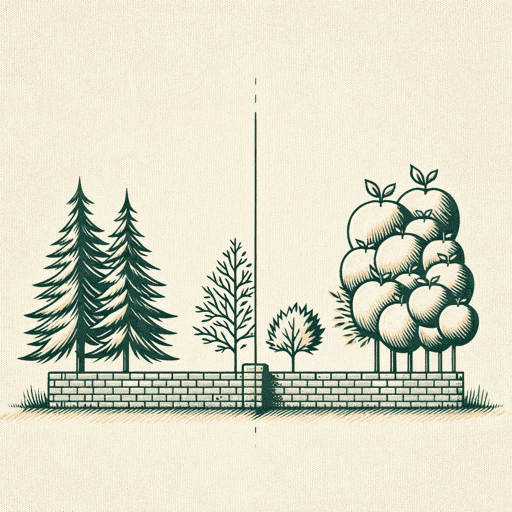
The images of a thriving apple crop at the height of harvest perpetuate the theme of balancing life with death. The speaker remembers “[a]pples [he] didn’t pick upon some bough” (Line 5). These apples cling to the tree, taking nutrients from it. “Stem end and blossom end” (Line 19) alludes to a beginning in both time and existence. Other apples lie on the ground, bound for the cider heap. This juxtaposition depicts survival and existence with death and an end paralleling the speaker’s understanding of the biological life cycle.
Anxiety and Worry
From the beginning, the themes of anxiety and worry dominate Frost’s poem. These conditions initially take the form of the ladder left standing (Lines 1-2) and the unfilled barrels (Line 3). The worries and anxieties become smaller, but more plentiful in the form of apples (Line 5). The speaker wills themself to sleep, but the worries and anxieties continue plaguing them (Line 8), and the speaker drifts between impending sleep and worrying (Line 9). The speaker momentarily finds relief, but then the worries and anxieties, both large and small, reemerge (lines 18-20). Worry and anxiety physically manifest in the speaker (Lines 21-22), but the speaker once again manages to drift into sleep (Line 23) only to become again overwhelmed by the tasks they left unfinished (Lines 24-26). The speaker desires relief from the stress (Lines 28-29), and they try to remain calm despite the realization that no matter what they would have done, the speaker could never have finished all the work that needed to be done (Lines 30-36). As the day’s anxieties and worries continue to manifest in the speaker’s mind, the speaker acknowledges that they will be restless because of the worry (Lines 37-38). The worries and anxieties plaguing the speaker then cause the speaker to begin worrying about their own life and whether or not this sleep will be “the long sleep”—meaning death, or whether it will be “just some human sleep” (Lines 41-42).

Unlock every key theme and why it matters
Get in-depth breakdowns of the book’s main ideas and how they connect and evolve.
- Explore how themes develop throughout the text
- Connect themes to characters, events, and symbols
- Support essays and discussions with thematic evidence
Related Titles
By Robert Frost