All My Puny Sorrows
A modern alternative to SparkNotes and CliffsNotes, SuperSummary offers high-quality Study Guides with detailed chapter summaries and analysis of major themes, characters, and more.
Summaries & Analyses
Quizzes
NEWReading Tools
Chapters 1-4Chapter Summaries & Analyses
Chapter 1 Summary
Content warning: This section of the guide discusses death by suicide. The text uses potentially triggering or stigmatizing terms for death by suicide that the guide reproduces in quotation only.
Yolandi Von Riesen (Yoli) remembers watching her family’s former home drive away on the back of a truck. She, her sister, Elfrieda Von Riesen (Elf), her mother, Lottie Von Riesen, and her father, Jack Von Riesen, waved as it disappeared down the road. It was 1979 and Jack had built the house when he and Lottie first married. They were in love and the East Village neighbors were shocked by Jack and Lottie’s behavior, as they were in the Canadian Mennonite community.
The family spent a few days “in the Badlands of South Dakota” in the United States waiting to move into their new house (8). Elf complained about camping throughout the trip, and one night their propane grill caused a fire. They returned to the road and headed back to East Village in Canada. On the way, they stopped to see some Indigenous rock paintings.
Back in East Village, the family moved into their new home on First Street. They’d lost the first house because Jack agreed to sell it to a local car dealer. One day, Yoli found Elf writing the letters “AMPS” in her notepad. She explained the letters stood for “all my puny sorrows” (13), a line from a Coleridge poem. She later graffitied the acronym throughout East Village.
In the narrative present, Yoli and Elf are in their forties. Elf recently tried to die by suicide again, and Yoli visits her in the hospital’s psychiatric ward. Yoli is horrified to see that Elf has a cut on her head from collapsing in the bathroom. She looks frail, as she hasn’t been eating.
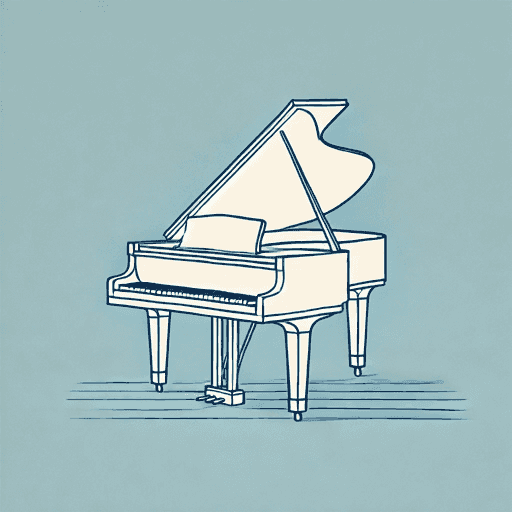
Elf is “a concert pianist” (16). Growing up, Yoli liked being her page turner.
Shortly after the family moved to the new house, the Mennonite elders visited to confront Jack and Lottie about sending Elf to university. They also disapproved of her piano playing, as music was forbidden in the community and the members felt threatened by women reading. While they talked to Jack, Elf played a loud Rachmaninoff piece on the forbidden piano. The elders left without further comment.
Chapter 2 Summary
At 17, Elf left home to perform in Norway. On the way to the airport, she let Yoli interview her. Elf teased her about her questions. Yoli secretly worried that Elf would never return home. They hugged outside the airport and Elf assured Yoli that she’d see her again.
In the present, Elf’s nurse, Janice, checks in on Elf and Yoli. Elf apologizes for what happened, and Janice reminds her that she doesn’t have to apologize for being sick or wanting to end her misery.
After Janice leaves, Yoli tries to remind Elf about the good things in life. Elf shares some anecdotes, trying to explain her despair. She’s annoyed with Yoli for trying to comfort her and begs her to stop talking.
Jack died by suicide a decade prior to the present. Beforehand, he stopped talking, the way Elf often does. Elf talks the most after performing piano recitals, yammering in a relentless way. Yoli remembers how upset Elf was when she returned home from Norway. She’d been traveling and performing throughout Europe and moved back in with Jack and Lottie afterward. By this time, Yoli had two kids, Will and Nora, from two different men and often visited Elf. She also kept in touch via letters. Over the following years, Elf continued to have bouts of depression. When she felt better, she’d return to the piano and start touring again. Then, one year, she met and fell in love with Nic. They now live together in Winnipeg and often dream of moving to Paris.
In the present, Elf tells Yoli that she can’t do her upcoming tour. Yoli assures her that her agent, Claudio, will understand, as they’ve been working together for years. Then she starts talking at length, desperate to say something meaningful. The hospital chaplain interrupts, asking if Elf is the concert pianist. The sisters say that she isn’t. Afterward, they argue about the man’s professionalism.
Chapter 3 Summary
Yoli asks Elf if she remembers various episodes from their childhood. Elf begs her to stop talking about the past. Yoli promises to stop but keeps sharing more memories. Before she leaves, the sisters embrace and express their love. Elf holds Yoli’s head in her hands. On her way out, Yoli checks her phone and finds texts from Nora and Will. Will lives in New York but is staying in Toronto with Nora while Yoli’s away.
Yoli remembers the last time Elf almost died by suicide. Lottie called her and begged for Yoli to come to town. Elf hadn’t been eating, hoping that she’d starve to death. Yoli arrived at her house and called the ambulance, which Elf had made Lottie and Nic promise not to do. Before she got into the ambulance, she told Yoli that she hated her. The emergency doctors had been frustrating, insisting that Elf’s disinterest in living showed a lack of intelligence. This most recent time, Elf had taken pills, and Lottie had found her unconscious on the floor. When Yoli got to Winnipeg, she and Lottie discussed the situation and the Mennonite belief that death by suicide is a sin.
Yoli and Nic send Lottie on a Caribbean cruise to get a break. Yoli is staying at her apartment in the meantime. In the hospital hallway, Yoli checks in with Janice. She considers returning to Elf’s room but decides to leave. She then drives Lottie’s car to the store and buys Elf a giant purple pillow. She also picks up alcohol, cigarettes, and chocolate. At Lottie’s, she stands on the balcony smoking and watching the ice break up on the river. Inside, she pokes around the apartment and calls Lottie but doesn’t get an answer. She tells herself that Elf is safe but calls the hospital anyway. The nurse won’t give Elf the phone. After hanging up, Yoli continues watching the ice and remembers her father’s death by suicide not long prior.
Chapter 4 Summary
Nic and Yoli try to find homecare for Elf when she’s discharged from the hospital, and the three of them discuss the plan together. Nic is more scientific and believes in traditional medicine. Elf is skeptical of his plans.
After the visit, Yoli drives to her best friend Julie’s house. They grew up in the Mennonite community in East Village together. They sit on the porch, drinking wine and talking. Yoli updates her on Elf and her family situation. She had Will with a man named Barry and Nora with a man named Dan. She and Dan are in the process of divorcing. Nora isn’t staying with him because she’s in dance school and Dan is in Borneo.
After leaving Julie’s, Yoli drives by her and Dan’s old house. She thinks about their marriage and her work as a writer. She’s made money over the years writing the Rodeo Rhonda series, which are YA books about a teen rodeo star. She reaches the house and notes the changes that the new owners have made. Then she drives to Nic and Elf’s. Inside, she and Nic further discuss Elf’s healthcare plan and upcoming tour. Nic is reluctant to cancel on her behalf, hoping that Elf will change her mind and agree to perform after all.
After Nic goes to bed, Yoli goes to her lover Radek’s apartment. He listens to her talk before they have dinner. Then he starts asking questions about Elf, revealing that he’s seen her perform and has always been enamored by her. Yoli tries hiding her hurt. Yoli remembers the first nights that she spent with Radek. He’s a gentle man and has always treated her kindly. She also remembers the letters that Elf wrote her after a breakup years prior.
Chapters 1-4 Analysis
Yolandi’s sister Elfrieda’s attempted death by suicide is the novel’s inciting event. After Yoli learns that her sister has been hospitalized again, she leaves her life and family in Toronto in order to be with Elf in Winnipeg. Elf’s hospitalization and mental health concerns therefore compel Yoli into a new physical and emotional sphere, prompting reflections that provide exposition about the sisters’ past and their family dynamic.
Yoli’s first-person narration introduces the primary narrative conflicts and stakes. Because Yoli is narrating All My Puny Sorrows, the narrative’s central tensions arise from her consciousness. Yoli’s responses to Elf’s attempted death by suicide and her attempts to bolster Elf’s spirit thus dictate the narrative mood. Indeed, Yoli’s love and concern for her sister create an anxious and tense narrative atmosphere and capture Yoli’s primary intent: to keep her sister alive at any cost. Yoli directly addresses this notion in Chapter 3 when she recalls the first time that Elf almost died by suicide:
Yoli, she said, I hate you. I bent to kiss her and whispered that I knew that, I was aware of it. I hate you too, I said. It was the first time that we had sort of articulated our major problem. She wanted to die and I wanted her to live and we were enemies who loved each other. We held each other tenderly, awkwardly, because she was in a bed attached to things (39).
In this passage, Yoli is articulating her deep connection with Elf: an intimate, familial connection that incites both love and tension between the sisters. Yoli is desperate to protect Elf, but her protectiveness in turn makes Elf feel as if Yoli doesn’t see her or understand her despair. This passage therefore captures the “push-and-pull” between the sisters, exemplified by the paradox of “enemies who loved each other.” The image of the “bed attached to things” evokes notions of entrapment and thus captures how powerless Elf feels in life (39). Yoli believes that Elf is safest when she’s in the hospital, but this setting simultaneously limits Elf’s freedom and augments her sadness. These complex interpersonal dynamics capture the Enduring Strength of Sibling Bonds and the Impact of Mental Health on Family Dynamics.
Building on the sisters kissing and holding each other in this flashback, Miriam Toews uses repeated images of the sisters touching each other to convey their intimacy. Yoli often feels as if she’s “desperate for words” and thus longs to say the right thing to quell her sister’s despair (33). Because words often fail her, physical touch takes their place. In one hospital scene, Elf “puts her hands gently on [Yoli’s] head and keeps them there as though she is resting them on a pregnant belly” (37). This image summons notions of care and protection—things that Yoli privately longs for from her sister. It also reifies the sister’s indelible bond by likening them to a mother and child. In another scene, the sisters “simply breathe together in each other’s arms for a minute” (38). This image captures the sisters’ alignment and connection despite their current conflict. The narrative’s incorporation of physical details softens the narrative’s overarching tone and subtextually reinforces its explorations of family bonds.
Elf’s mental health particularly troubles Yoli and her family because it reminds them of Jack’s death by suicide. Yoli’s allusions to Jack’s passing are tangential throughout these chapters. In Chapter 3, for example, the narrative shifts into a flashback after Yoli’s call with the nurse on the ward. This dialogue thus narratively summons Yoli’s memories of her father’s passing and compels her to reveal that her “father died beside trees on iron rails” (49). This violent imagery is briefly embedded within the body of Yoli’s narration, conveying Yoli’s fear of meditating too long on her father’s death. This is in large part because it parallels Elf’s mental health and current hospitalization. This facet of Yoli’s family history therefore casts a shadow over Yoli’s experience in the present and challenges her ability to remain positive and hopeful.
Despite Yoli’s anxious state of mind throughout these chapters, Toews incorporates comedy, wit, and irony into her narration. This tonal register helps to portray Yoli’s inherent nature and her relationship with Elf. These more comedic narrative elements, Yoli’s linguistic play, and her and Elf’s frequent jokes lighten the narrative tone and provide insight into the primary characters and their connection. Indeed, Yoli and Elf have inside jokes and have clearly delighted in one another’s company from a young age. The flashbacks to scenes from their childhood feature images of the sisters bantering or Elf leading Yoli in witty games. While this underscores the sisters’ enduring bond and their ability to find joy amidst hardship, it also provides a positive reference point to highlight the negative Impact of Mental Health on Family Dynamics.

Get in-depth, chapter-by-chapter summaries and analysis from our literary experts.
- Grasp challenging concepts with clear, comprehensive explanations
- Revisit key plot points and ideas without rereading the book
- Share impressive insights in classes and book clubs
Related Titles
By Miriam Toews