All the Little Raindrops
50 pages • 1-hour read
Mia SheridanAll the Little Raindrops
A modern alternative to SparkNotes and CliffsNotes, SuperSummary offers high-quality Study Guides with detailed chapter summaries and analysis of major themes, characters, and more.
Symbols & Motifs
Content Warning: This section of the guide includes discussion of graphic violence, death, child death, rape, child sexual abuse, and physical abuse.
Evan’s and Noelle’s Fingers
The captives’ fingers acquire figurative significance when Noelle sacrifices her physical safety to save Evan’s hand. In this way, fingers become associated with Noelle’s goodness and generosity. Evan later sacrifices his own fingers during their escape, slightly assuaging his guilt over what Noelle sacrificed for him and demonstrating his own courage and loyalty. In this sense, the motif illustrates the protagonists’ moral characters.
As a point of physical connection, fingers also demonstrate the bond that develops between Evan and Noelle. After Noelle pays “dearly” for Evan’s fingers, he offers them to her through the bars of their cages as a source of comfort. Soon, the movement feels “as natural as breathing air” (86). This gesture “creat[es] what [feels] like an unbreakable link” that soothes them both (87), so much so that they reach for each other even after their escape. In the motel, Noelle wakes in confusion, fearful that they are still imprisoned, but when Evan reaches for her, she suddenly finds that she can “breathe” again.
However, like Evan and Noelle’s relationship broadly, the motif of fingers also becomes intertwined with The Psychological Impact of Trauma. Noelle’s sacrifice prompts Evan to declare that they will do everything in their power to “leave here whole” (75). This “wholeness,” however, is merely physical; they do not lose any of their body parts, but they remain scarred by the experience. Indeed, this is quite literally the case with Evan, who uses a mallet to break his hand so that it will fit through the bars, allowing him to reach the cage’s lock. Years later, his hand remains scarred and painful, though multiple surgeries restore its use. His fingers, then, are explicitly linked to the trauma he continues to endure even after his captivity is over. Meanwhile, the act of holding hands becomes distressing for Noelle; when a man tries to take her hand, she “[feels] like her skin [i]s crawling” because she associates holding hands with Evan and their shared trauma (138).
The ultimate sign of Evan and Noelle’s healing thus becomes their ability to hold hands with one another without reawakening memories of trauma or doubting that their closeness is merely a byproduct of shared suffering. After he and Noelle reunite, “[t]hey turn[], fingers linked, and head[] toward the house. Whole. Together” (374). The gesture signifies a full-circle moment; they’ve healed, finally feeling “whole,” and can move forward with certainty of their love.
Red Diamonds
Through their association with both the bloody massacre and Vitucci’s love for his sister, the red diamonds function as a symbol that highlights The Concurrence of Humanity’s Good and Evil as well as The Corruption Associated With Power and Privilege.
Vitucci first mentions the jewels (though not by name) when he tells the story of the massacre to the captive Noelle, saying, “There was once a man who collected things, very fine things […] Jewels. Rubies. Emeralds. Diamonds. And he draped them on the women he stole” (64). Van Daele’s casual adornment of abducted women in priceless gems connects his corruption to his privilege: By draping the women in jewelry, he suggests that he has money to waste, even on those he sees as “throwaways.” Among those jewels is the red diamond that Vitucci’s sister, Celesse, wore “in the hollow below her throat” (131). The color of the gem, as well as its placement, visually evoke spilled blood, connecting them to Van Daele and his friends’ actions on the night when they slit the throat of Vitucci’s mother and murdered 13 other women.
However, the diamonds are not merely symbols of violence and cruelty. That Vitucci still has the diamond’s twin, set in a ring, mirrors his twinship with Celesse, but it also associates the red diamonds with love. Just as he still has his diamond, he still loves his murdered family members, and his desire to bring them justice motivates him in many ways. When Evan finds Celesse’s blood-red jewel in the home of his father, the man who raped and murdered her, it foreshadows the violent way in which that motivation will ultimately express itself: Sinclair’s bloody death by Vitucci’s blade. In this sense, the jewels represent how suffering has twisted Vitucci’s basic character, rendering his best and worst qualities all but indistinguishable.
Unlike Vitucci himself, however, the diamonds are eventually “redeemed.” At Van Daele’s final party, Vitucci thinks of how he has already sent the jewels to Baudelaire, who will “spread the wealth as he s[ees] fit to those who had possessed enough innate decency to sacrifice themselves for a stranger. How rare the quality [i]s that inspire[s] such a choice. As rare as the two red diamonds that w[ill] help them live easier lives” (365). Vitucci’s act transforms the diamonds from a symbol of the depravity associated with power into a symbol of the empowerment of those who have suffered but retained their moral compass.
Megan Meyer’s Wedding Ring
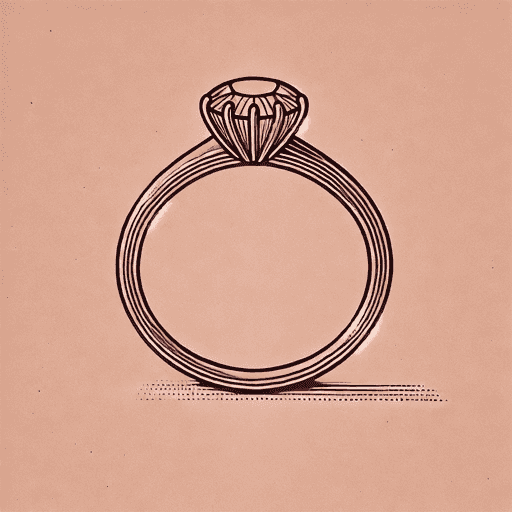
Noelle’s mother’s wedding ring initially symbolizes the psychological impact of trauma. Bennett Meyer was so traumatized by what he learned of Sinclair’s crimes and his wife’s murder that he sold the ring to pay for Evan’s abduction. The novel highlights the unprecedented nature of this decision by noting that while Meyer mortgaged his home and business to afford a legal team for the trial, “he hadn’t sold [the ring], even though at the time he’d very much needed the money” (251). The sale thus represents both the sacrifice of a valued object and a marked departure from Meyer’s usual moral character, conveying just how broken up he was by everything he endured.
The ring also represents trauma for Noelle—specifically, the trauma of her mother’s murder and alleged infidelity. Consequently, she doesn’t want the ring when she finds it at Baudelaire’s shop. When Evan suggests that they use the $10,000 to buy it back for her, Noelle thinks, “It wasn’t like it had good memories attached to it, for her or for her father. Her mother had cheated on him and been shot because of the affair that led to her being where she shouldn’t have been” (302). However, Noelle’s discovery of the true circumstances of her mother’s death prompts a reassessment of the ring’s value. Ultimately, Evan gives the ring to Noelle, saying that it is “[a] promise. That they’d love hard, that they’d always be honest, that they’d try their very best to be a living embodiment of the victory that had risen from the ashes of evil. Love” (374). Thus, once Noelle no longer associates the ring with her or her father’s trauma, it becomes a symbol of healing and love.

Unlock the meaning behind every key symbol & motif
See how recurring imagery, objects, and ideas shape the narrative.
- Explore how the author builds meaning through symbolism
- Understand what symbols & motifs represent in the text
- Connect recurring ideas to themes, characters, and events