American Nations: A History of the Eleven Rival Regional Cultures of North America
American Nations: A History of the Eleven Rival Regional Cultures of North America
A modern alternative to SparkNotes and CliffsNotes, SuperSummary offers high-quality Study Guides with detailed chapter summaries and analysis of major themes, characters, and more.
Summaries & Analyses
Quizzes
NEWReading Tools
Games
Introduction-Part 1Chapter Summaries & Analyses
Part 1: “Origins, 1590 to 1769”
Introduction Summary
Content Warning: The source material and study guide discuss the US’s legacy of slavery, Indigenous genocide, and white supremacy.
The author begins with the story of TV personality Glenn Beck speaking on the steps of the Lincoln Memorial in 2010. Beck says that Americans must rediscover the values that unite them. Many people, including intellectuals looking askance at immigration at the turn of the 20th century, have preached this idea.
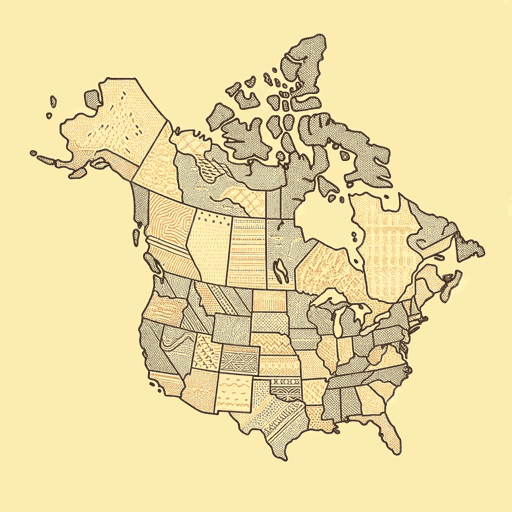
However, Woodard writes that the US has been divided since the founding of Jamestown and Plymouth. People from different parts of Europe who brought different cultures with them founded each area of the US. These different regions were competitive with each other in colonial times and thought about leaving the union even after the Revolutionary War. Each region had its own principles, and they were often in contradiction with each other. By the mid-1700s, there were eight distinct regions in the southern and eastern US, and they were quite isolated from each other. As of the book’s publication, there are 11 regional nations that bleed over into Canada and Mexico.
A nation is a group of people with the same culture. Woodard’s book is the account of these 11 nations within the US, Mexico, and Canada. He traces the development of these nations and shows that they have often conflicted with each other. Often, state and national boundaries on maps slash through these cultures.
Woodard then introduces the 11 nations. Calvinists founded “Yankeedom” in the Massachusetts Bay as a “religious utopia.” This region always emphasized education, local political control, and the strength of the community. People in this region have more faith in the government to better people’s lives than do people in any other region. Yankees have long sought to build a better society on earth—a form of “secular Puritanism.” Yankeedom spread from New England across New York, northern Pennsylvania, Ohio, and through the Midwest. Yankees have long fought with the Deep South for control over the federal government.
Originally settled by the Dutch, New Netherland (later New York City) was always a commercial city built on trade. It was materialistic, multicultural, and raucous. The Dutch imparted to this region the values of diversity and freedom of thought. Today, New Netherland comprises New York City, the lower Hudson Valley, northern New Jersey, western Long Island, and southwestern Connecticut. The region still has sway over the nation’s publishing, fashion, media, and financial industries.
Founded by the Quakers, the Midlands region gave rise to the culture of Middle America and the Heartland. This region has long been ethnically diverse, with more people of German descent than Anglo-Saxons. Populated by people who fled tyrannies in Europe, people in this region have historically opposed government intervention. The dialect of this region is considered “standard,” and the region is a bellwether of political opinion and often the swing vote in national elections. This region covers southeastern Pennsylvania, southern New Jersey, northern Delaware, and Maryland, extending into the Midwest and part of southern Ontario.
Tidewater, the most important region in the colonial period and the early republic, is a conservative region with reverence for authority and tradition. The younger sons of English gentry founded Tidewater to replicate the manorial society of rural England. These “cavaliers” turned this region into an aristocrat’s dream, and they relied on enslaved and indentured servant labor. This region was responsible for conservative elements of the Constitution, such as the Electoral College and the appointment of senators by state legislatures. This region has lost power since the early 1800s.
People often termed “white trash” or “hillbillies” who were originally from Northern Ireland, northern England, and the Scottish Lowlands founded Greater Appalachia. These regions were often war-torn, giving rise to a warrior ethic and to a culture that hated aristocrats and social reformers. This region fought with the Union during the Civil War but then resisted the effort to free enslaved Black Americans, siding with the Deep South. This region has given rise to a large proportion of the country’s military, to bluegrass music, and to evangelism.
Founded by enslavers from Barbados, the Deep South has historically believed in white supremacy and aristocratic privilege. This region is the least democratic and remains an area in which race determines one’s political affiliation. Enforcing a system of “apartheid,” this region instigated the Civil War to form its own nation and then endorsed states’ rights and racial segregation. The Deep South is at war with Yankeedom, the Left Coast, and New Netherland for control of the country.
Founded in the 1600s in Québec, New France includes the cultures of northern French peasantry and Indigenous peoples. The region’s culture is egalitarian and the most liberal on the continent. It has given many of its qualities to the Canadian federation, which values consensus and multiculturalism. This region includes parts of Québec, New Brunswick, and the Acadian (or “Cajun”) parts of Louisiana.
In the late 16th century, the Spanish founded El Norte, the oldest of the Euro-American nations. Today, it encompasses parts of the US-Mexico border as well as other parts of the US Southwest. It has a combination of Anglo and Spanish cultures. Mexicans regard “Norteños,” or those from the north, as more independent and more Americanized than people from the core of Mexico. In many ways, Woodard writes, the region resembles Germany during the Cold War, as it’s a common culture divided by a wall. This region will have increasing influence in the US. By the year 2050, Hispanic Americans will comprise 29% of the US population.
The Left Coast runs from Monterrey, California, to Juneau, Alaska. Merchants from New England and farmers and traders from Greater Appalachia settled the Left Coast. It contains a strong strain of New England intellectualism and idealism, though it also has a culture of self-fulfillment. Today, it combines the Yankee belief in social reform with a culture of discovery. It is the birthplace of the environmental movement and technology (including companies such as Google and Microsoft). It is the founder, along with New Netherland, of the gay rights movement and the closest ally of Yankeedom.
The Far West’s climate has defied the replication of agricultural techniques in other regions. It required industrialization, including railroads, dams, and mining equipment, to colonize this region. Its leadership often chafes at governmental interference while relying on federal money. However, the corporate entities that control the region are rarely challenged.
Like the Far West, the First Nation has a hostile climate. Its Indigenous populations still occupy the region and have begun to reclaim their autonomy in areas such as Nunavut and Alaska.
Woodard writes that these 11 regions have long “been hiding in plain sight” (13), as they are clearly marked on maps of political geography, including modern voting patterns. For example, the most educated state (that in which people had the most advanced degrees) in 2007 was Massachusetts, followed by other states in Yankeedom, while the least educated states were in Appalachia.
Woodard is not the first person to have developed the idea of different cultural regions in the US. Republican strategist Kevin Phillips did so in 1969 and predicted the Reagan Revolution. Historian David Hackett Fischer also wrote about the early form of four of these nations in Albion’s Seed.
Woodard next considers the question of whether and how nations founded so long ago could have maintained their identity in the face of newer immigration. For example, New York has very few people of Dutch descent living there today. Woodard argues that these regions maintained their dominant cultures, a conclusion also arrived at by cultural geographer Wilbur Zelinsky. In 1973, Zelinsky produced his theory of the Doctrine of First Settlement, which states that initial colonizers can establish the lasting cultural geography of a region. American mobility only adds to this phenomenon, as people tend to settle where their worldviews are valued. As a result, areas with a landslide political advantage (over 20% margin of victory) have increased from 26.8% in 1976 to 48.3% in 2004. Democratic landslides are prevalent in Yankeeland, the Left Coast, and El Norte, while Republican landslides dominate Greater Appalachia, Tidewater, the Deep South, and the Far West.
Some of these regions are not neatly bounded by states. Within each region, there is a nucleus of power and sphere of wider influence. These influences can change over time. Within each region, there are also micronations, such as the Mormons in the Far West. Investigating each region is like peeling an onion and exposing its different layers. The author also notes that he has left out certain regions, such as the Polynesian culture in Hawaii. He concludes that being part of a region is not a matter of inheritance but of acquisition in childhood: People are influenced by where they live, not by their family’s origins.
Part 1, Chapter 1 Summary: “Founding El Norte”
While Americans have been taught that European settlement proceeded from the east to the west, it actually proceeded from the south northward. By the time Jamestown was founded in the early 1600s, Spaniards had already traversed much of the continent. Spaniards were living in New Mexico and Colorado in 1595, and their descendants have a sense of living amid a culture that has been passed down for generations. Spain at that time was more prosperous than any Protestant nation, and it was granted the right to the Americas by Pope Alexander VI in 1493. The pope hoped that Spaniards would transport Catholicism to the Americas.
His grant would trigger what demographers consider the most catastrophic destruction of human lives in history. Before the Spanish conquest, the people of the Americas had one of the most sophisticated and healthiest cultures of the era. However, by 1630, the Indigenous population had declined by 80-90%, the result of wars and epidemics.
Philip II of Spain used the wealth pouring into his kingdom from the Americas to wage war against Protestant nations. However, in the process, he caused his nation to become insolvent while causing warfare in Europe that lasted the better part of a century.
These events had long-term consequences. First, the anti-Spanish feeling of Protestant nations became ingrained in Yankeedom, Appalachia, Tidewater, and the Deep South, and these feelings are still present in anti-Mexican sentiment today. Second, Spain became so involved in wars that its colonies were neglected and impoverished, and they developed with little contact from Europe or the central part of Mexico. Finally, the religious motive became the cornerstone of colonial policy, and the Spaniards attempted to convert Indigenous Americans through close supervision of their religious and economic lives. As few Spaniards came with wives, many married Indigenous women. Over time, mestizos, people of both Spanish and Indigenous ancestry, became the majority culture, and the strict Spanish hierarchy began to break down. The Spaniards tried to spread their culture even further and expand El Norte, but their system of training neophytes, or Indigenous converts, was abusive and autocratic.
In addition, El Norte was ruled in an autocratic manner and had little control over its own affairs and no self-government. Instead, the people, or peons, were expected to follow their bosses, or patrons. Even in the 1940s, Lyndon Johnson won votes for the Texas senate race by having patrons tell their followers how to vote. At the same time, the people of El Norte also developed a greater sense of independence and self-sufficiency than the people of central Mexico, as they were located so far from the center of the Spanish colony and often had to fend for themselves. This cultural legacy has lasted—it was people of this region who overwhelmingly supported the Mexican Revolution. People of this region were freer from authority and religious control, and many were able to “pass” as white though they were of mestizo ancestry. The cowboy is an invention of El Norte that was influenced by Spanish tradition. The Spaniards introduced cattle and other animals into the Americas, and they also introduced the life of the vaquero, or cowboy.
Part 1, Chapter 2 Summary: “Founding New France"
In 1604, a group of Frenchmen led by Pierre Dugua and Samuel de Champlain reconnoitered the coasts of what today is Nova Scotia, New Brunswick, and Maine looking for a permanent settlement. Both had experienced France’s religious wars and wanted to found a tolerant society in the Americas. While both men envisioned a hierarchical, feudal society in the Americas, Champlain also imagined that the society would live peacefully with the Indigenous Americans. This idea of mutual respect between the French settlers and Indigenous Americans is what historian David Hackett Fisher referred to as “Champlain’s Dream.”
After a disastrous start on an island in current-day Maine called Saint Croix, during which the settlement only survived with the help of the local Passamaquoddy, the settlement moved to Nova Scotia. There, colonists founded Port Royal, which would be the model for future French settlements. Most of the settlers came from northwestern France, and they replicated the hierarchical system of their home villages, in which the gentlemen had little contact with the peasants. The gentlemen came to know the local Mi’kmaq and even sent their children to live among them to learn their culture and language. The French also studied their language.
This pattern of cultural exchange was repeated in Québec (founded in 1608) and across New France. Champlain visited Indigenous American councils, and the Jesuits who arrived in the settlement also lived among the Indigenous peoples. Champlain was an advocate of intermarriage, and many Frenchmen went to the woods to live with Indigenous communities.
In Acadia, the French married with the Mi’kmaq, who began to practice a hybrid form of Catholicism combined with their own religion. The society became as French as it was Indigenous, and it passed this culture onto Canada as a whole. In the 1660s, Louis XIV tried to remake New France as a feudal colony; he wanted a society in which nobles controlled most of the land with peasants tied to estates. He planned to institute a controlling bureaucracy, and he sent settlers to the colony, most of whom were from the northern and western regions of France, including Normandy, the Channel Islands, and the areas around Paris, and who brought their ways and dialects to the colony. However, the king’s plans went awry, as most of the indentured servants refused to work the seigniors’ lands once their term of indenture was up. Instead, many became coureurs de bois, or woodsmen, who married Indigenous women and whose children were a new ethno-racial group called the Métis. They were proud of their independence and scoffed at the rights of the nobles, while the seigniors sank deeper into poverty. The settlers relied almost entirely on Indigenous Americans for their defense, and they made up a small group compared to the Englishmen who began arriving in the Americas.
Part 1, Chapter 3 Summary: “Founding Tidewater”
As opposed to the mythical stories about John Smith saving Jamestown, the real colony was “a hell hole of epic proportions” (44). It was founded on a sluggish river surrounded by malarial swamps that bred disease. Its settlers, many of them gentlemen, did not know anything about farming. Many in the original group died, and even after John Smith tried to impose order, settlers’ efforts to find gold resulted in the starving winter of 1609-1610.
These settlers had not come to work but instead to live as conquistadores under the aegis of the Virginia Company. However, the local Indigenous peoples under Powhatan, the leader of a confederacy of 24,000 people and 30 tribes, saw that the English were weak and did not submit to their rule. Powhatan’s plan was to turn the English into vassals and secure their weapons. As a result, the Tidewater became a battle zone. The Virginians tried to get Indigenous Americans’ corn by force. Smith was ambushed and only spared when Pocahontas, a child, begged for his life to be saved. A war of attrition between the Indigenous Americans and the Virginian settlers ensued—one the settlers won because the English kept shipping people their way.
Two events changed the fate of the Tidewater. One took place in 1617 when John Rolfe, Pocahontas’ husband, decided to plant tobacco, turning Jamestown into a booming plantation economy. The second was the English Civil War of the 1640s, which sent aristocratic families from England to Jamestown. To farm the labor-intensive tobacco crops, young men were recruited from England as indentured servants. They endured a mortality rate as high as 30%. The colonial society was hierarchical, divided between a few plantation owners and a vast laboring class. The plantation owners were encouraged to work their laborers as much as possible, and they treated the laborers harshly. The first African enslaved laborers arrived in Jamestown in 1619. Though they were treated harshly, slavery was not yet inherited, and many enslaved African Americans went on to acquire freedom and land. Meanwhile, settlers who came without indenture could receive 50 acres upon arrival and 25 acres for each person they brought with them.
Maryland started as an oligarchy. It was founded by Cecil Calvert, the Second Lord Baltimore, who was given 12 million acres by King Charles I, a fellow Catholic who wanted Lord Baltimore to start a Catholic colony that practiced religious tolerance. Both Catholics and Protestants comprised the colony, which came to resemble Virginia over time, with a Protestant ruling class presiding over indentured servants.
Among English colonies, Yankeedom was the diametrical opposite of the Tidewater, and when the English Civil War broke out in the 1640s, New England and the Tidewater supported different sides. Puritan New England supported Parliament, which was made up of Puritans and lawyers from London and the east of England, while the Tidewater backed Charles I and a group of aristocratic landowners called Cavaliers who were from the north and west of England. Sir William Berkeley, Virginia’s governor, was a close friend of the king who tried to rule his colony as a Royalist stronghold. He kicked out the resident Puritans, who went to Maryland, and invited Cavaliers, such as the Lee and Washington families, to Virginia.
These aristocrats sought to bring their manorial life to the Americas, and they ruled over their laborers, the court system, and the local Anglican churches. They established a parliament called the House of Burgesses, where only the wealthy could serve. Unlike the aristocrats of England, however, they did not disinherit the younger sons in their families. Able to import goods cheaply from England, the region did not develop industry or towns and, unlike New England, did not establish public schools. Interrelated families who controlled government and the distribution of land ruled the Tidewater via the threat of violence. Whereas written laws settled disputes in New England, duels often settled disputes in the Tidewater. Harsh punishments were meted out to women and servants, while men of the ruling class received more lenient treatment.
This society, which produced George Washington, Thomas Jefferson, and James Madison, was based on the Latin idea of libertas, or liberty, rather than the German concept of freedom, or Freiheit, that was the basis of Yankeedom and the Midlands. In the German tradition, all people were born free and were equal before the law. Puritans brought this tradition, present in English common law and the House of Commons, to Yankeedom. The Tidewater culture, on the other hand, followed the Greek and Roman idea that most people are not born free and that freedom is a privilege, not a right. They saw no contradiction between liberty for some and slavery for others. The Tidewater elite called themselves “heads” of their manors and built the government seats in Williamsburg and Annapolis to replicate ancient Rome. While they loved liberty, they did not believe in equality. However, the gentry had an increasingly difficult time finding a permanent underclass, and there were several rebellions. For this reason, they increasingly turned to slavery to perpetuate their culture.
Part 1, Chapter 4 Summary: “Founding Yankeedom”
The Puritans of New England were completely opposed to the Tidewater’s landed aristocracy, Anglican Church, and Royalists. The Puritans came to the Americas not to replicate the old but to build a novel society, a kind of religious utopia that would be a “city upon a hill,” or a model for the rest of the world. Those who did not follow their dictates were punished, as they believed that they were God’s chosen people and must follow divine will.
The idea that the Puritans came to the Americas as champions of religious freedom is a myth. While this is true of the Pilgrims who arrived in Cape Cod, the Puritans who arrived in the Massachusetts Bay Colony starting in the 1630s crushed all forms of dissent. However, in many ways, the colony, which did not have a royal charter, was revolutionary and not beholden to corporations back home. Most of the early settlers came from East Anglia, which was an economically sophisticated part of England known for its large middle class, influence from the nearby Calvinist Netherlands, and high levels of education.
The demographics of the Puritans were different from those of El Norte, the Tidewater, and New France, as well-educated, middle-class families arrived. They were skilled craftsmen, and though not aristocrats, were well-educated people. They also encountered a favorable climate that did not cause the widespread disease of the Tidewater. Hostile to aristocratic privilege at home, they brought these same values to Yankeedom. They disliked ostentatious displays of wealth, and rather than handing out plantations to landowners, the Puritans gave out town charters to groups that built roads, churches, and schoolhouses and divvied up the land on an egalitarian basis. Towns had the ability to govern themselves, and the society, while intolerant, was democratic, as 60-70% of adult men were allowed to cast votes. This tradition of self-government is still prized in New England towns today. Yankees developed a strong faith in government to correct for privilege and cure social ills.
The Puritans believed that each person had to read the scriptures for divine inspiration, and they therefore had to be literate. As a result, they founded compulsory public schools at a time when there were very few in the nation, and their elite were not necessarily those of high birth but those of higher education. Harvard was founded only six years after the Puritans arrived in the Americas.
The Puritans’ calling to spread God’s word made them unpopular in other regions. They loathed idleness and believed that personal wealth should be used for philanthropy. At the same time, they distrusted others, and they regarded Indigenous Americans as savages. Waging war on the Pequot, the Puritans conducted massacres of Pequot villages and battled with other tribes. They took over other parts of New England and embodied the kernels of the ideas of American Exceptionalism and Manifest Destiny—the idea that America had a God-given right to conquer other lands.
Yankeedom opposed the ideas of the Tidewater and sent some of its men back to England to fight against the Royalists and shake off the Norman yoke they felt had too long bound England (the Normans conquered England in the 11th century and, assuming rulership of the country, became associated with the aristocracy and monarchy). After Royalists fled to the Tidewater, the Yankees distrusted them, a feeling that intensified after Cromwell and his Puritan allies fell in 1658 and the monarchy was restored, pushing the colonies toward eventual rebellion.
Part 1, Chapter 5 Summary: “Founding New Netherland”
New Netherland, founded by the Dutch in 1624, had a lasting effect on the region that was to become New York when the English took it over in 1664. The Dutch fur-trading outpost was a purely mercantile venture that had little concern for social cohesion. The trading center had a remarkably diverse population, including Lutherans, Catholics, Anglicans, Quakers, and Jews (who were banned from New France, Yankeedom, and the Tidewater). Eventually, New York would become home to the largest Jewish community in the world. People from Africa and India also lived there, and the region’s diversity, cultural and linguistic, still characterizes the city today, as does New Netherland’s tolerance and emphasis on commercial enterprise.
The Dutch were among the most sophisticated cultures at that time. They had a bank that served as a clearinghouse for different world currencies, and they founded the first global corporation, the Dutch East India Company. They had a commitment to free inquiry, hosting thinkers who were in exile from other nations and printing half the books made in the 17th century. They were a haven for people seeking religious and other freedoms, including Sephardic Jews from Spain and Portugal, Catholics, Lutherans, and even Puritans for a time.
As few people wanted to leave the Netherlands, the Dutch colony in the Americas had few colonists, and it was run as a commercial venture by the Dutch West India Company with few resources from the Dutch government. The colony was run in a tolerant way, and when its governor, Peter Stuyvesant, tried to keep Jews from Brazil out of New Amsterdam, he was overruled by the Dutch government. The Dutch maintained good relations with the local Indigenous peoples, mainly out of interest in their ties to the fur trade. The Dutch did not celebrate diversity, but, long accustomed to religious wars in Europe, they tolerated it—a trait that still characterizes New York.
Many of the families that became elite in the colony were self-made, including the Vanderbilts. Slavery was introduced into the Americas by the Dutch, who were mainly interested in pursuing what was profitable even while the Tidewater was still treating African Americans as indentured servants. In the 1650s, New Amsterdam had become the greatest market of enslaved individuals in North America. The city had a multigenerational legacy of slavery by the time it became New York.
When the English arrived in 1664, the Dutch negotiated to keep their laws, including religious tolerance, and business interests. James, the Duke of York and the brother of King Charles II, took over the colony and ruled it in an autocratic way, taking over the Yankee colony of Long Island against the residents’ will. When the duke later became king, he would spark the first large-scale rebellion in the Americas.
Part 1, Chapter 6 Summary: “The Colonies’ First Revolt”
Few people realize that the first revolt by the English colonies in the Americas took place in the 1680s, not the 1770s. When James II became king in 1685, he wanted to impose control over the colonies. He decided to merge New England, New York, and New Jersey into one colony called the Dominion of New England that would replace representative assemblies with an all-powerful royal governor. He did not recognize Puritan land titles and imposed high tariffs on Tidewater tobacco and sugar without the approval of the colonies.
The colonies would likely not have revolted if James II had not been so unpopular at home. A Catholic, he had appointed Catholics to public office. Yankeedom led the Tidewater and New Amsterdam in protest. Andros, the royal governor installed in Boston, had replaced Puritan meetinghouses with Anglican churches and had removed the Puritans’ charters of government. Fearing a “Popish plot,” Puritans refused to go along with the governor’s tax collection and sent Increase Mather, a clergyman and the president of Harvard, to England to negotiate with James II, who refused to back down. However, after two other uprisings, the English succeeded in inviting Prince William and his wife Mary of the Netherlands to depose James II and take over the country in the “Glorious Revolution” in 1688.
In 1689, a revolt broke out in Boston, and militiamen seized control of the state house and arrested Dominion officials. The governor surrendered, and the Dominion was overturned. News of the rebellion spread to New Netherland, where people also sought to throw off the English yoke. The first uprising came in Long Island, where people had never wanted to be part of New York but to be part of Connecticut; the rebels marched to Manhattan, where Governor Nicholson stopped them and negotiated a truce. However, the authority of the Dominion had slipped, and townspeople in Manhattan marched on the fort where Nicholson had withdrawn.
In the Tidewater, people began turning on James II for the same reason the aristocrats at home had—because he had appointed Catholics and not Anglicans to top positions. James II had also threatened their position with high taxes on tobacco. In Virginia, anger broke out against Catholics in Maryland. When news of the Glorious Revolution reached the colony, the Calverts’ Catholic governing council refused to submit to the new monarchs. In response, a Protestant ragtag army called the Protestant Associators marched on Lord Baltimore’s mansion, causing him to surrender and making Maryland part of Anglican Tidewater culture.
After he assumed office, King William did not concede to all the colonists’ demands. He did not agree to the demands of New York to return the colony to the Dutch. A protestor leader named Jacob Leisler stirred discontent, leading to the hanging of the new royal governor. The colony remained fractious. Yankees were given back their rights to elected assemblies, but they did not return to their status as a self-governing colony. They also had to allow all Protestant landowners to vote, not just Puritans, and they were to be kept under tight control by England.
Part 1, Chapter 7 Summary: “Founding the Deep South”
The founding fathers of the Deep South came via boat from Barbados to Charleston in 1670 and 1671. They sought to replicate the West Indian slavery system, and this society would reach across Georgia and South Carolina to what is now Mississippi, lowland Alabama, the Louisiana Delta, eastern Texas and Arkansas, western Tennessee, northern Florida, and southern North Carolina. The society was built on a tiny white elite demanding and enforcing total control with “state-sponsored terror” in a way that would put the Deep South on a collision course with its Yankee rivals to this day (82).
In the late 1600s, Barbados was the oldest and richest colony in British America. Noted for their ostentation, the planters of Barbados restricted voting rights to only the wealthiest and retained control over the courts and assembly. The planters had first used indentured labor, but their harsh treatment of their workers had scared the poor English away. The planters even turned to kidnapping children (giving rise to the term “barbadosed”) before turning to enslaved Africans, whom they treated as chattel. While the population of enslaved laborers in the Tidewater replenished itself naturally, the planters in Barbados had to import large numbers of enslaved individuals to cultivate sugar, a highly profitable crop, because their treatment of their laborers was so brutal, shocking even to people at the time. After running out of land on the island of Barbados, they headed elsewhere, including to North America.
The charter for Carolina allowed planters to get land for each enslaved individual they brought to the colony, creating an oligarchy in lowland South Carolina, where planters growing rice and indigo for export to England were the wealthiest people in the colonies (save those in the West Indies). Charleston was the wealthiest town on the east coast, filled with distractions for planters, who left their estates to the care of overseers. They embraced the outward trappings of the English aristocracy and were connected with the restored king, Charles II. The charter that John Locke had written for the colony granted religious freedoms, and the colony attracted French Huguenots and Sephardic Jews. The new aristocracy overturned these provisions and made the region entirely Anglican, ensuring themselves a close connection with London.
In many places, enslaved Black laborers outnumbered white settlers nine to one, and a brutal system kept the former under control. Those who sought freedom were harshly punished, as were enslavers who refused to mete out punishments. Though enslaved individuals could be baptized, their Christian faith did not excuse them from bondage. While other colonies had enslaved populations, slavery was the organizing principle of society in the Deep South and the Tidewater. In the Tidewater, people of African descent increasingly became enslaved for life as Tidewater people adopted the practices of the Deep South. However, enslaved Black Americans in the Tidewater made up a small proportion of the population and lived longer with more stable family lives than those in the Deep South. In addition, there was a relatively stable free Black population in the Tidewater, some of whom were even enslavers themselves. In the Tidewater, one’s class determined one’s station.
In the Deep South, however, there was a high mortality rate among enslaved individuals, meaning labor had to be continuously imported. Those who were enslaved there developed their own culture, with their own languages, culinary traditions, and music. The culture of the Deep South was a caste-based culture, meaning that there was no ability for people to move out of the station they were born into, unlike in a class-based culture. It was forbidden to marry across racial lines, though white elites often raped enslaved laborers, consigning their biracial offspring to be enslaved as well. Vastly outnumbered, enslavers feared uprisings such as the revolt that occurred in Stono in 1737.
The Deep South was expansionist, spreading to North Carolina, a colony divided between Tidewater farmers in the north and wealthy plantation owners in the south. Georgia was founded by a group of social reformers who forbade slavery with the goal of making white “sinners” carry out hard work, but South Carolinians seized control of Georgia and doled out the best land to themselves and spread their culture of slavery.
Part 1, Chapter 8 Summary: “Founding the Midlands”
The most prototypical region of America, the Midlands, was founded by a group of farmers who were tolerant, multicultural, and multilingual. Their culture spread across the middle of the country. Pennsylvania was founded by the Quakers, then thought to be controversial because they flouted social conventions. They thought women equal to men, questioned slavery, and believed that everyone possessed an “inner light” that contained the Holy Spirit. They did not believe that priests or churches were necessary to achieve salvation and felt that each person was capable of goodness, no matter what their race or gender. They also were pacifists who disavowed war.
An admiral in the British Navy, William Penn, had lent money to King Charles. His son, William Penn, became a Quaker, much to his father’s chagrin. He settled his father’s debt in return for a grant of land that he named Pennsylvania. His colony would not have armed forces and would exist in tranquility with the local Indigenous peoples. The government’s powers would be limited. Penn advertised his colony, raising a large population quickly from not only England but also Germany, where people were seeking to escape religious conflicts. Some were Mennonites or Amish, and others were Lutheran and German Calvinists. The Pennsylvania Dutch, as they were called, were allowed to live freely and practice their religions. They were superior farmers and craftsmen and allowed the Quakers to run the colony. Like the Quakers, the Germans were averse to slavery.
While the colony was a commercial success, its government was a disaster, falling prey to infighting over Quaker religious matters and prompting Dutch, Swedes, and Finns to found Delaware in 1704. In the 1770s, a group of settlers from Scotland and Ulster, the so-called Borderlands, poured into the colony. They were not believers in the Quakers’ ethic and occupied Indigenous lands while the Quaker leadership did little. In 1755, the Lenni Lenape attacked the German and Scots-Irish settlements in the western part of Pennsylvania. Rather than endorse violence, the Quaker leadership resigned and would never again monopolize political power in the Midlands. The Borderlander civilization would go on to reshape the American nations in the years ahead.
Part 1, Chapter 9 Summary: “Founding Greater Appalachia”
Greater Appalachia was the last and most disruptive nation to be founded in the colonial era. Its culture came from the clan-based warlike culture on the borderlands of the British empire, including lowland Scotland, northern England, and the Scots-Irish-controlled north of Ireland. As refugees who were pushed out of their homelands, these settlers fled to the frontier, eager to be out of the control of the law. Coming from war-ravaged lands, they learned to rely only on themselves. Presbyterian in religion, they endorsed taking up arms to defend their liberties, and between 1717 and 1776, their numbers soared as a result of various crises.
Most of these people went to the Midlands because of the Quaker policy of welcoming immigrants of all faiths. However, the newcomers’ rough ways alarmed the Midlanders, and the immigrants were shuffled out of town to the frontier as a buffer against French or Indigenous attacks. They settled on vacant land and took part in a backcountry subsistence economy. Life in war-torn zones had taught them not to invest in property but instead in cattle, which were mobile. Whiskey became the de facto currency of the region for the next 200 years. Isolated from the outside world, the residents had a great deal of time for leisure and tended to take the law into their own hands, often indulging in blood feuds or rivalries between families such as the famous Hatfields and McCoys. Borderlanders tend to quash dissent in their communities and to tolerate great economic inequality.
They eventually spread down the Appalachian Mountains into Georgia, preventing the Tidewater and the Deep South from advancing into the interior. While some Borderlanders intermarried with Indigenous people or adopted their ways, they tended to see such peoples as opponents in a war for control of the backcountry. In 1763, a Scots-Irish group from Paxton, Pennsylvania, attacked a settlement of Christianized Indigenous Americans on Penn land and then marched on Philadelphia, where Benjamin Franklin had to negotiate a truce. The incident exposed the fault lines between the Borderlanders and the Midland. Borderlanders also attacked the Cherokee and Creek in Georgia.
Banditry in the backcountry led the Borderlanders not to accumulate wealth, as it was an invitation to thievery. As a response to lawlessness, the leading Appalachian families formed a group called the Regulators to control crime, rebuffing the control of the authorities. Similarly, Regulators seized control over the Appalachian part of North Carolina in the 1760s, and tensions between the Appalachians and coastal elites would later shape allegiances during the Revolution. Frustrated by their lack of power, some Appalachians turned to forming their own communities, such as the radical “Fair Play” territory in Pennsylvania and the community of Transylvania in Indigenous country in what is now Kentucky and Tennessee. During the Revolution, this group’s loyalty was decided by which side it thought would respect the clan’s autonomy.
Introduction-Part 1 Analysis
Woodard’s account of American history challenges the conventional and much-mythologized idea of the United States. Instead of cultures coming together and losing their distinctiveness over time, he argues, cultural differences among different “nations” within the United States have fostered the growth of different regions that have always been at odds with each other. In other words, The Melting Pot Is a Falsehood: The United States is instead a collection of competing cultures.
Woodard also challenges the idea that Americans are becoming more alike over time as subsequent immigration erases the original culture of each region. Instead, he believes that the culture that was present at the founding of each region had a lasting effect on its culture. For example, the Dutch population of New Amsterdam was quite small and quickly lost power, but their values and culture, including their emphasis on mercantile pursuits and their tolerance of different religions and peoples, still characterize New York City and its environs today.
In most of the chapters following the Introduction, Woodard’s analysis concentrates on the ways in which the founding of a particular region, including the founders’ motives, religion, beliefs about other religions and cultures, and attitudes toward education and slavery, went on to affect that region. It’s similar to the way in which the circumstances of a person’s birth might go on to affect that person over their lifetime. Woodard’s rationale for conducting these in-depth analyses of the cultures of each nation within the United States is to see how these cultures, and the interplay between them, have affected the history of the country—particularly as he contends that the differences among the nations, as well as their natural alliances and enmities, continue to affect the US. In the first part of the book, he lays out these different cultures so he can explain the ways in which their differences came to a head in the American Revolution. The first section of the book resembles a series of portraits of these different nations, and their actions in relation to each other will be set into motion in the later parts of the book.
Tellingly, the first chapter to depart from the overall pattern Woodard has established, Chapter 6, focuses on conflict—specifically, an uprising. The depiction of cultural friction between the colonies and Britain lays the groundwork for later friction between the regions themselves, thus contributing to Woodard’s overall portrait of The Regions at Loggerheads.

Get in-depth, chapter-by-chapter summaries and analysis from our literary experts.
- Grasp challenging concepts with clear, comprehensive explanations
- Revisit key plot points and ideas without rereading the book
- Share impressive insights in classes and book clubs