An Anonymous Girl: A Novel
A modern alternative to SparkNotes and CliffsNotes, SuperSummary offers high-quality Study Guides with detailed chapter summaries and analysis of major themes, characters, and more.
Summaries & Analyses
Quizzes
NEWReading Tools
Games
Symbols & Motifs
Psychological Manipulation
Content Warning: This section of the guide discusses suicide, in addition to strong psychological manipulation.
Psychological manipulation is a motif that illuminates characters, including their motives and flaws, and their views on The Nature of Morality. Dr. Shields and Thomas are both psychologists who take advantage of their positions of power in the narrative. Dr. Shields, specifically, uses her knowledge of psychology and own personal adeptness at manipulating others to control what people do and think. Dr. Shields manipulates Thomas, attempting to win him back and prove to herself that he still loves her. Jessica manipulates them both, finding ways to earn money while keeping herself generally safe. Dr. Shields’s main tactics of psychological manipulation are distraction, sympathy, excuses, threats, and lying. She also uses her appearance, professional reputation, and knowledge of both Jessica’s and Thomas’s lives to manipulate them. Jessica feels as though she is caught in a web of Dr. Shields’s doing, and she cannot escape even if she wanted to: “It’s like she is writing my script, and I’m just reciting the lines now” (367). Thomas later reveals that he feels the same way.
Dr. Shields often references the ways a therapist should act and perform, including revealing nothing of themselves in their office décor and refraining from becoming emotionally involved: “Therapists are trained to set aside their own turbulent emotions and focus on their clients” (203). Dr. Shields is human, however, and her major weakness is Thomas; thus, she is only able to set aside emotions that do not concern him.
Dr. Shields’s Gifts
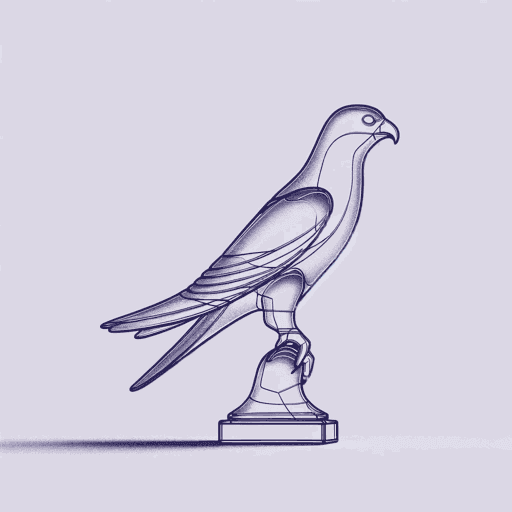
Dr. Shields’s gifts each symbolize something unique but unify to represent The Stronghold of Obsession and Dr. Shields’s desire to control others. Dr. Shields wrongly assumes that by accepting gifts, people owe her their loyalty: “You have received carefully curated gifts […] you have received the equivalent of intensive therapy sessions for free. You belong to me” (237). The first thing Dr. Shields gifts Jessica is the burgundy nail polish that Jessica admired on her; Jessica proceeds to wear it, symbolizing her admiration of Dr. Shields. Dr. Shields then gifts Thomas a sculpture of a glass falcon—his favorite animal—but it also symbolizes her readiness to launch an attack on him if needed. Dr. Shields’s second gift to Jessica is chicken soup, but rather than serving as a nurturing gesture, it is intended as a warning. Later, she pays for Jessica’s family to stay at an expensive Florida resort; her intention is to isolate Jessica and guilt her into continuing to work for her. Dr. Shields’s final gift to Jessica, which she also gave to April, is a Vicodin pill. Jessica knows that Dr. Shields expects her to take it and end her life the way April did, but she refuses, instead keeping it as evidence to use later. While Jessica falls for Dr. Shields’s tactics at first, she eventually grows wise to her true intentions.
Infidelity
Infidelity is a frequent motif in the novel. Dr. Shields, who had previously written a book called The Morality of Marriage, opines frequently about the nature of infidelity and betrayal in the novel as she attempts to determine whether Thomas’s adultery is a singular event—the result of “male fragility”—or a pattern of “systemic fraud.” Infidelity sparks Dr. Shields’s inquiries into The Nature of Morality as she tries to understand if morality is a false notion or if Thomas knowingly made an immoral decision. This preoccupation is her reason for inviting Jessica into her life and organizing the experiment. Thomas was unfaithful to Dr. Shields at least once over the previous summer when he slept with one of his patients, a woman named April. April became preoccupied with Thomas herself and was eventually roped into Dr. Shields’s world, and when she admitted in therapy that she had slept with a married man, Dr. Shields exploited her guilt and manipulated her into suicide. Dr. Shields chooses Jessica to test Thomas because Jessica admits during the initial study that she, too, has slept with men who have partners and because Jessica reminds Dr. Shields of April. Over two months, Dr. Shields uses Jessica to test Thomas, hoping to prove that his affair was not a “referendum” on their relationship. She has Jessica meet up with Thomas, get his phone number, and flirt with him, all the while unaware that Jessica and Thomas end up sleeping together. In the end, all that Dr. Shields finds out is that Thomas is no longer interested in her at all. Thomas’s infidelity illustrates how the decisions one makes can ripple out and affect others in ways that may not have been predicted.

Unlock the meaning behind every key symbol & motif
See how recurring imagery, objects, and ideas shape the narrative.
- Explore how the author builds meaning through symbolism
- Understand what symbols & motifs represent in the text
- Connect recurring ideas to themes, characters, and events
Related Titles
By these authors