An Elderly Lady is up to No Good
52 pages • 1-hour read
Helene TurstenAn Elderly Lady is up to No Good
A modern alternative to SparkNotes and CliffsNotes, SuperSummary offers high-quality Study Guides with detailed chapter summaries and analysis of major themes, characters, and more.
Story 1Chapter Summaries & Analyses
Content Warning: This section of the guide includes discussion of ableism, addiction, sexual content, graphic violence, and death.
Story 1 Summary: “An Elderly Lady Has Accommodation Problems”
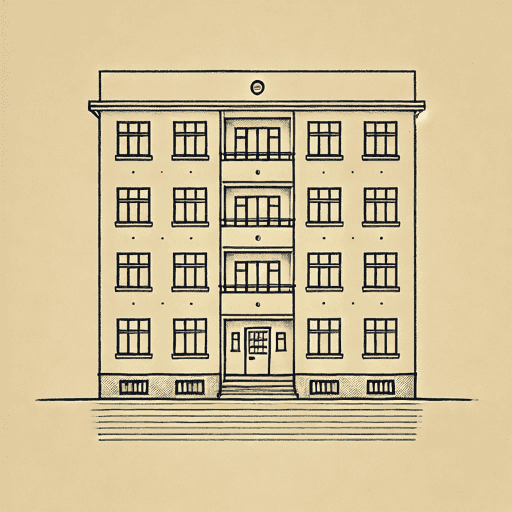
Maud is an 88-year-old Swedish woman living alone in a spacious apartment in Gothenburg. Her family once owned the entire building, but when she was a young woman, her father lost most of the family’s money. After her father died suddenly of a heart attack, their lawyer negotiated a lifetime tenancy in the apartment, rent-free, for Maud’s mother and her two daughters. Maud’s mother grew depressed after her husband’s death and died two years later.
For many years, Maud and her sister, Charlotte, lived in the apartment together. Since Charlotte’s death 40 years prior, Maud has lived alone. Because housing is now very expensive and limited in Gothenburg, many of the building’s tenants resent Maud’s presence after so many decades—but aside from forcing her to pay a small monthly sum toward the building’s upkeep, they cannot dislodge her.
When the story opens, Maud is avoiding answering her door. A newer neighbor, Jasmin Schimmerhof, is repeatedly ringing her doorbell, but Maud has no interest in seeing her. Jasmin’s famous parents spent little time raising her, and after her mother died in a car accident, Jasmin spent some time in a drug and alcohol rehabilitation facility. Jasmin has since launched an artistic career, which she blogs about.
Since Jasmin forced her way into Maud’s life a few weeks prior, Maud has been reading Jasmin’s blog. She finds Jasmin’s art tasteless and amateurish: Much of it involves trash or rubber phalluses. Still, Maud reads about Jasmin because Jasmin has created a problem for her. Jasmin, who lives in a tiny apartment on the ground floor, has been dropping by Maud’s apartment frequently with gourmet treats, politely coercing Maud into a relationship. It is clear to Maud that Jasmin wants to convince her to swap apartments, and Maud is appalled.
For decades, Maud had a full-time job and supported herself and Charlotte. When Charlotte died, Maud continued working and took in boarders so that she could put money aside for retirement. Now, she is well-off enough to spend her time as she likes and travels for much of the year. She has no intention of letting the privileged and idle Jasmin take over her apartment.
Now, she ignores Jasmin’s ringing until Jasmin leaves. Maud realizes that if Jasmin appeals to the housing board and suggests that the large upper-floor apartment is too difficult for Maud to manage, the board may find a way to move her to the small ground-floor apartment. She decides that she will have to deal with the problem before Jasmin tries.
Jasmin has urged Maud to visit her apartment for weeks. Maud pays her a surprise visit. She affects a feeble, confused voice, projecting a nonthreatening persona. On her way inside, however, she checks the hallway for witnesses. There are none.
Jasmin shows Maud around her apartment, praising its features effusively. When they get to Jasmin’s art studio, Maud sees a new piece that is not yet on Jasmin’s blog. It is an old wagon wheel hanging from the ceiling; phalluses of all different sizes, materials, and colors dangle from the wheel. Jasmin shows Maud the mechanism that keeps the wheel suspended despite its great weight. Maud lures Jasmin underneath the sculpture by pretending to have questions about the various phalluses. When Jasmin is directly under the wheel, Maud releases the mechanism keeping the sculpture suspended. Jasmin’s skull is crushed, and she falls to the floor in a pool of blood. That evening, Maud watches Jasmin’s body being carried from the building. She decides that she can live with the mixture of calm and emptiness she feels.
Story 1 Analysis
“An Elderly Lady Has Accommodation Problems” explores The Ambiguity Between Justice and Vengeance through its portrayal of a horrific murder committed by an unlikely killer. By breaking a core convention of the mystery genre and making its protagonist the killer, the story subverts expectations to challenge preconceived notions about guilt and sympathy. Several elements of the story work to offset this subversion by suggesting that Maud and her actions are not as repugnant as they might seem. These elements include the story’s ironic title, the manipulation of stereotypes around age and gender, the use of Maud’s limited point of view, and the critical portrayal of her victim.
Maud possesses unattractive qualities. She prioritizes her own comfort and convenience above all, disliking the way human connections introduce obligations and “idle chatter” that she does not care for (5). Being disturbed by others is both obnoxious and offensive to Maud. She is judgmental, noting with disdain Jasmin’s chipped nail polish and dirty feet, and lacks empathy and compassion, given her willingness to kill in cold blood without considering other options. Her actions suggest not a momentary lapse but a worldview rooted in a rigid sense of personal entitlement and detachment.
Maud resists easy classification as a villain; her age, gender, and motivations align her more closely with an anti-hero, complicating the reader’s moral judgment. Four of the five story titles in the collection, including “An Elderly Lady Has Accommodation Problems,” begin by emphasizing Maud’s age and gender. The diction “An Elderly Lady” summons an image of isolation, frailty, and gentility, creating sympathy for Maud. This works to soften the horror of Maud’s actions. Positioning the threat to her home and her choice to kill in its defense as “Accommodation Problems” comically minimizes the story’s events. The mismatch between title and content establishes the collection’s darkly ironic tone, alerting readers to the possibility that serious violence may emerge from mundane social frictions.
By casting a calculating killer as a seemingly harmless elderly woman, the story subverts cultural stereotypes around age and femininity to darkly comic and unsettling effect. Maud exploits these stereotypes throughout the story, pretending to be frailer and more confused than she really is to buy herself time and deflect suspicions. Tursten, too, exploits these stereotypes: Readers might react with instant dislike had her main character—who violently murders a woman over an implied plan to switch apartments—been another gender or in another age range. Because Maud seems like the underdog in this situation, her actions seem less morally outrageous and more emotionally nuanced. Both Maud’s and Tursten’s use of Maud’s age to manipulate introduces one of the collection’s most prominent themes: The Mistake of Stereotyping the Elderly. The humor that arises from this unexpected role reversal—an elderly woman as a methodical killer—adds a satirical edge to the narrative.
The story’s third-person-limited point of view also plays a role in the narrative’s moral ambiguity. This point of view focuses on Maud’s perspective and conveys her state of mind, helping the reader understand her. The tone is relatively objective, a bit formal, and even clinical in its portrayal of events. The formal language emphasizes Maud’s age, and its clinical nature reflects her generally unemotional state. Contrastingly, emotional language only appears after Maud realizes what Jasmin’s intentions appear to be. She angrily thinks of her as a “spoiled upper-class bitch” (28), making it clear how threatening the potential loss of her home is: Since little disturbs her usually level emotions, this exception stands out as a motive. The word choice of “upper-class” and “spoiled,” by contrast, stress how conscientious about money the hard-working Maud always was, again casting her as the underdog and as Jasmin’s moral superior. The moment of angry clarity punctures Maud’s otherwise controlled persona, revealing the depth of her resentment and fear of displacement.
Jasmin, the murder victim, is portrayed as a self-centered, spoiled, and manipulative person through details like her two marriages, her tell-all autobiography, and her history of substance use. The story states that “she had been abusing both legal and illegal drugs, as well as drinking heavily,” which Maud seems to interpret as evidence of Jasmin’s moral failure (6-7). Any sympathy generated by her difficult childhood and her mother’s death is undercut in Maud’s mind by her visible wealth and the theatrical quality of her lifestyle, including her revealing autobiography and provocative, nontraditional art. Jasmin’s behavior during the story—particularly her attempt to pressure Maud out of her apartment—appears manipulative from Maud’s point of view, reinforcing her belief that Jasmin is undeserving. This subjective portrait makes Jasmin’s murder seem less tragic. She is not portrayed—at least through Maud’s lens—as contributing to the world or surrounded by loved ones who will mourn her loss. This subjectivity encourages readers to adopt Maud’s outlook, or at least to understand it. As a result, Jasmin’s murder does not land with emotional weight or narrative condemnation: There is no grief or reflection on her inherent worth. Instead, the story invites readers to engage with Maud’s logic, creating a sense of complicity as Jasmin’s body is removed from the apartment.
While the story is largely framed from Maud’s perspective, making it difficult to verify her suspicions about Jasmin’s motivations, one moment offers a hint that Maud may have been right. In a social media post, Jasmin writes that she may “be moving into a bigger apartment! […] BIGGER! MUCH BIGGER!!!” (26), which seems to confirm Maud’s suspicions that she is angling to take over the flat. This admission complicates the story’s moral balance: Jasmin may not be guilty of the full scheme Maud imagines, but her apparent excitement over the possibility of upgrading her housing—possibly at Maud’s expense—casts doubt on her intentions. It invites readers to question whether Maud’s extreme solution was in response to a real threat or a projection born of paranoia, thereby deepening the collection’s thematic exploration of The Ambiguity Between Justice and Vengeance.
The various elements of the story—its characterizations, plot, point-of-view, and tone—work together to create a portrait of two partially sympathetic and yet deeply flawed women whose contradictory aims set them—at least as Maud perceives them—on a collision course. That Maud assumes Jasmin is trying to manipulate her into giving up her apartment—and that Maud’s only response is to commit murder—illustrates a theme that runs throughout the collection: The Impact of Self-Centered Thinking. Both women operate from insular mindsets that prioritize their own needs and perceptions over broader moral considerations. Jasmin appears oblivious to how her repeated intrusions upset Maud, while Maud fixates on the perceived threat without entertaining the possibility of setting boundaries or seeking help. Rather than working through their conflict or even confirming each other’s motivations, each woman retreats further into her own worldview. Within this narrow psychological landscape—one shaped as much by miscommunication as by willful self-interest—Maud’s extreme action is framed as disturbingly logical. This moral tension is one of the collection’s signature moves, unsettling readers by drawing them into the perspective of a character whose choices are legally and ethically indefensible.
This story also establishes the idea of performance, not just Maud’s literal acting frail and confused but her mastery of social camouflage. The entire encounter with Jasmin is choreographed like a piece of theater: Maud checks for witnesses, adopts a trembling voice, and plays the role of a bumbling old woman to gain access. Her performance both enables the murder and shields her from suspicion, revealing how power can operate through disguise. Earlier, when she becomes flustered, she “revert[s] to her role of Very Old Lady” (22), a line that reveals how deeply embedded these performances are in Maud’s identity. The capitalization of the phrase makes the role feel almost like a stock character or archetype she steps into at will—an insight that sharpens the story’s critique of how society treats, and underestimates, older women. Tursten’s satire thus extends beyond violence into the realm of social behavior, where politeness and performance mask hostility, entitlement, and deception. This theme of calculated theatricality becomes central to the collection’s critique of ageism, moral hypocrisy, and the cost of appearing harmless.

Unlock all 52 pages of this Study Guide
Get in-depth, chapter-by-chapter summaries and analysis from our literary experts.
- Grasp challenging concepts with clear, comprehensive explanations
- Revisit key plot points and ideas without rereading the book
- Share impressive insights in classes and book clubs