An Elderly Lady is up to No Good
52 pages • 1-hour read
Helene TurstenAn Elderly Lady is up to No Good
A modern alternative to SparkNotes and CliffsNotes, SuperSummary offers high-quality Study Guides with detailed chapter summaries and analysis of major themes, characters, and more.
Symbols & Motifs
Content Warning: This section of the guide includes discussion of ableism, graphic violence, and death.
Maud’s Apartment
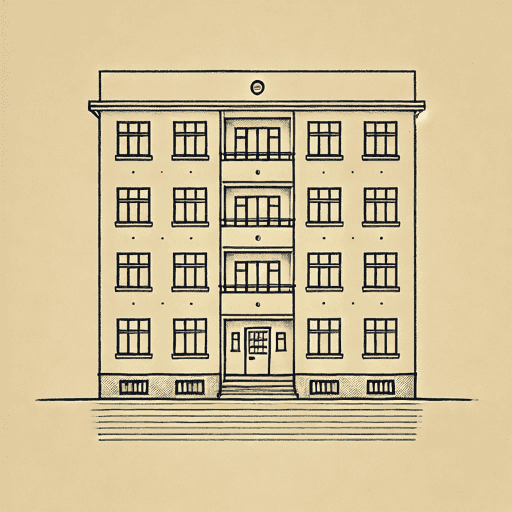
Maud’s apartment functions as a symbol of her identity, and this is why she is willing to fight so hard to protect it. The apartment is where she has lived all her life. It reminds her of her early years with her family, particularly reminding her of the strongest relationship she had during that time—the one with her beloved father. This aspect of Maud’s identity is reflected in the way she has preserved the apartment like “a time capsule”—particularly her father’s room (108). It is also reflected in the unusual arrangement by which Maud continues to occupy the apartment. She does not pay rent, like an ordinary tenant. The apartment is literally the only remaining asset from her family’s once-great wealth, and Maud has inherited a free lifetime tenancy, just as she has inherited a particular eye color and nose shape.
The events surrounding Charlotte’s death are another clue that the apartment functions as a representation of Maud’s identity. Maud’s relationship with Charlotte was uneasy and burdensome—but as long as Charlotte stayed inside the apartment, Maud felt bound to her. On the only occasion Charlotte stepped outside of the apartment, she ended up falling to her death. In a symbolic sense, Charlotte stepped outside of Maud’s sense of self for just a moment, and Maud took advantage of this to expel Charlotte forever. Since Charlotte’s death, Maud has had complete control over her own life—and over the apartment she lives in.
Maud has fought hard to keep the apartment and to build an independent life there. Any threat to the apartment is a threat to Maud herself—as her behavior shows in “An Elderly Lady Has Accommodation Problems” and “An Elderly Lady Is Faced with a Difficult Dilemma.” She is incensed when Jasmin barges into the apartment and begins touching her things—because she so closely identifies with the apartment, this intrusion feels like an invasion of the self. When Jasmin seems to be scheming to move Maud to another apartment, Maud snaps and commits murder. Similarly, when Frazzén seems to be bent on stealing precious items from the apartment—items tied to Maud’s family history and identity—Maud kills him without a second thought. Maud’s murders are horrific—but the symbol of the apartment helps to convey how deeply threatened she feels in these moments, increasing The Ambiguity Between Justice and Vengeance of her actions.
Creature Comforts and Aesthetic Pleasure
Throughout each of the four stories told from Maud’s perspective, descriptive details create a motif of the importance of physical comforts and aesthetic pleasures. Although Maud does not enjoy Jasmin’s company in “An Elderly Lady Has Accommodation Problems,” she very much enjoys the foods that Jasmin brings to share: champagne, caviar, and fresh pastries. In “An Elderly Lady on Her Travels,” Maud takes great pleasure in the spa’s treatments, gourmet food, and comfortable rooms. Descriptions of her experiences often stress their pleasurable qualities: The “freshly baked vanilla pastries” Jasmin brings have a “seductive aroma” Maud cannot help but notice, for example (21), and when she buys her Christmas foods in “An Elderly Lady Seeks Peace at Christmastime,” she chooses not just “bread” but an “artisan loaf that [is] still warm” (82).
The great importance Maud places on things that bring her physical or aesthetic pleasure is evidence of The Impact of Self-Centered Thinking. She is so devoted to her own quiet, comfortable routines that she kills Jasmin and the attorney to preserve them. She is so devoted to her art collection that in “An Elderly Lady Is Faced with a Difficult Dilemma” she kills Frazzén for trying to steal a part of it. Her pleasures, in other words, are more important than other people’s actual lives.
The emphasis Maud places on the value of creature comforts and aesthetic pleasure helps to characterize her—and it is also a part of the text’s dark sense of humor. Most mystery novels that feature elderly protagonists are part of the “cozy” subgenre. These warm, uplifting, domestic stories generally emphasize these same kinds of comforts and pleasures. Here, however, instead of convivial scenes of elderly friends or relatives chatting and laughing together over an elaborate tea, taking in a play at a fancy theater, or reveling in a spa vacation, there is only Maud: solitary, calculating, and dangerous. The details of her meals, massages, and art collection function as a part of the text’s satire of the genre’s usual treatment of elderly characters. She has many of the surface features of these other characters—advanced age, comical irritability about a changing world, and a love of good food and a comfortable bed—but underneath, Maud is something entirely different—which demonstrates clearly The Mistake of Stereotyping the Elderly.
The Cane and the Walker
The cane and the walker that Maud uses in several stories are humorously ironic symbols of her power to manipulate the world around her and part of the text’s arguments about The Mistake of Stereotyping the Elderly. Maud does not need either device—in fact, she steals both the cane and the walker somewhat arbitrarily, thinking that they might come in handy at some point. Maud’s cavalier attitude about taking what is not hers is a part of her power—she can arrange the world to her liking, because she simply does not care about others’ suffering in the way she cares about her own convenience.
Both the cane and the walker come in handy as part of her pretense of being more infirm than she really is. She leans on the cane at the spa after Zazza’s murder, feigning a limp to make herself appear nonthreatening. She shuffles along behind the walker at the grocery store and then bends over it as if dependent on its support after jabbing the clerk with a pin, making it seem as if she could not possibly have attacked him as he claims.
The cane and the walker are useful to Maud in a more sinister way, too: She uses both as murder weapons. There is dark humor in her use of mobility assistance devices in this way: shoving Zazza to the ground with the cane and shoving the attorney down the stairs with the walker subverts their intended purpose ironically and demonstrates that, like Maud, these devices are the opposite of what they appear to be.

Unlock the meaning behind every key symbol & motif
See how recurring imagery, objects, and ideas shape the narrative.
- Explore how the author builds meaning through symbolism
- Understand what symbols & motifs represent in the text
- Connect recurring ideas to themes, characters, and events