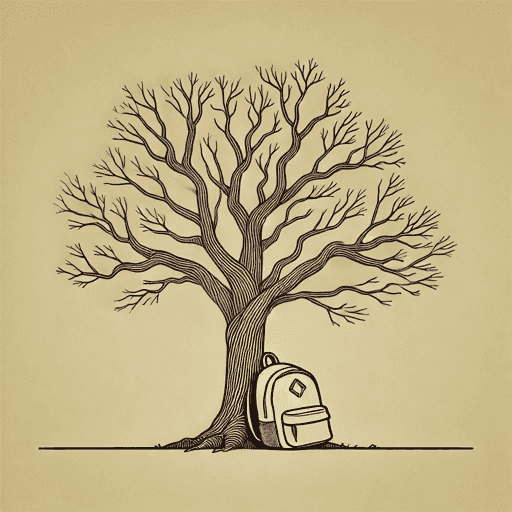
And Then, Boom!
51 pages • 1-hour read
Lisa FippsAnd Then, Boom!
A modern alternative to SparkNotes and CliffsNotes, SuperSummary offers high-quality Study Guides with detailed chapter summaries and analysis of major themes, characters, and more.
Pages 66-120Chapter Summaries & Analyses
Content Warning: This section of the guide contains descriptions of poverty, emotional abuse, illness, and death.
Note: These pages contain the poems “The Grower,” “My Walk to School,” “Hakeem,” “FARBAL,” “Math Matters,” “Juste Horrible,” “The Share Table and Corner Store,” “The Reticulated Python,” “Not Enough, But Plenty,” “Villains at the Table,” “Fair and Square,” “Sitgen,” “Tummy Troubles,” “Hunger,” “Wasted,” “Bowling Ball Pyramid,” “Sick and Tired,” “I Love Basketball,” “What the Game’s About,” “The Turd,” “Happy Farts,” “Out for Supper,” “Worse Than Hunger,” “All I Need,” “Last Night,” “Nighttime’s For Wishes and Dreams,” “Everyone Has A One Day,” “The Return of Thanos,” “Raven,” “Seeds of Hope,” “Screaming,” “Three Kinds of People,” “I Am Falcon,” “The Hug Sandwich,” and “Grandmum Got Her One Day.”
Pages 66-120 Summary
Grandmum plans to plant a new garden in the small yard. She uprooted her prized rose bush from the Gingerbread House and took it with her. Now she can replant it. These days, Joey’s walk to school is less idyllic than when he lived in the Gingerbread House. The sidewalks are damaged, and many houses and businesses are boarded up. Joey finds the walk scary by himself but feels more comfortable when he walks with Nick and Hakeem.
Joey has known Hakeem since kindergarten, when Hakeem caught him falling from the climbing rings. Hakeem has always been there for Joey. Joey is now a recipient of FARBAL (an acronym for “Free And Reduced Breakfasts And Lunches”), and although he feels ashamed of receiving this benefit, he knows that he would go hungry without it.
Mrs. Swan, Joey’s math teacher, has noticed that it is embarrassing for children entitled to FARBAL to have to announce to the cafeteria workers that they get their meals for free. Mrs. Swan changed the code in the computer system so that a swipe of students’ ID cards automatically triggers the notification. Joey sees this is as an example of the way that math can solve problems. He loves math and excels at the subject.
Hakeem learns French through a free app and hopes to go to culinary school in France one day. He uses his French to critique the fish sandwich from the cafeteria. Joey doesn’t mention that eating bad food is better than not having enough food.
Mrs. Swan puts together a “Share Table” where students can leave unopened food that they don’t want or need. She also creates a “Corner Store” full of free snacks in her classroom. Joey takes a few items to supplement his dinner with Grandmum. By the middle of each month, Joey and Grandmum always run out of supplies. Joey imagines poverty like a python that squeezes a person.
Grandmum makes “potato thingees”: potatoes fried in bacon grease. They have no other food, and there isn’t quite enough potato to go around. Joey reflects that he is grateful for his grandmother. The bills on the table remind him of Doomsday, a villain from the comics. He imagines comic book violence as he thinks of their utilities being turned off. Joey calculates what they owe, doing the math in his head.
One day, he wins a game of jeopardy in class, which means that he gets a prize from Mrs. Swan. In the storage closet, she directs him toward a pile of games but is puzzled when he takes a huge box of toilet paper instead.
“Sitgen” is an acronym for Spanish, Italian, Turkish, German, English and Norwegian: all the languages of the places that Grandmum lived when Grampy was in the Air Force. Joey uses the word “sitgen” like a curse word as a way to release the pressure he feels. As time goes on, Grandmum gets sick with a persistent stomachache. She needs to go to the doctor but that would cost money, and she would miss work. Joey isn’t sure what to do. To Joey, hunger is about more than food. It’s about needing something to survive and not being able to obtain it.
Every day after school, Joey goes with Nick and Hakeem to a convenience store. Hakeem always pays for Joey’s snack. Joey notices how much food gets thrown out even though people in the world are hungry.
Uncle Frankie has a pyramid of bowling balls in front of the entrance to the mobile home park. He tells Joey that he had always wanted to build a castle, but when he got these free bowling balls from a bowling alley that was closing, he moved on to Plan B. Joey reflects that he and Grandmum are on “Plan ZZZ.” Joey notices that Grandmum has gone to work. He feels bad that she went to work while sick, even though he understands that they need the money.
Joey loves basketball and thinks that he is pretty good at it. He can’t afford shoes or the fees to join a team, so he just plays at the mobile home court. Joey focuses on the sensory experience of playing basketball and forgets about everything else in his life.
Uncle Frankie brings Joey and Grandmum a porch swing. Joey, Nick, and Hakeem jokingly name it “The Turd” after its brown, lopsided appearance. Grandmum comes home in the Fishbowl, which sounds like it is farting all the time. She takes Joey to a soup kitchen, and they eat spaghetti with other people who cannot afford dinner. They eat with a little girl named Candy Sprinkles. Her mother gave her this name so that her life would be sweet. Joey notices the mother sharing food with her daughter. Grandmum often gives Joey her portion so that he will have enough, and he often does the same for her. On the drive home, Grandmum expresses regret that she can’t give Joey everything he needs. Joey tells her that he only really needs her.
Joey hears Grandmum groaning in pain and crawls into bed with her. They look at the oak trees out the window and feel connected to the idea that the trees survive storm after storm. Grandmum encourages Joey to make wishes on the glow-in-the-dark stars. He wishes to be a pro basketball player and to buy back the Gingerbread House. He reflects that everyone has a dream. Hakeem dreams of being a Michelin-star chef, and Nick hopes to find a cure for depression. Grandmum dreams of going back home to England, while Joey hopes to never be hungry again.
One day, when Joey returns home from school, he learns that Grandmum is in the hospital. When he gets there, he encounters his mother and does not understand why the hospital called her; he reflects that she is more like the villain, Thanos, than a hero like Batman. Mom informs Joey that Grandmum has died. Joey accuses her of lying and insists on seeing Grandmum himself. He sees Grandmum’s body on the hospital bed, and he wishes that she would say something comforting and hug him. He feels like he has lost his entire world.
Joey and Mom return home. Joey notices all the milk jugs that Grandmum used to plant seedlings for the garden. Mom insists that they are trash and wants them thrown away. She kicks them over, squashing Joey’s hope. Joey retreats to his secret pine grove and screams.
Nick finds Joey in the pine grove and helps him to restore the jugs that Mom kicked over. They take all the seedlings to Nick’s home in order to keep them safe. Nick helps Joey hold onto hope.
During Grandmum’s funeral, Joey dissociates, imagining that he is a superhero flying above his body. Joey’s friends and community support him during the funeral. As Nick and Hakeem and their families hug him, Joey cries. Grandmum had dreamed of going back to England, and Joey reflects that she did get her dream in the end because they shipped her ashes back to England.
Pages 66-120 Analysis
With Grandmum’s death, Joey’s life becomes far more complicated and precarious, and although his intense reactions reflect Children’s Resilience amid Hardship, he struggles with his internalized shame over his unstable circumstances. Joey’s voice continues to carry the fragmented, emotionally direct quality established earlier in the novel, and the author uses verse to capture the rawness of Joey’s experience as he confronts a deep personal loss and heightened material hardships.
One of the most persistent themes in this section is The Impact of Food Insecurity, which intensifies as Joey becomes more aware of the daily challenges involved in finding his next meal. Before her death, Grandmum gives her makeshift meals creative names such as “potato thingees,” using humor and love as a coping mechanism to mask the harsh reality of the family’s food scarcity. Even so, Joey’s hyperawareness around the availability of food reveals how intensely the family’s poverty weighs on them. Although his classmates never have to worry about where their next meal is coming from, Joey deeply values his teacher’s “Corner Store” and “Share Table” because to him, they aren’t just casual amenities; they are a vital part of his survival strategy. He instinctively takes food for both himself and his grandmother, and it is clear that even as he focuses on gaining an education, he is stuck in survival mode. His hunger has rewired his thinking, robbing him of the carefree mindset of childhood, and his heightened sensitivity to food waste reveals his growing awareness of the world’s inequalities. For example, when he notices food being thrown away at the Corner Store, he notes the irony between “so much wasted food” and “so many hungry people” (89). This tension between the burden of adult responsibilities and the desire to remain a kid is central to Joey’s emotional struggle.
This section also focuses on Addressing the Social Stigma of Poverty, a theme that plays out through small but meaningful interactions. In this context, Mrs. Swan proves herself to be one of Joey’s most compassionate allies. Her decision to change the lunchroom system so that FARBAL students no longer have to announce their benefit status signals her deep understanding of the emotional toll that poverty takes on children. Her Corner Store also becomes a small act of resistance against shame, and she uses this method to help meet students’ needs with care and dignity. Joey’s friends, Nick and Hakeem, also offer him crucial emotional support through quiet gestures like paying for his snacks or restoring the milk jugs that Grandmum planted. Notably, Joey’s friends never draw attention to his reduced circumstances, and he therefore feels empowered to accept their help without feeling embarrassed. These relationships function as a safety net that helps Joey to survive the instability around him.
A major turning point in the novel occurs when Grandmum dies. For now Joey is left only with his unpredictable mother and lacks a stable source of love, safety, and structure. Grandmum’s death, which is clearly foreshadowed by her stomach pains and inability to seek medical care, illustrates the grim reality that poverty can often have lethal consequences. Utterly bereft, Joey is suddenly alone and vulnerable, and the emotional gravity of this moment is reflected in the increasingly dark tone of his language. Upon seeing Grandmum’s body, he describes “her skin so blue” (111) and the disconcerting way her body looks like a blue comic book character. He also conveys his own visceral reaction to this sight, as when he starts “shaking” and his “teeth chatter” (111). His physical response highlights his vulnerability, suggesting that Grandmum’s death has deprived him of the last vestiges of warmth and safety in his world.
The return of Joey’s mother in this moment of crisis adds further instability rather than comfort. Her violent and erratic behavior, particularly the moment when she kicks over Grandmum’s seedlings, epitomizes her inability to nurture or protect Joey. The jugs are symbolic of Grandmum’s care, self-reliance, and dreams of creating something beautiful, but Joey’s mother cruelly desecrates this hope, showing Joey in no uncertain terms that does not care about his physical or emotional well-being. With the threat of losing the plants, Joey loses one more tether to the safety and love that Grandmum once provided.
Because Joey’s emotional response to these events is fragmented and delayed, his reaction is consistent with common manifestations of trauma. He initially dissociates from his emotions during the funeral, escaping into the superhero narratives that have long served as a protective shield against the grim realities of his world. Although his stoicism reflects children’s resilience amid hardship, his disconnection from his emotions is clearly unhealthy, and it is only when he is surrounded by the physical presence of Nick, Hakeem, and their families that he finally allows himself to cry. This moment affirms that, although he has lost Grandmum, he is not entirely alone; his chosen community is still here to hold him up. His retreat to the sanctuary of the pine grove also helps him to cope with his loss, and he repeatedly turns to nature and solitude to help him process his most difficult feelings.
In this emotionally intense scene, Joey is forced to grow up even more quickly as the joint pressures of hunger, grief, and unstable parenting converge and cause him to feel heightened internal turmoil. Even so, Joey’s narrative remains grounded in small acts of resilience, kindness, and imagination, and whether he is sharing food at the soup kitchen, dreaming under glow-in-the-dark stars, or screaming into the trees, it is clear that he is doing his best to find a way forward even in the face of despair.

Unlock all 51 pages of this Study Guide
Get in-depth, chapter-by-chapter summaries and analysis from our literary experts.
- Grasp challenging concepts with clear, comprehensive explanations
- Revisit key plot points and ideas without rereading the book
- Share impressive insights in classes and book clubs