Angel Falls
49 pages • 1-hour read
Kristin HannahAngel Falls
A modern alternative to SparkNotes and CliffsNotes, SuperSummary offers high-quality Study Guides with detailed chapter summaries and analysis of major themes, characters, and more.
Symbols & Motifs
Content Warning: This section of the guide includes a discussion of illness.
Memory
The recurring motif of memory—as well as its opposite—lies at the heart of the novel, driving the plot and exploring whether identity and love are constructs of the past or products of conscious, present-day choices. Mikaela’s retrograde amnesia is acts as a thematic crucible that strips away 15 years of her life and compels her to confront a past self who was still in love with Julian True. The central conflict arises from this erasure of her lived reality with Liam, and Hannah uses the novel’s premise to pose the question of whether a couple’s connection can survive without the shared memories that built their relationship. In the process of recovering from her catastrophic failure of memory, Mikaela also evaluates the true nature of love. Torn between the idealized, remembered passion for a celebrity she remembers and the tangible, stable partnership with a man she has forgotten, she can only rebuild her family’s stability when she makes the active choice to rebuild her life with Liam, the husband who has always been there for her.
The Pillowcase
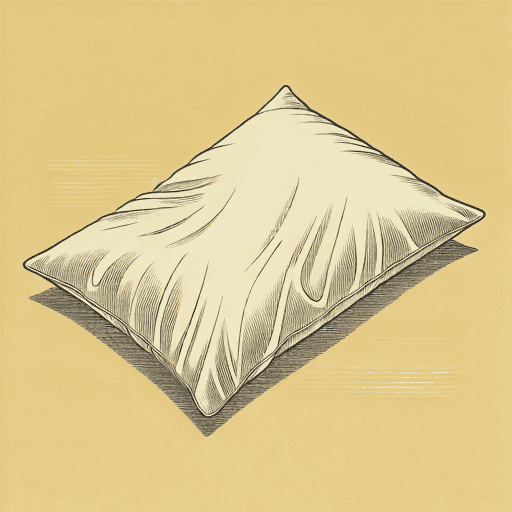
The pillowcase holding Mikaela’s memorabilia of her life with Julian stands as a symbol of her suppressed past and unresolved secrets. A tangible object containing the life she left behind, it functions as a Pandora’s box for the Campbell family. When Liam discovers it, he understands its symbolic weight and reflects, “The past they’d all ignored was here; it had lived with them all these years, hidden inside a Nordstrom bag in his wife’s closet. And like Pandora, he simply had to look” (104). This allusion to Greek myth foreshadows the chaos and pain that will be unleashed when Liam chooses study the contents: the glossy photographs of a glamorous wedding, the newspaper clippings about celebrity life, and the massive diamond ring. All of these items represent the past identity of “Kayla True,” a persona that Mikaela shed in order to build a new life in Last Bend. For Liam, the discovery shatters the foundation of his marriage by revealing the scale of the secrets that his wife has kept. For Mikaela, the pillowcase becomes the catalyst for her inner conflict, compelling her to reconcile the passionate, artificial world of her first marriage with the grounded, authentic love that she built with Liam. In this way, the pillowcase furthers the novel’s exploration of Reintegrating Past Selves Into a Coherent Identity.
Angel Falls and Angel Lake
Angel Falls and the surrounding landscape of Angel Lake serve as a symbol for the sanctuary of genuine love that Mikaela and Liam have consciously built together. This setting represents a life of mutual support and true belonging, which contrasts with the empty glamour of Mikaela’s past in Hollywood. The symbolic importance of the setting is established through the town’s founding mythos; Liam’s grandfather was the one who named the town Last Bend “because he thought the only home worth having was worth searching for, and he’d found his at the last turn in the road” (4). This legacy infuses the setting with the idea that the best version of life is the one that has been consciously and deliberately embraced. At the family home of Angel Falls Ranch, Mikaela and Liam have built their family and nurtured a stable partnership, and although it is here that Mikaela’s traumatic “fall” initiates her journey of memory loss, this journey ultimately leads her to a deeper appreciation for the life and love she has cultivated here. Her final choice to recommit to Liam is intertwined with her choice to return to Angel Falls, and it is clear that her true identity lies in this haven of genuine connection.
Piano Playing
Liam’s unwillingness to play the piano symbolizes his internal struggle to come to terms with Mikaela’s accident and her secret past. He is a pianist at heart, for long before he became a doctor, he studied music. Up until the accident, his melodies frequently fill the house. However, after the accident, “he end[s] up in front of the grand piano in the living room, staring down at the keyboard, wishing the music was still in his heart and in his fingers” (99). The music is his love and joy, which he struggles to summon when Mikaela is injured. It becomes increasingly difficult for him to play after learning about his wife’s past with Julian, for he believes that Mikaela never truly loved him. Repeatedly, Liam sits on the piano bench, and repeatedly, he does not make a sound. It is only when Mikaela returns home and explains that her passion for Julian was an obsession that Liam is finally able to play again. After her confession, “he face[s] the piano and lift[s] his hands [...] Gently he began to play […] their song, ‘A Time for Us’” (376). Once they discuss the past honestly, Liam can find the music again because he knows that his love for Mikaela is reciprocated. Playing the piano ultimately symbolizes that he has resolved his internal struggle and can resume his life with greater confidence in the architecture of his marriage.

Unlock the meaning behind every key symbol & motif
See how recurring imagery, objects, and ideas shape the narrative.
- Explore how the author builds meaning through symbolism
- Understand what symbols & motifs represent in the text
- Connect recurring ideas to themes, characters, and events