anyone lived in a pretty how town
anyone lived in a pretty how town
A modern alternative to SparkNotes and CliffsNotes, SuperSummary offers high-quality Study Guides with detailed chapter summaries and analysis of major themes, characters, and more.
Symbols & Motifs
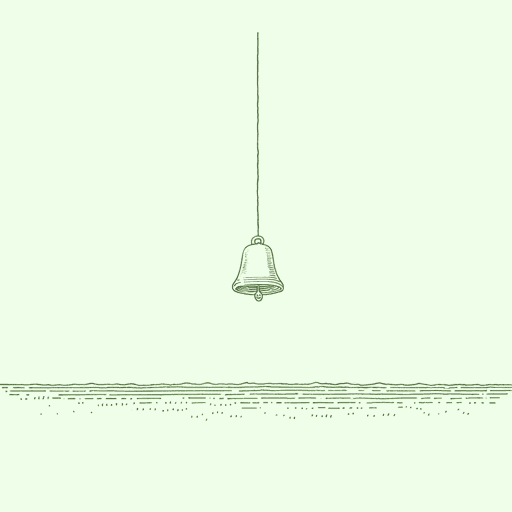
Bells
The bells in the poem are clear representations of time. Bells are often used to mark different hours of the day or specific occasions in life. For example, church bells often call people to worship, wedding bells signify the union of two people, and funeral bells commemorate the dead. While bells are designed to mark the passage of time or an event, their ringing also has a stopping effect, often keeping the time in an extended moment of observation and thought.
In the poem, the speaker introduces the bells in Line 2, saying the town features “up so floating many bells down.” This introduction simply adds to the imagery of this town, giving it a surreal feeling. However, later in the poem, the bells return, and this is where their significance comes into focus. The speaker mentions “how children are apt to forget to remember / with up so floating many bells down” (Lines 23-24). Here, the speaker makes clear the connection between bells and time, specifically with how the bells mark the passing of children from innocence to experience. Just as time passes from season to season, people pass from joy to grief to loss to gain. Time does not stop, even as people are born and die. The bells serve as a reminder that no matter what our lives look like, we will always be at the mercy of time’s uncaring progression.
Nature
Just as time moves on and on, so too does nature. The poem shows how people are at the mercy of nature and its unending, unchanging, uncompromising progression.
But there is also a more positive, if not hopeful connotation with nature in this poem. In a way, human life mirrors the natural progression of the seasons. On the earth, spring is a time of birth and renewal, where new life emerges from the melting snow of winter. Throughout the summer, life flourishes and grows, and the days become bright and hot. Once fall settles in, the temperature begins to drop as animals prepare for winter and plants stop growing. And once winter hits, the snow and the cold come to kill life, and animals hibernate or leave for warmer places.
Just as this natural progression of seasons happens, human beings also experience their own spring, summer, fall, and winter. We are born, we grow and thrive, we age and wind down, and eventually we die. And just like the seasons repeat in a never-ending cycle, we have children who repeat the cycle for us. Children bring renewal just as the spring does, but children grow and die too, continuing the cycle forever.
Eventually, people die and become one with the earth, returning to the place where we all began. When the speaker says “noone and anyone earth by april” (Line 31), he might as well be Hamlet holding Yorick’s skull and soliloquizing about how the fate of all humans is to return to the dust of the earth.
Children
Throughout the poem, the only people who acknowledge anyone and noone are children, but they quickly lose interest in the couple and become “everyones” and “someones” (Line 17). The children and their progression into uninterested adults help the speaker make points about the passage of time and the things we lose as time works upon us.
It’s also worth noting here that the poem is written like a nursery rhyme with an accentual meter, meaning that it has a fixed number of stressed syllables or accents in every line. Nursery rhymes are supposed to be whimsical and comforting to children, but this poem is contemplative and can be read as a bleak comment on life and nature. The way a reader approaches the poem actually mimics this bait and switch, as upon first reading, most people notice the poem’s nursery rhyme elements, like its rhythm, its surreal setting, and its unique syntax. However, only upon subsequent readings and deeper analysis do the poem’s bleaker themes become clear.
As humans grow, they forget the whimsy they had as children. The poem references this loss twice: “and down they forgot as up they grew” (Line 10) and “how children are apt to forget to remember” (Line 23). Just as we read a poem like this and search for its hidden meanings, we often forget the joy and pleasure of the rhythmic language and surreal imagery that often attracts children to poetry and other kinds of storytelling in the first place. The poem laments the fact of life that as we grow, we lose this innocent part of ourselves.

Unlock the meaning behind every key symbol & motif
See how recurring imagery, objects, and ideas shape the narrative.
- Explore how the author builds meaning through symbolism
- Understand what symbols & motifs represent in the text
- Connect recurring ideas to themes, characters, and events