Assassination Vacation
50 pages • 1-hour read
Sarah VowellAssassination Vacation
A modern alternative to SparkNotes and CliffsNotes, SuperSummary offers high-quality Study Guides with detailed chapter summaries and analysis of major themes, characters, and more.
Themes
The Impact of Political Violence in American History
One of the points that Sarah Vowell makes explicit throughout Assassination Vacation is her personal opposition to political violence. That opposition, along with a belief in the rule of law, is a core part of how Vowell views her own political liberalism. For example, when referring to her objection to Emma Goldman’s advocacy of violent acts, Vowell remarks, “I’m more of a Ten Commandments, rule-of-law girl myself” (218). In tracing the legacy of political assassinations, Vowell seeks to better understand the impact of political violence in American history.
Violence and death are, for Vowell, something that should transcend political divisions. She treats the idea of violence befalling even a leader she hates, President George W. Bush, with abhorrence. When remembering a flippant remark that she made related to the shooting of President Ronald Reagan, Vowell remarks with regret, “It pains me that, like Reagan, faced with the profundity of death my first conscious impulse was to act like a smart-alecky partisan jackass” (84)
Two figures that are central to Vowell’s discussion of political violence are John Brown and Emma Goldman. It is true that Vowell never explicitly condemns Brown’s actions. However, she does note the fact that Brown inspired John Wilkes Booth, even though Booth was pro-enslavement and Brown was an abolitionist (82-83). Further, she does suggest that Brown was responsible for the violence that led to the Bleeding Kansas massacres (64). In one passage, Vowell also sardonically refers to Brown as “the abolitionists’ favorite murderer” (96).
More explicit are Vowell’s words about Emma Goldman. Vowell writes, “Emma Goldman claimed to abhor violence, and yet her speeches and writings are full of sympathetic odes to killers and would-be killers” (218). Elsewhere, she observes, “It is interesting how, once one edits justifications for violence down to a length suitable for T-shirt slogans, political distinctions between left and right disappear” (89). Often Vowell suggests that figures like Brown and Goldman are part of a continuity of political violence in the history of the United States, which directly influenced the three assassins discussed in Assassination Vacation.
Vowell also maintains that political violence is ultimately ineffective and leads to further violence. One example is how veterans of the Indian Wars used violent techniques they learned in the Philippines (204-205). Nor does violence lead to the perpetrators’ outcomes. For example, Booth’s assassination led to Lincoln becoming a martyr instead of reviving the Confederacy. In the case of Czolgosz, while the assassination of McKinley did lead to Theodore Roosevelt becoming president and enacting reforms that benefited the working class, it also led to a crackdown against anarchists.
Vowell thus suggests that political violence can have destructive reverberations that can last centuries, sometimes begetting even more violence in response. What is more, she also suggests that it is ultimately ineffective, and that seeking change should come through legal and democratic channels instead.
The Shaping of Civic Memory
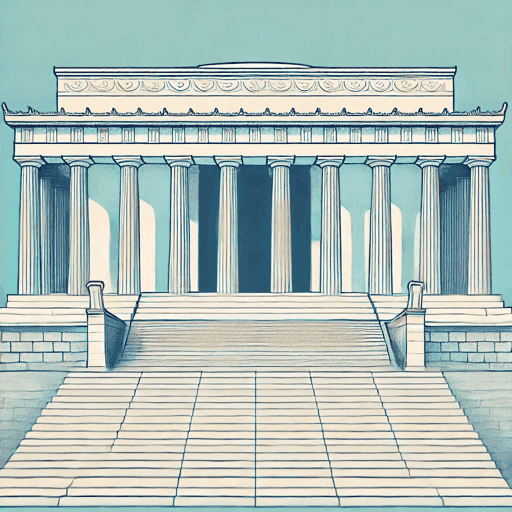
Sarah Vowell compares Christian religious pilgrimages to the sites of holy relics to the sort of “historical pilgrimage” (11) she takes in Assassination Vacation. A key part of this allegory is one major coincidence: “Booth shot Lincoln on Good Friday, the day commemorating Christ’s crucifixion. By the next morning, Lincoln was dead” (248). Vowell, however, is more interested in a secular ideal of pilgrimage and commemoration, with her travels helping her to explore the shaping of civic memory.
Vowell suggests that religious and historical pilgrimages serve similar needs. Just as religious pilgrimages and icons connect people to the sacred, historical tourism and relics allow people to connect to the past. Vowell quotes a museum curator as saying, “the importance of the relic, the importance of the little sacred icon, is a sense of connection to the past” (98). For Vowell, this is what she achieves by reading Lincoln’s works and visiting the Lincoln Memorial: “I’ve been under the impression that every time | come here to the Lincoln Memorial, I’m cheating death […] I feel like I’m bringing Abraham Lincoln back to life” (251).
Nonetheless, civic memories can change over time or be forgotten. Although President Garfield was widely mourned after his assassination, “[n]o plaque marks the spot where Guiteau gunned down Garfield—zip” (159), which suggests that some legacies fade over time. A statue of President McKinley, whose expansion of the United States’ overseas territory was once praised, is now the subject of a campaign to tear it down or relocate it “because it ‘represents this nation’s dawning season of global militarism, empire-building and corporate-funded, political victories of capitalist classes over working classes, and of racists over reformers’” (208-209).
In the case of the McKinley statue and its meaning, civic memory changed as a result of shifting social and cultural values. Often civic memory is created not by the history itself, but by later generations of artists, architects, and writers. Vowell illustrates this point when she discusses the remodeling of the New York Custom House. Instead of following the styles of the architect Frank Lloyd Wright, who integrated non-western cultural styles, the design of the New York Custom House instead visually “symbolized the emerging economic global dominance of Theodore Roosevelt’s America” (241) by showing symbols of European dominance over Indigenous Americans.
More positively, Vowell also shows how civic memory is shaped on the ground, by those who are passionate about history. Vowell describes such people thusly: “I’ve learned that the people who volunteer to preserve and interpret at such places are mostly local heroes who care deeply about their hometowns and the people who lived there before them” (54). For example, there is Joan Schnorbus. When describing the railroad track the residents of Long Branch, New Jersey laid out to help the dying President Garfield reach his beloved beachside cottage, Vowell notes that “after Garfield’s death, after the rail spur was torn out, some sentimental local, someone like Joan, gathered the wood and built a little house out of it” (185).
Overall, Vowell’s view of civic memory is that it can be something created by those in power for political reasons, but it can also genuinely preserve an impression of the past and be shaped by historical preservationists on the ground. Either way, she suggests that civic memory helps to bring order and meaning to the chaos and obscurity of the past.
The Tension Between Patriotism and History
Very clearly, Vowell views herself as a patriotic individual. She explicitly describes her faith in the United States as “religious” (11), declaring, “The Declaration of Independence, the Constitution, the Civil War—when I really think about them they all seem about as likely as the parting of the Red Sea” (12). At the same time, Vowell does not hesitate to be critical of the darker chapters in the history of the United States, thereby examining the tension between patriotism and history throughout her assassination-themed road trip.
Vowell asserts that any view into the past should be brutally and totally honest. Vowell speaks about the legacy of enslavement, gesturing towards how the enslaving of African Americans contradicted the ostensible founding ideals of the American republic. In a similar vein, Vowell acknowledges how American imperialism in the Philippines was a dark mark that fed into future crises and atrocities: “Our failed postwar policy after the Spanish-American War actually led the world to the brink of nuclear annihilation in 1962” (208). Elsewhere, she explicitly compares the foreign policy of McKinley to George W. Bush’s invasion of Iraq, stating that with Bush “we seem to be reliving” (206) the McKinley presidency.
Nonetheless, despite Vowell’s disgust over the George W. Bush presidency, the selling of Confederate memorabilia, and the United States’ history of violence against indigenous Americans, African Americans, and Filipinos, she still takes an overall optimistic view of the United States and its history. This is exactly what Vowell suggests when, upon viewing the Lincoln Memorial, she writes
But loving this memorial is a lot like loving this country: I might not have built the place this way; it’s a little too pompous, and if you look underneath the marble, the structure’s a fake and ye olde Parthenon is actually supported by skyscraper steel. But the Lincoln Memorial is still my favorite place in the world and not just in spite of its many stupid flaws (247).
For Vowell, the history of the United States is not only defined by its atrocities like enslavement, but in how the American people and individuals like Lincoln were able to keep turning the country into something better and more fitting with its founding ideals. Her reflections thus suggest that, while citizens should seek to know the unvarnished truth of their country’s history, such knowledge does not prevent a person from still loving and taking pride in their community and nation.

Unlock every key theme and why it matters
Get in-depth breakdowns of the book’s main ideas and how they connect and evolve.
- Explore how themes develop throughout the text
- Connect themes to characters, events, and symbols
- Support essays and discussions with thematic evidence