Average Waves in Unprotected Waters
30 pages • 1-hour read
Anne TylerAverage Waves in Unprotected Waters
A modern alternative to SparkNotes and CliffsNotes, SuperSummary offers high-quality Study Guides with detailed chapter summaries and analysis of major themes, characters, and more.
Symbols & Motifs
Cleanliness
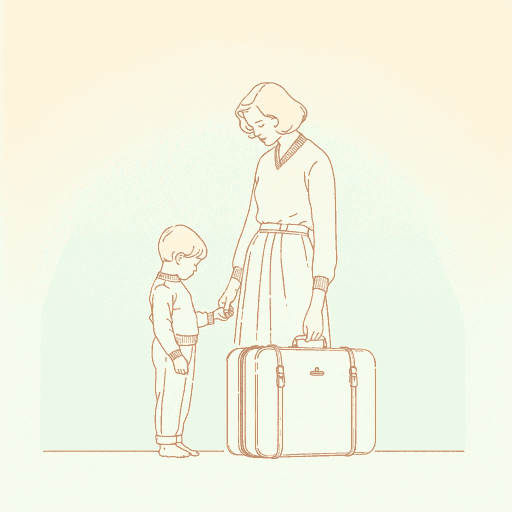
Tyler employs the motif of tidiness and order versus dinginess and disarray to embody Bet’s moral compass. Throughout the story, Bet associates cleanliness and neatness with goodness. Part of her existing identity derives from her pride in maintaining Arnold’s outward appearance as a way to compensate for his quirks and her shame. Bet’s own dilapidated clothing that “[hangs] on her like a sack” (32) reflects her poor self-worth. Arnold’s shirt, by contrast, is “too neat and the jeans too blue, unpatched and unfaded” (32). Bet makes sure to carefully button his coat and fix his collar, and when Arnold wants a peanut butter cookie, she worries that “[he’ll] get it all over his face and arrive [at the hospital] not looking his best” (34). Bet focuses on making Arnold presentable as a coping mechanism for her anxiety about how the world will judge him, choosing to be oblivious to the triviality of his appearance in the face of her decision to institutionalize him. As long as he is neat, he is a good boy, and she is a good mother. The fallacy of this logic is apparent in the hospital itself, which is clean to the point of alienation. Noting its smell of disinfectant and the sterile white walls and floors, Bet acknowledges there is no sign that children live there at all. This focus on cleanliness and outward appearances, therefore, supplants love and care.
Title
The most significant symbol in the story is the title, which derives from a flashback midway through the narrative. On the train, Bet remembers that her fisherman father’s days were always determined by “the height of average waves in unprotected waters” (33), and Tyler uses this phrase as a metaphor for all the characters in the story. Bet, Arnold, Mrs. Puckett, Bet’s parents, and the supporting characters she interacts with along her journey are all “average waves,” or ordinary people, trying to navigate the “unprotected waters” of their society. Tyler’s use of “average” is grounded on a positive connotation—not mediocre, but quotidian. Just as she characterizes Bet’s father as seeing beauty in the sea by virtue of its existence, Tyler finds grace in the everyday moments of human lives. She places no judgment on her characters; they are merely people who make choices.
Even the two moments in the story with the most potential for heartbreak unfold as neutral, or “average,” through Tyler’s tone. When Avery leaves, Bet “[isn’t] surprised. She even [knows] how he [feels], more or less” (33). Tyler reports the incident like a journalist: the facts and an innocuous reaction. Later, as the taxi drives Bet away from the hospital, Tyler alleviates Bet’s shame through quiet, faultless actions: “She folded her hands and looked straight ahead. Tears seemed to be coming down her face in sheets” (36). Bet has made a choice, and she does not look back, just as Avery never returned after his choice. The tears come, but Bet does not own them. Both portrayals of abandonment are unremarkable, but Tyler implies deep emotion beneath the muted surface.
Symbolic Settings
Tyler uses multiple settings to symbolize the stages of Bet’s realization of identity. The condition of Bet’s apartment reflects the deterioration of her mind and life. She rents a room in an “ancient, crumbling house” with “yellowed shade[s],” a bathroom sink that provides the only source of water, and a hot plate for cooking (32). Bet’s early life of relative freedom in the vast ocean has been reduced to a dingy, compact room that she must share with a person who requires all her energy and attention.
The train represents Bet’s escape from her small life and her journey toward a new identity. Both she and Arnold are nervous when they first board the train, but “when the train [reaches] a steady speed, he [grows] calmer” (33), and so does she. They are both safe for the moment, and Bet allows her mind to open. Physically, Bet is moving away from her ramshackle life, which allows her mind to become unstuck as well. Although her memories start with Arnold, they quickly shift to her as a child, and she is able to reclaim some of her self-assurance.
On the outside, the hospital starkly contrasts with Bet’s apartment. When they first arrive, “the hospital [looks] like someone’s great, pillared mansion, with square brick buildings all around it” (35). This description fits Bet’s expectations of the hospital as the place where all her burdens will be lifted. Inside, however, Bet realizes for the first time that even clean, bright places can be bleak. With its long corridors, “chicken-wired windows,” “fat, ugly women in shapeless gray dresses,” and the antiseptic ward where Arnold will sleep on a white cot with a gray blanket, the hospital seems just as stifling and confining as the apartment (35). Tyler’s use of white in this scene, coupled with the neat bed and sheets that look “painted on,” almost mocks Bet’s obsession with hygiene. For a brief moment, she recognizes that pristine facades do not necessarily mean virtue and dignity.

Unlock the meaning behind every key symbol & motif
See how recurring imagery, objects, and ideas shape the narrative.
- Explore how the author builds meaning through symbolism
- Understand what symbols & motifs represent in the text
- Connect recurring ideas to themes, characters, and events