Big Dumb Eyes: Stories from a Simpler Mind
46 pages • 1-hour read
Nate BargatzeBig Dumb Eyes: Stories from a Simpler Mind
A modern alternative to SparkNotes and CliffsNotes, SuperSummary offers high-quality Study Guides with detailed chapter summaries and analysis of major themes, characters, and more.
Chapters 1-5Chapter Summaries & Analyses
Content Warning: This section features descriptions of child abuse, substance use disorder, and death by suicide.
Chapter 1 Summary: “Introduction: The Most Words”
Nick Bargatze opens his memoir by recalling the first time he spoke to his publisher over the phone about titling the book. He suggested the title Big Dumb Eyes, but with his Southern accent, his publisher hears “Big Demise.” Bargatze acknowledges the irony of the fact that he has written a book at all; in his standup comedy, he often talks about his distaste for reading and books. However, he assures readers that Big Dumb Eyes is not “a whole complicated thing” (2). It does not go into deep or serious topics, and as a collection of stories, the chapters don’t have to be read in chronological order. Reading this book, he stresses, does not necessitate any “pesky stuff” like “smarts,” or “facts or opinions” (2).
Bargatze assures readers that he will contextualize recurring characters each time they come up, so that there is no need to keep track of who they are. For example, Bargatze mentions his friend P-P frequently, and the he promises to remind readers each time that P-P’s nickname derives from an incident wherein “he got hit in the pee-pee with a football” (4). Bargatze also notes that the book contains several blank pages, “to help you keep your head above water,” and very few “big words” (4).
Chapter 2 Summary: “The Biggest Little Speed Trap in Tennessee”
Bargatze is from Old Hickory, Tennessee, which is a small town. When he was an adolescent, his family moved to Lakewood, which was an even smaller town. Lakewood is technically located within the boundaries of Old Hickory (though Bargatze does not understand how this is “legally possible”), and the family’s new home was a couple miles away from their previous one. This move marks “a big transition” for his family. In Lakewood, everybody knows everyone else. Most people born in Lakewood end up spending their whole lives there.
It rarely snows in Tennessee, and if it does snow in Lakewood, the entire town shuts down. Everyone goes to the big hill next to the church to go sledding, but it snows so little that after a few minutes, the hill is covered in mud. He used “trays and trash can lids” as sleds, and the hill eventually became “pure slop” (6).
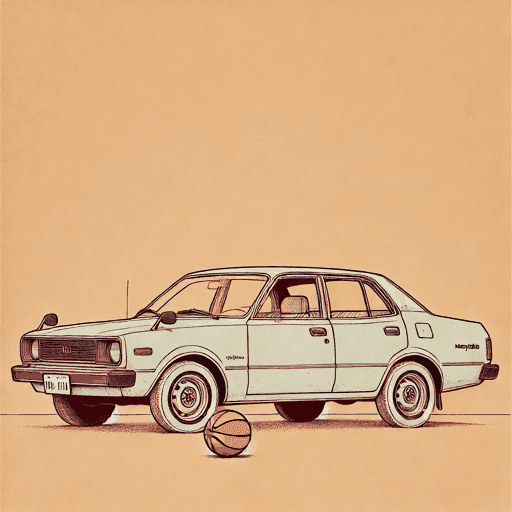
Lakewood had six police officers, which seemed to the townspeople like a lot for such a small place. There was never any crime, so one of the police department’s main duties was giving speeding tickets. There was a speed trap on Old Hickory Boulevard, across from the Piggly Wiggly, that everyone in the town sped through even though they knew about it. An officer once pulled over Bargatze’s dad as he was driving his family to church because he had a can in his hand. The officer asked to take a sip out of the can to verify that it was not alcohol. After realizing that it was Big Red cream soda, he sent the family on their way. Shortly after this incident, Bargatze’s mother was caught in a speed trap. To avoid getting pulled over again, she managed to successfully outrun the officer, even though she was driving an old, used Mazda in a town with very few streets.
After Bargatze grows up and leaves Lakewood, his parents move to a bigger town a few miles down the road. Lakewood eventually loses its police department, which saddens the Bargatze family even though the speed trap was a nuisance. Whenever Bargatze visits his family, he makes sure to slow down on Old Hickory Boulevard in the police department’s honor.
Chapter 3 Summary: “Raised by a Clown”
When Bargatze was a child, his father was a professional clown. Bargatze reflects that having a clown as a father was not easy, because his dad was especially talented. Bargatze’s dad performed at his seventh birthday party, and Bargatze’s friends wanted to watch his dad rather than hang out with Bargatze. Bargatze writes that when his friends walked into his house, instead of seeing “normal-house things,” they would see “a bag of thirty lemons, one stack of fake quarters, twenty lengths of rope, and about seven hundred million decks of cards” (13). When Bargatze was in high school, his dad still performed at his birthday parties. Bargatze’s first girlfriend refused to come to the party because she was afraid of clowns. This conflict caused the two to break up, and Bargatze was heartbroken.
Back in the present, Bargatze explains that his dad is a very funny man in part due to his difficult childhood. Though childhood trauma is a common factor of funny adults, the author notes that it’s not the case for himself. He had a happy and loving childhood and still grew up to be a comedian. His dad, Bargatze writes, “got all the miserable stuff out of the way” (13). Both of Bargatze’s dad’s parents had substance use disorder. His mother was a semi-professional bowler, and she used to leave Bargatze’s dad outside the bowling alley while she played. When he was a toddler, he was attacked by a dog while waiting for his mother in the alley. The dog tore his face so severely that Bargatze’s dad required several years of reconstructive surgery, and he developed a speech impediment. Due to the speech impediment, he went to special education instead of regular classes, and he could barely read or write by the time he was a teenager.
When he was in middle school, he met a girl who would eventually become Bargatze’s mom, and the two hit it off right away. Meeting Bargatze’s mother was “the one good thing that happened” to his dad in childhood (15). After high school, Bargatze’s dad was kicked out of his parents’ house, lived unhoused for a while, and even attempted to die by suicide. He eventually moved in with his cousin, Ronnie, and his wife, Melinda, who showed Bargatze’s dad a lot of kindness. They even helped bathe him when his arm was in a cast after his mother pushed him down the stairs. Ronnie and Melinda went to church, which is how Bargatze’s dad became religious.
When Bargatze first starts to become successful as a comedian, he invites his dad to open for him onstage. (Bargatze’s father eventually transitions from clown to magician). He tells his dad to try not to be “too funny,” so that Bargatze is still the star of the show. When the day arrives, Bargatze’s dad doesn’t hold back at all, and the audience loves him. Bargatze’s new wife, Laura, attends with her parents, who still talk about Bargatze’s dad’s act to this day. Bargatze’s dad still opens for him on stage sometimes—20 years later—and he always cries, out of gratitude and pride, when welcoming his son to the stage after his act.
Chapter 4 Summary: “I Was Almost a Genius”
Nick Bargatze claims that he is dumb as an adult. When he was a child, however, he was a genius. He writes, “I was gonna be […] a doctor that does brain stuff […] You know, any of those jobs that take a lot of smarts. That was gonna be me” (19). When he was in seventh grade, Bargatze participated in his school’s science fair. It was an extra-competitive fair, because the judges were scientists from DuPont chemical company. The winner would go on to compete in the city and state fairs afterward.
While all the other top students spent weeks perfecting their presentations, Bargatze waited until the night before the fair. He used a magic trick his father used in his act that involved a strong magnet and some everyday objects that had tiny slivers of metal embedded in them. The trick makes it look like the magnet can move objects that aren’t made of metal. Bargatze doesn’t remember exactly what he did to impress the judges, but he won first place. He never went on to compete in the city-wide fair because his family lacked interest. They dropped his project off at the competition with a note about how it worked, and later Bargatze learned that he didn’t win.
Bargatze was the top student in his grade in every subject up until seventh grade. After seventh grade, he was never a strong student. Bargatze is certain that this is because he suffered a severe concussion during the summer after seventh grade when he fell off a 60-foot cliff and woke up in the hospital. He writes, “I was different after that” (24). Bargatze’s family takes a different stance. They believe that the change in his academic performance occurred because a new kid, Daniel Rucker, moved into town. The Rucker family was studious and intelligent, and Bargatze felt that he couldn’t compete with Daniel. Bargatze didn’t try very hard in school after that. Bargatze adds, “And I was also starting to realize that for some reason I liked making people laugh more than I liked, you know, studying and stuff. That was good enough for me” (26).
Chapter 5 Summary: “Random Food Thing 1: I Guess Sushi is Old”
The author reflects on a recent dining experience with his wife, Laura, at a sushi restaurant. He tells the chef that sushi must have been invented in the 2000s in California. The chef informs him that sushi is Japanese. This sounds improbably because of the popular “California roll,” which includes cream cheese. Laura points out that the restaurant’s sign reads “Japanese Food,” so Bargatze concedes that he is wrong. He learns that sushi is indeed from Japan, and that it was invented at least 200 years ago.
Chapters 1-5 Analysis
Bargatze opens his memoir with an explanation of its self-deprecating title. From these opening lines, Bargatze establishes that humility and Taking Pride in Southern Culture Despite Its Stereotypes will be foundational themes. Over the course of the book, he often returns to the idea that he has low intelligence though this is not true. It’s part of his comedic persona that he uses to make his comedy approachable for a range of audiences. Bargatze often uses specific diction to drive this point home. For example, he uses intentionally low-brow language when he reassures readers that the book does not contain “pesky stuff” like “smarts.” Using this colloquial language in the Introduction sets a funny and ironic tone for the rest of the book. It’s also a way of breaking down any perceived barriers between the author and his readers. Big Dumb Eyes is meant to read like a casual, lighthearted conversation between friends than a didactic or educational text by an expert.
The Introduction also lays the foundation for a few running jokes that continue throughout the book. For example, as Bargatze promises, he does repeat the explanation of how his friend P-P got his nickname nearly every time P-P is mentioned. The reference fulfills its stated function but also allows Bargatze to poke fun at his friend by reminding him of an embarrassing memory every time the opportunity arises. Framing his decision to add character name reminders as a result of his decision to read Russian author Leo Tolstoy’s novel War and Peace as a child undercuts his claims of low intelligence. Bargatze’s humility, which he proves by exaggerating his own dullness, helps his readers feel comfortable and confident in comparison, making them more receptive to his stories.
Bargatze’s idyllic description of Lakewood as well as the brief introductions to his parents orients readers to the setting, culture, and social contexts against which the rest of the memoir is set. The anecdote about getting pulled over characterizes Bargatze’s father as being a non-drinker and also as someone who isn’t in the best physical shape—he has diabetes—due to a lifetime of drinking sugary drinks. He still takes pride in his family’s foibles and growing up in Tennessee, even after living outside of the South for decades.
The anecdote about Bargatze’s mother running away from the police is the first appearance of cars as a motif. Bargatze makes sure to mention that his mom was driving a “used Mazda,” which adds comedic value in that this is generally considered to be a slow car, not one used by criminals caught up in a police chase. Describing the nature of his and his family’s cars is also a device the author employs as a marker of his life’s progression. At the time that his mother escapes from the police, the family is at a socioeconomic low point—she can’t afford to pay a speeding ticket. Later on, as circumstances change, Bargatze and his parents will have different cars, which Bargatze will tie to the events he experiences with them.
The Importance of Strong Family Bonds is another theme introduced in this section. Bargatze’s family values strong family ties, even if their execution isn’t always perfect. The background information Bargatze provides about his father’s abusive, neglectful childhood motivates Bargatze to improve and strengthen the bonds among the family though this point remains in the memoir’s subtext.
Including a chapter about being a childhood genius is noteworthy because Bargatze devotes so much of his memoir to the trope of his below-average intelligence. It is clear from the start that Bargatze drastically exaggerates his lack of intelligence for comedic effect, and the chapter “I Was Almost a Genius” adds even more perspective. Until he was a teenager, Bargatze ranked at the top of his class in every subject. It is unlikely that the concussion he suffered is truly responsible for his drop in grades, as he claims. Instead, the realization Bargatze has about himself at this time—that he enjoys comedy more than studying—is likely a key contributor to his drop in academic success. As Big Dumb Eyes continues to show, Bargatze has strong values and a keen intellect that guide his approach to comedy. His desire to de-emphasize academic success and focus on the details of daily life resonates with the theme of Finding Humor and Joy in Simplicity. His approach to comedy also implies that intellect doesn’t have to be condescending; it can be expressed in relatable ways, even if Bargatze has to downplay his own intelligence to make it work.

Unlock all 46 pages of this Study Guide
Get in-depth, chapter-by-chapter summaries and analysis from our literary experts.
- Grasp challenging concepts with clear, comprehensive explanations
- Revisit key plot points and ideas without rereading the book
- Share impressive insights in classes and book clubs