Big Dumb Eyes: Stories from a Simpler Mind
46 pages • 1-hour read
Nate BargatzeBig Dumb Eyes: Stories from a Simpler Mind
A modern alternative to SparkNotes and CliffsNotes, SuperSummary offers high-quality Study Guides with detailed chapter summaries and analysis of major themes, characters, and more.
Important Quotes
“This book is never trying to say anything even close to important.”
(Chapter 1, Pages 1-2)
In the Introduction to his memoir, Bargatze asserts that the book never tries to hint at a deeper meaning below its surface level. This is an example of the author being an unreliable narrator—the memoir does indeed touch on meaningful topics. The trope is an example of Bargatze’s theme of Taking Pride in Southern Culture Despite Its Stereotypes. Bargatze plays into the stereotype of the unintelligent Southerner, even though that’s not the truth. He does not bend the truth to sway his readers’ opinions, but his narration is self-deprecating and sarcastic, so it cannot always be taken as truth.
“Like my friend P-P comes up in a few chapters, and I will always helpfully remind you that he’s called P-P.”
(Chapter 1, Page 3)
Bargatze promises to continuously remind readers of the origin of P-P’s nickname. Bargatze reiterates throughout the book that he is not a strong reader and tends to be forgetful when he reads. Reminding readers of P-P’s nickname is a courtesy to his readers based on the author’s own struggle. Over time, this becomes a running joke. Bargatze mentions P-P and his nickname’s origin story so many times that it becomes more about the continuity of the joke than about the courtesy.
“I grew up in this tiny little town in Tennessee that thought it needed six police officers. I’d say no one knew why we had so many police officers, except we did know why.”
(Chapter 2, Page 4)
Nick Bargatze grows up in Lakewood, Tennessee, which is outside of the slightly larger town, Old Hickory, Tennessee. Lakewood has six police officers because there is a speed-trap near the supermarket. The speed trap is annoying to Bargatze’s family when they live there, but when they move out of town, they find that they miss it. They don’t miss getting in trouble, but they are nostalgic for the community feel of a small, friendly town. The anecdote is an example of Finding Humor and Joy in Simplicity.
“We’d take trays and trash can lids and we’d flop down on our bellies, me on the bottom, my sister on top, my brother sandwiched in between, and we’d bolt right down that single snowy hill, and after five minutes it was nothing but mud. Just pure slop.”
(Chapter 2, Page 7)
Bargatze reflects on his childhood in the South. There was never much snowfall there, but this passage sheds light on the importance of family and community to Bargatze when he is young. Even though the snowfall isn’t substantial enough to truly go sledding, Bargatze and his siblings go anyway. They don’t seem to care about the lack of actual snow—they just have fun and enjoy each other’s company. This passage highlights the theme of finding humor and joy in simplicity.
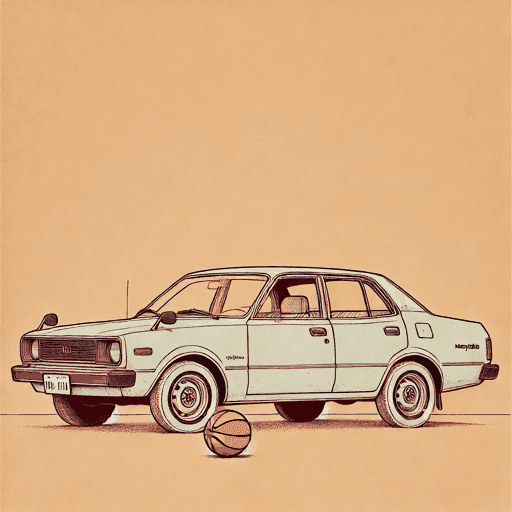
“My mom heard the sirens, she saw the flashing lights, she said, ‘Nope, not today, Po-Po,’ and she outran this cop behind the wheel of a used Mazda.”
(Chapter 2, Page 9)
Even though the mother’s dialogue is exaggerated for comedic effect, Bargatze does swear that his mother really did outrun the cops, as she was tired of getting pulled over in the speed trap. This detail serves to characterize Lakewood, where Bargatze grew up, as a generally relaxed, community-based town. It also mentions Bargatze’s mother’s Mazda, which is the memoir’s first use of cars as a motif.
“Or maybe a math teacher who teaches the hardest math on earth. You know, any of those jobs that take a lot of smarts. That was gonna be me.”
(Chapter 4, Page 19)
Bargatze claims that he used to be the smartest student in his class: He was always first among his classmates until seventh grade. Now, he is making a joke about he allegedly lost the intelligence he once had. The author uses colloquial diction like “smarts” instead of “intelligence” and “gonna” instead of “going to” to convince readers that his mental capacity isn’t very high. However, he also makes the point that many people have stereotypes about what constitutes a valid career for an intelligent person.
“And I was also starting to realize that for some reason I liked making people laugh more than I liked, you know, studying and stuff.”
(Chapter 4, Page 26)
The idea that Bargatze is “dumb,” in his words, is a recurring joke throughout the book, but this quote hints at the truth of why Bargatze doesn’t go on to have a traditionally successful academic career. Bargatze simply enjoys making people laugh more than anything else. His father is a professional clown and magician, so this is a trait passed down in the family. This touches on the memoir’s themes of The Importance of Strong Family Bonds as well as finding humor and joy in simplicity.
“Plus, we were born-again Christians, but because my mom’s relatives didn’t go to church five times a week like us, we all thought they’d lost their way.”
(Chapter 10, Page 59)
This quote relates to the theme of taking pride in Southern culture despite its stereotypes. One stereotype is that Southerners are very religious, a belief that he echoes. His Christian upbringing affects everything he does throughout the memoir. It’s also the reason this book as well as his standup comedy is always family-friendly and “clean.”
“I went to Western Kentucky with one of my oldest friends from Old Hickory, P-P. Who got his nickname when a football hit…you know. Maybe I’ve explained it enough.”
(Chapter 11, Page 74)
True to his promise in the book’s introduction, Bargatze makes sure to remind readers of the origin of P-P’s nickname every time P-P comes up. This is one example of a running joke, which is a tactic the author uses to tie together different sections of the narrative and add structure to the memoir, since its episodes aren’t always presented in chronological order.
“First off, someone’s gotta keep watch over our daughter, because Harper could be listening to something completely inappropriate about drugs or Satan or boys, and I’d be like, ‘Hey, that’s a catchy tune.’”
(Chapter 13, Page 84)
Here, Bargatze is explaining how he doesn’t tend to pay attention to the meaning of music. The joke in this quote is two-fold; Bargatze exaggerates how oblivious he is, and he also lists drugs, Satan, and boys as though they are all on the same level of immorality. Bargatze’s desire to shield his daughter from Satan as well as boys exemplifies his traditional values as well as his protective nature over his family.
“We piled into my car, which at the time was this giant, champagne-colored Buick.1 It was this big boat of a car, one of those things that maybe your great-grandpa drove around and thought it was a real fine vehicle.”
(Chapter 13, Page 90)
Bargatze uses cars as a motif to signify major changes and different periods within his life. He first bonds with his wife Laura in this Buick. Bargatze often uses reference numbers, like the “1” in this quote, directing readers to footnotes. These footnotes help to add layers to the narrative and thus make connections between different parts of the book. They also have the comedic effect of imitating scholarly texts, even though the book’s lack of complexity is a central idea in the memoir.
“To anyone who is actually paying attention to what I’m writing, this car was about two or three generations after Old Blue, who by now was down in Texas enjoying his retirement. He may have been gone, but the spirit of nicknaming every vehicle I ever drove was going strong.”
(Chapter 13, Page 93)
This is the footnote corresponding to the passage in the previous quote. The note reinforces the importance of the car motif, as it links the significance of Bargatze’s Buick in his life to the impact his old car, Old Blue, had on his teenage years.
“GET YOUR HEAD ABOVE WATER”
(Chapter 14, Page 94)
“Get Your Head Above Water” is the title of Chapter 14. It has no content and is made up of several blank pages. This is the second chapter in the memoir that is composed of blank pages, which Bargatze writes in the introduction are meant to give his readers a break. These chapters sarcastically imply that reading the book is overwhelmingly difficult work.
“So I had pretty much jack squat. But I did have a place to start. I had a sense of purpose. And I had a job with a pretty simple title. You stand. You’re up. And you, like, comedied or something.”
(Chapter 15, Page 107)
Earlier in this chapter, Bargatze writes about being a water meter reader for a time, which is a job where the title indicates exactly what the job duties are. He ends the chapter with this line, which ties back to the beginning of the chapter by implying that “standup comedian” is the same kind of job title. The quote also marks a climactic change in the author’s life, wherein he is about to move away from his family for the first time and attempt to start a career in comedy.
“This was an old-fashioned tube TV. This thing basically had transistors that weighed about a ton each. And that rat treated it like an iPad. We didn’t know what the rat did after it got out of the wall, and we didn’t want to know. Probably bench-pressed our sofa a few times.”
(Chapter 16, Page 117)
When Bargatze moves to Chicago, he experiences culture shock. There are rats in his apartment, which he has never seen and knows nothing about. This shows how Bargatze had previously been somewhat sheltered in his small, Southern town. The author also uses exaggeration for comedic effect and to illustrate the horror he experiences when he discovers how large and strong city rats are.
“McDonald’s and I have had a long and happy relationship. For a while, I thought it was the perfect relationship.”
(Chapter 18, Page 127)
The author uses food as a motif to emphasize various themes in his memoir. Bargatze loves fast food—a trait that is a stereotype of people from the South though it’s also true to the author’s lived experience. The characterization of Bargatze’s relationship with McDonald’s as “long and happy” underscores his theme of finding humor and joy in simplicity.
“How sweet, a stray homeless dog that lives in the trash. We should let him sleep with our children in their bed.”
(Chapter 19, Page 134)
Dogs are a motif the author uses to illustrate how his values change as his life progresses. This quote refers to Bargatze’s parents’ attitude toward the family’s first dog when Bargatze is a child. They simply take in a stray dog and don’t put much effort into its care. This reflects the simplicity of the Southern lifestyle Bargatze grew up in.
“But we were simpler folk back then. Stronger. One with our land and our lawns. Times change. Attitudes evolve. Now we’re too fancy to walk around with dog poop on our shoes.”
(Chapter 19, Page 147)
Once Bargatze has a family of his own, he gets a labradoodle, which is a change from the rescued mixed-breed dogs he used to have. As a child living in Old Hickory, no one picked up after their dogs. Now, people have designer-bred dogs and are expected to take meticulous care of them. Bargatze laments these cultural changes, showing how deeply his Southern upbringing has affected him, even years into adulthood.
“All I could think of was how amazing our child was, nothing else even crossed my mind, and before I even knew what was happening, the good Southern doctor pressed these scissors with these big round blades into my hand and I cut the umbilical cord and that was that.”
(Chapter 21, Page 165)
Before Bargatze’s daughter Harper is born, his wife and mother make a bet as to whether he will be able to cut the umbilical cord, as Bargatze is known to be squeamish. Bargatze’s mother thinks he will be able to, but his wife Laura doesn’t. Even Bargatze himself doesn’t believe in his ability to overcome his squeamishness. When the time comes, Bargatze cuts the cord easily. The event illustrates how important family is to the author, as he is so overcome with love for his daughter that he doesn’t think about anything else. The fact that Bargatze’s mother believes in him also highlights their strong family value.
“In the South, we take our bond with our team seriously. I mean, I know people take their team seriously all over the place, but especially in the South. It’s not just your team, it’s your tribe, it’s your heritage, it’s who you give your allegiance to.”
(Chapter 24, Page 181)
Bargatze discusses his support for Vanderbilt football team. He stays loyal to his team for his entire life, even though Vanderbilt is not a very strong team. The author’s comment about how team allegiances are stronger in the South than in other places reiterates his theme of taking pride in Southern culture despite its stereotypes.
“My wife sometimes reminds me that I need to be Harper’s dad, a guy who can provide discipline and wisdom, and I shouldn’t think of Harper as my friend. This, of course, is ridiculous. Harper is not my friend. She is my best friend.”
(Chapter 26, Page 191)
Bargatze’s closeness to his daughter is another example of how important family is to him, emphasizing the importance of strong family bonds. Earlier in the memoir, the author focuses on the significance of his relationships to his parents and siblings, but after getting married and having a child, the new family he creates becomes the most meaningful aspect of his life.
“Over the years, I have developed many complicated strategies for avoiding exercise. […] For example, me and Eric will schedule a time to meet up and work out, and at the last second I’ll remember I have something important I have to do, like go to McDonald’s, and I’ll cancel.”
(Chapter 27, Page 202)
Bargatze discusses his attempts to lose weight and get in shape, at which he is largely unsuccessful. His mention of McDonald’s is another example of food as a motif the author uses to illustrate his alleged simple-minded nature. It’s also an example of the theme finding humor and joy in simplicity.
“And I can’t do a chicken salad. I did one of those yesterday, and they snuck onions in it, and now I’ll never trust chicken salad ever again in my life. So it’s definitely gonna be a sandwich. Then I could go simple with some mustard, probably not too spicy, or I might try barbecue sauce.”
(Chapter 28, Page 207)
This quote is an excerpt from a conversation Bargatze has with his wife Laura over the phone. He calls Laura multiple times a day, every day, which again illustrates how connected Bargatze is to his family. Like many of Bargatze’s details about his life, it could be an exaggeration for comedic effect. This conversation also exemplifies how important food is in the author’s life.
“So my parents went crazy and bought the big Chevy with the cup holders. And it was a bad, bad idea. They were constantly behind on their payments, which were a whopping $100 a month.”
(Chapter 29, Page 214)
At one point in Bargatze’s childhood, his parents buy a nice Chevrolet because it has cup holders and they are tired of spilling drinks in the car. This anecdote is another usage of the car motif, which is used throughout the book to signify different periods of the author’s life. At this point in his childhood, his family is so poor that they can’t afford the low car payment. With the focus on cupholders as a priority and the family’s low socioeconomic status, the incident is an example of taking pride in Southern culture despite its stereotypes.
“Who knows—for my next project, I might be even more ambitious. Maybe try Russian historical fiction or dystopian sci-fi. I’m just kidding. I don’t even know what any of that means.”
(Chapter 30, Page 222)
In the conclusion of Bargatze’s memoir, he discloses that the book took him two years to write, despite how simple it is. He jokes that he might write something more complicated for his next project. His dismissal of the idea once again drives home the book’s joke about the author’s alleged simple-mindedness, but his mention of these genres signals that he indeed knows what they are and, possibly, could write such a work.

Unlock every key quote and its meaning
Get 25 quotes with page numbers and clear analysis to help you reference, write, and discuss with confidence.
- Cite quotes accurately with exact page numbers
- Understand what each quote really means
- Strengthen your analysis in essays or discussions