Big Dumb Eyes: Stories from a Simpler Mind
46 pages • 1-hour read
Nate BargatzeBig Dumb Eyes: Stories from a Simpler Mind
A modern alternative to SparkNotes and CliffsNotes, SuperSummary offers high-quality Study Guides with detailed chapter summaries and analysis of major themes, characters, and more.
Symbols & Motifs
Cars
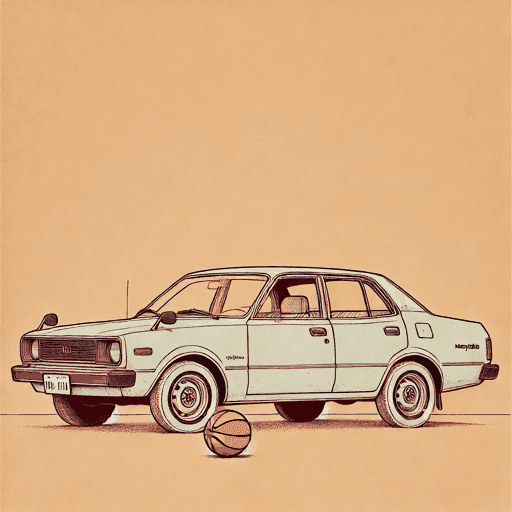
In Big Dumb Eyes, each of the various cars that Nick Bargatze owns represents a different stage of his life. Taken as a whole, his journey from car to car symbolizes the author’s personal advancement as he matures and achieves success in his career. Bargatze’s first car is a used 1985 Mazda, which his parents buy for him when he is in high school. Bargatze’s dream car at the time was a brand-new black Chevrolet Camaro, but he is content with the car he gets, even though it already has 60,000 miles on it and it barely runs. He nicknames it “Old Blue.” A few years later, Bargatze gets a new car—a “giant, champagne-colored Buick,” which he nicknames “the Real Car’s Car” (90). It is in this Buick that he first bonds with Laura, his future wife.
After this, Bargatze works briefly as an anti-drunk driving educator for high school programs, so he drives a specially programmed Dodge Neon used to simulate driving while intoxicated. He drives another specialized work vehicle when he works as a water meter reader. Bargatze loves this job, because he spends much of his time napping and snacking in the company truck. One more car that Bargatze reflects on later in the memoir is a Chevrolet that his parents purchase even though they can’t afford it. They buy this car because it has cup holders, and they are tired of spilling drinks in the car. The specific details the author recalls about each car serve as reminders of some of the memoir’s most significant themes—The Importance of Strong Family Bonds and Finding Humor and Joy in Simplicity.
Food
Food is a prevalent motif in Big Dumb Eyes, as Bargatze discusses his food and restaurant preferences often and at length. He intersperses five chapters—"Random Food Things,” numbered 1-5—throughout the memoir on the topic. The first “Random Food Thing” chapter, subtitled “I Guess Sushi is Old,” is a summary of an argument Bargatze had with a sushi chef. The brief chapter serves to further Bargatze’s characterization of himself as “dumb” and simple in a playful and comedic way. “Random Food Thing 2: I Hate Onions” plays a similar narrative role, and it reiterates Bargatze’s ties to his Southern roots by emphasizing his love for fast and fried foods. This exemplifies the theme of Taking Pride in Southern Culture Despite Its Stereotypes. The author writes that the only time he eats onions is when they are in the form of onion rings. This passage plays with stereotypes of Southerners eating unhealthy, fried foods, but only eating onions in the form of onion rings is something many people in the United States can relate to, as fast-food culture is popular throughout the country. The author’s frequent and impassioned discussions of food attests to his appreciation of small, modest pleasures, and example of the theme finding humor and joy in simplicity.
Dogs
Dogs are a recurring motif in Big Dumb Eyes. Nick Bargatze owns dogs throughout his life, but the relationships he has with his dogs change over time, depending on his life circumstances. Like the cars Bargatze owns throughout his life, each dog the author mentions helps to characterize Bargatze’s views as well as the culture of that era. When Bargatze is a child, no one was expected to take their dog out for a walk, since, as the author puts it, “Dogs walked perfectly fine all by themselves” (132). The concept of dog ownership was completely different in the South as compared to how most people think of it now. In Tennessee in the 1990s, neighborhood dogs came and went as they pleased. Bargatze’s “first dog” was a stray that temporarily lived in the Bargatze household, and he never even had a name.
Years later, Bargatze got a new dog, Sasha, when he moved to New York City. Bargatze was shocked to learn that in New York, dog owners picked up after their dogs. Bargatze ends up having to give Sasha away when he realizes he can’t keep up with her care. Whereas the nameless stray that Bargatze had as a child reflects the simplicity of that time in his life, Sasha demonstrates the difficult and unexpected complexities inherent to becoming an adult. Years later, when Bargatze is settled down with a wife and daughter, they adopt a labradoodle named Holly. Bargatze refers to doodles as “the Lamborghini[s] of dogs.” Doodles (poodle mixes) are expensive and trendy, and Bargatze’s wife doesn’t even let Holly outside on her own in case she gets attacked by foxes. Bargatze concludes that “These dogs aren’t animals. They aren’t even dogs anymore” (145). Holly exemplifies the modern, overly cautious and higher-class environment in which Bargatze now finds himself.

Unlock the meaning behind every key symbol & motif
See how recurring imagery, objects, and ideas shape the narrative.
- Explore how the author builds meaning through symbolism
- Understand what symbols & motifs represent in the text
- Connect recurring ideas to themes, characters, and events