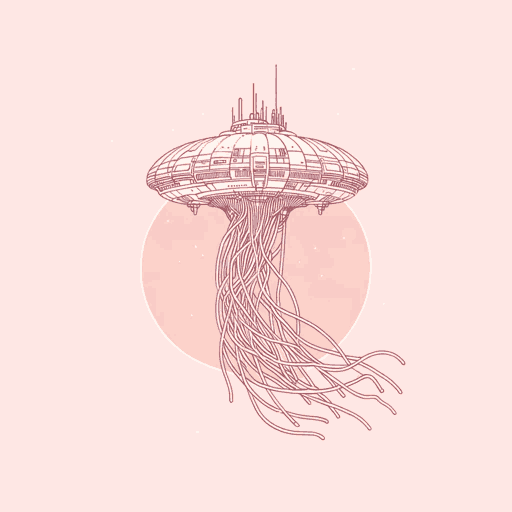
Binti
102 pages • 3-hour read
Nnedi OkoraforBinti
A modern alternative to SparkNotes and CliffsNotes, SuperSummary offers high-quality Study Guides with detailed chapter summaries and analysis of major themes, characters, and more. For select classroom titles, we also provide Teaching Guides with discussion and quiz questions to prompt student engagement.
Answer Key
Novella 1-Short Story
Reading Check
1. 16 years old (Novella 1)
2. 9 siblings (Novella 1)
3. Root (Novella 1)
4. Professor Okpala, the head of the mathematics department (Short Story)
Short Answer
1. She can communicate with “spirit flow” and create harmony. She creates unity among her people and also at large, among any differing factions. She is someone who brings people together and creates community. (Novella 1)
2. An astrolabe is a complex piece of technology that holds its user’s identity; it not only allows people to communicate but also stores data. Additionally, it holds five possible forecasts of its user’s future. (Novella 1)
3. Both Haifa and Binti went through transitions. Binti was transformed into being part Meduse. Haifa, meanwhile, was born physically male but transitioned to female when she was 13 years old. (Short Story)
Novella 2, Prologue-Chapter 4
Reading Check
1. Weapons City (Novella 2, Prologue)
2. Back flips (Novella 2, Chapter 1)
3. Because Third Fish is pregnant (Novella 2, Chapter 2)
4. She covers Okwu’s tentacles in otjize (Novella 2, Chapter 3)
5. Blue (Novella 2, Chapter 4)
Short Answer
1. The edan is an ancient artifact that Binti discovered when she was a child. The edan protects Binti from the Meduse because it is poisonous to them. It also allows her to communicate with the Meduse. (Novella 2, Prologue-Chapter 4)
2. In the eyes of the Khoush, the Himba are a savage people—so, one role foisted upon Binti is that of “savage.” As such, she’s expected to be unintelligent and impetuous. As a girl, Binti is expected to be demure and to defer to patriarchal figures in Himba culture. Binti’s family also has certain expectations of her, and therefore “dutiful daughter” is another role that Binti must assume. (Novella 2, Prologue-Chapter 4)
Novella 2, Chapters 5-9
Reading Check
1. Shining baby snails (Novella 2, Chapter 5)
2. She is her paternal grandmother. (Novella 2, Chapter 6)
3. They believe the Desert People have a neurological condition. (Novella 2, Chapter 6)
4. A harmonizer (Novella 2, Chapter 7)
Short Answer
1. Binti was furious that she couldn’t attend a dance because her community told her it would be inappropriate for the next master harmonizer to do so. To find peace, Binti stole away to the desert to meditate. She was digging into the desert’s sand when she pricked her finger. She dug at the sand even more and discovered a strange flower; beneath the flower, she found the edan. (Novella 2, Chapter 8)
2. The Enyi Zinariya were given a technology by an alien race called the Zinariya. The technology, called a “biological nanoid,” is a tiny chip implanted in the Enyi Zinariya’s brains that allows them to communicate over long distances. (Novella 2, Chapter 9)
Novella 2, Chapter 10-Novella 3, Chapter 2
Reading Check
1. In the center of a dried lake (Novella 2, Chapter 11)
2. That of an owl (Novella 2, Chapter 12)
3. She smokes. (Novella 3, Chapter 1)
4. An orange (Novella 3, Chapter 2)
Short Answer
1. The Enyi Zinariya live in vast networks of caves, unlike the Himba. Also unlike the Himba, the Enyi Zinariya encourage clan members to move and live wherever they see fit; they do not force their people to stay within the bounds of their original home. (Novella 2, Chapter 10)
2. Binti is no longer “simply Himba.” The Meduse have already changed Binti during their scuffle, and Binti recently learned that she also has Enyi Zinariya heritage. Binti is realizing that life is far more complex than she initially imagined. She is learning, growing, and adapting as necessary. (Novella 2, Chapter 11)
Novella 3, Chapters 3-7
Reading Check
1. It absorbed some of the glowing snails’ genetic coding. (Novella 3, Chapter 4)
2. Dancing in a way that only Dele does (Novella 3, Chapter 5)
3. In space (Novella 3, Chapter 6)
4. In the Undying Tree itself (Novella 3, Chapter 7)
Short Answer
1. When Binti sees the Root destroyed, she reflects upon how the Khoush have always seen the Himba as expendable—that during wartime, the Himba people were simply “in the way” of the Khoush. The Himba are the “grass” in Binti’s saying; when the Khoush (the “elephants”) go to war, it is inevitable that the “grass” will be squashed underfoot. In essence, this is Binti acknowledging that the destruction of the Root is not her fault. (Novella 3, Chapter 3)
Novella 3, Chapters 8-12
Reading Check
1. Binti’s okuoko begin to writhe. (Novella 3, Chapter 8)
2. “It’s all mathematics.” (Novella 3, Chapter 9)
3. Saturn’s rings (Novella 3, Chapter 10)
4. Mwinyi (Novella 3, Chapter 12)
Short Answer
1. New Fish represents how growth or adaptation is crucial to survival. Binti notes that New Fish is “beautiful” and “less shrimp-like than her mother.” New Fish is similar to its mother (Third Fish) but also different—and, while not necessarily “better,” New Fish is uniquely equipped to help Binti and her friends in this period of the Meduse-Khoush War. (Novella 3, Chapter 11)
Novella 3, Chapters 13-14
Reading Check
1. Dr. Tuka (Novella 3, Chapter 13)
2. Like the edan and salt from Undying Trees (Novella 3, Chapter 14)
Short Answer
1. Binti’s choices and decisions have permanently changed her—physically, mentally, and spiritually. On the physical side, Dr. Tuka explains to Binti that her DNA is Himba, Enyi Zinariya, and Meduse, and some of her microbes have mixed with New Fish, as well. Suddenly, she’s no longer “simply Himba.” Mentally and spiritually, Binti has evolved from a girl into a young woman, and as such embodies the complexity inherent in life as an adult. (Novella 3, Chapters 13-14)

Unlock all 102 pages of this Study Guide
Get in-depth, chapter-by-chapter summaries and analysis from our literary experts.
- Grasp challenging concepts with clear, comprehensive explanations
- Revisit key plot points and ideas without rereading the book
- Share impressive insights in classes and book clubs