Bittersweet: How Sorrow and Longing Make Us Whole
Bittersweet: How Sorrow and Longing Make Us Whole
A modern alternative to SparkNotes and CliffsNotes, SuperSummary offers high-quality Study Guides with detailed chapter summaries and analysis of major themes, characters, and more.
Summaries & Analyses
Quizzes
NEWReading Tools
Prelude-IntroductionChapter Summaries & Analyses
Prelude-Introduction Summary
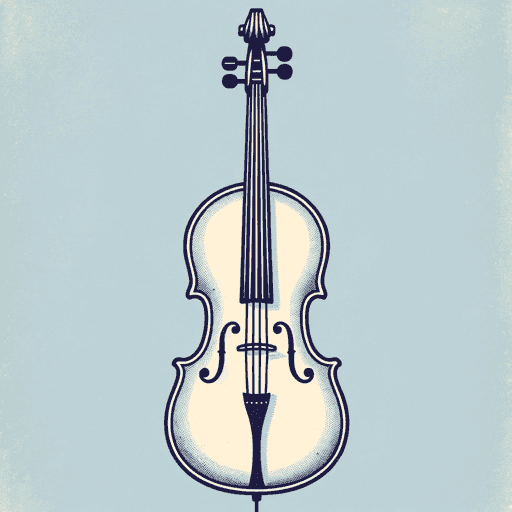
The Prelude introduces Vedran Smailović, otherwise known as the Cellist of Sarajevo. Cain provides a brief background of how Smailović became famous, namely that during the war in the former Yugoslavia, Smailović had been almost killed by a mortar attack. Twenty-two others near him were killed, and Smailović decided that he would play the cello for 22 days straight to honor the victims, all while mortars and bullets were firing around him. Cain mentions the music that Smailović played, Albinoni’s Adagio in G Minor. The Prelude ends with another anecdote from that war, this one involving an elderly man who had sought shelter in a forest. Upon his emergence from the forest, he was asked by a journalist if he would identify whether he was Croat or Muslim; the man responded by saying he was a musician.
In the opening to the formal introduction, Cain discusses her penchant for sad music and how she had been gently mocked while in college for it. She also asks why the culture in the United States is derisive toward demonstrations of melancholy. Cain then discusses the idea of the body having four humors, which Hippocrates developed to describe temperament in general. The four include melancholic, sanguine, choleric, and phlegmatic (18). She identifies the duality of melancholy, primarily how it includes both light and dark, death and birth. She argues that traditionally, melancholy was not looked at derisively until Sigmund Freud concluded in a 1918 essay that it is an act of narcissism. Cain probes more into the nature of melancholy until finally she expresses that the idea of transforming pain into love, creativity, and transcendence is at the heart of her book (20). Cain believes that in the US the general cultural preference is to reward the sanguine and choleric temperaments and to look down at the melancholic, and she discusses how this preference is manifested in the culture. Cain transitions into an explanation of what melancholy is, connecting it to a sense of longing and yearning that she sees as a fundamentally human experience. She points to religious figures and texts ranging from St. Augustine to the Quran and how these texts and figures show longing as a spiritual state. She argues that melancholic longing is for a beautiful and perfect world, of which humans can only catch fleeting glimpses. Cain believes that whether one is religious or secular, when we experience longing, we are seeking heaven. The Introduction concludes with a survey that she composed with the help of a cognitive scientist and a professor of medicine. The quiz asks a series of questions for which the reader is expected to provide a scaled score between 1 and 10 to determine their tendency, or lack thereof, toward the melancholic temperament. Finally, she asserts that the book is about learning to understand the transformative power of melancholy so that it will help enrich our own lives, including how we treat each other.
Prelude-Introduction Analysis
The Prelude that begins the book draws the reader’s attention to the famous story of Vedran Smailović, otherwise known as the Cellist of Sarajevo. Cain describes the song as “haunting […] exquisite […] infinitely sad” (12), making the image of his playing the song as bullets fly around him even more moving. Cain begins with this image to illustrate the universal nature of melancholy, assuming that the reader will be as affected by the image as she is. Cain likens the popular reaction to Smailović to her own infatuation with the late singer-songwriter Leonard Cohen, whose music is likewise known as gloomy, melancholic, and sad. Cain attributes a series of questions as motivation for the book:
Why did I find yearning music so strangely uplifting? And what in our culture made this a fitting subject for a joke? Why, even as I write this, do I feel the need to reassure you that I love dance music, too? (I really do.) At first, these were just interesting questions. But as I searched for answers, I realized that they were the questions, the big ones—and that contemporary culture has trained us, to our great impoverishment, not to ask them (18).
Effectively, Cain identifies here the impetus for the book—that answering the questions of why such music is so appealing to so many is a secondary question to why it seems unpopular to acknowledge the appeal.
She also identifies her ultimate purpose and what she hopes to achieve in writing the book, aside from simply asking the kinds of questions that she considers are implicitly impermissible in modern American culture. Cain says, “This idea—of transforming pain into creativity, transcendence, and love—is the heart of this book” (20). Moreover, as she describes the evident dualities of life, such as sorrow and joy, light and darkness, death and birth, Cain also argues that the bittersweet (melancholy) is a feeling that should be embraced and sought after. She claims that our awareness of life’s dualities is fundamental to human existence and that it is traceable to a longing for the “perfect and beautiful world” (23). While Cain says that she is agnostic herself, she believes that this is an expression of longing for the divine. Regardless of culture or religious identification, Cain says, “[I]n some fundamental way, we’re all reaching for the heavens” (24).
As she establishes the purpose of the book and the questions that inform her views, Cain also establishes one of the book’s primary themes: How to Respond to Pain. Cain accepts the premise that suffering is inevitable and argues that rather than try to avoid the resulting feelings that come from suffering, people should find ways to transform it into something beautiful. She says:
Some people enter this realm through prayer or meditation or walks in the woods; minor-key music was the portal that happened to entice me. But these entryways are everywhere, and they take endless forms. One of the aims of this book is to urge you to notice them—and to step through (25).
Cain advances the idea that pain can be transformed and identifies the purpose of the book, which effectively, she hopes, will serve as an example of what she urges readers to do for themselves.

Get in-depth, chapter-by-chapter summaries and analysis from our literary experts.
- Grasp challenging concepts with clear, comprehensive explanations
- Revisit key plot points and ideas without rereading the book
- Share impressive insights in classes and book clubs