Black Woods, Blue Sky
57 pages • 1-hour read
Eowyn IveyBlack Woods, Blue Sky
A modern alternative to SparkNotes and CliffsNotes, SuperSummary offers high-quality Study Guides with detailed chapter summaries and analysis of major themes, characters, and more.
Character Analysis
Birdie
Content Warning: This section of the guide includes discussion of death.
Birdie is the protagonist and one of the three narrative points of view through which the story is told. As a young single mother, Birdie struggles to balance her love for her daughter, Emaleen, with her desire to live a life of her own. When she meets Arthur, she sees an opportunity to fulfill her longing to be free and provide a better life for Emaleen. Living with Arthur offers her a Human Connection With Nature, free from the judgmental eyes of society. She tells him, “I’m like that all the time, just craving and craving. And I sit here looking across the river and I think that’s it. That’s what I’m craving” (38). As a bear who lives among humans, Arthur is caught between two worlds, like Birdie feels within her own identity. His presence forces her to confront the tension between her civilization and wildness. Just as Arthur cannot fully be one thing, neither entirely bear nor entirely human, Birdie struggles with her sense of belonging as a mother and a woman.
On the mountain, Birdie experiences wildness and her unresolved desire to be free from society’s constraints. She is skilled at living off the land, but the often unpredictable and sometimes brutal nature of the wild mirrors her inner life. However, as Arthur morphs into his complete animal, he becomes something that she cannot control. His transformation represents the ultimate breakdown of the balance that Birdie has tried to maintain between civilization and nature. Once nurtured by humans, Arthur severs his final connection to the human world, and Birdie becomes the casualty of that transformation.
Birdie’s death symbolizes her inability to reconcile the competing forces within her life. She has spent much of the novel caught between different versions of herself: mother, abandoned daughter, and woman of the wilderness. Birdie projects too much of her identity onto Arthur, who she thought was the answer to her problem, but this ultimately destroys her. Arthur killing Birdie is a tragic manifestation of the dangers of trying to tame or understand forces that are, by nature, untamable. His act of violence is an assertion of nature’s wild nature, a reminder that despite Birdie’s investment in him, he is something wholly separate from her. Ultimately, Birdie is consumed by something in nature that she could never fully understand and dies in the natural world into which she longed to integrate.
Emaleen
Emaleen is Birdie’s daughter, and the story is partially told from her perspective as a six-year-old and then later as a young adult. Emaleen’s childlike perspective and youthful lens provide insight into the world through her innocent and unfiltered perception and develops The Line Between Reality and Fantasy—particularly her sense of wonder, confusion, and occasional misinterpretation of the world. When she becomes lost in the woods, “Emaleen step[s] off the path, and she ha[s] the feeling that maybe she [i]s being very brave, or else she [i]s being very bad” (18). Emaleen displays children’s fears and anxieties, particularly surrounding safety and security. Her entire identity is shaped by the perception that her mother will leave her at any moment. Thus, when Birdie dies, Emaleen’s life is split into two parts. Her coming-of-age journey transforms into making sense of what happened on the mountain and discovering her identity without a mother. She reveals her loss of innocence, saying, “Now that she was a big kid, Emaleen understood all of it, that people and animals sometimes died and moms sometimes left” (72). Emaleen’s character embodies a child’s vulnerability, still learning about emotions, relationships, and the complexity of human behavior. Her innocence makes her an archetype of youthful naiveté, untouched by the harsh realities with which adults must contend.
As a young adult, Emaleen wrestles with the lingering guilt and trauma surrounding her mother’s death before she can move forward in life. She returns to Alaska after college graduation to confront her grief before fully entering adulthood. Through reconnecting with Della, Syd, and Warren, Emaleen sees her childhood events differently. She faces her fears physically and metaphorically by journeying to the cabin and seeing Arthur again. With Warren’s help, Emaleen releases her guilt from the past, allowing her to forgive Arthur and release him fully back into the wild to die in peace. As he dies, she recognizes the roles that Birdie and Arthur played in making her who she is: “She’d believed that she was bound to the two of them, that their dangerous power would forever dictate who she was and how she moved through the world. They would always be a mysterious part of her” (306). Emaleen’s character represents the emotional turbulence that comes with growing up and the ultimate realization that the world is far more complicated than she once thought. Her experiences reflect the struggle of transitioning from the fantasy of childhood to the responsibilities of adulthood.
Arthur Nielsen
Arthur is a recluse with a scarred face who lives in a cabin in the mountains on the far side of the Wolverine River. He is known for his mysterious and solitary nature, appearing in town only at the change of seasons. After he rescues Emaleen from being lost in the woods, Birdie becomes intrigued by him, particularly his extensive knowledge of the North Fork area, where she’s always dreamed of living. Arthur rarely speaks, but when he does, it’s always in the present tense, and more than once, Birdie catches him inhaling her scent like an animal. Arthur is an embodiment of the freedom that Birdie longs for, and she eventually falls in love with him and the idea of creating a life with him in the mountains: “That’s how it was with Arthur. Getting close to him, feeling his eyes on her—like touching something dark and wild, and then watching it dart away” (68). However, after Birdie and Emaleen move to his isolated cabin, Birdie learns that Arthur has a secret and that, like Alaska, Arthur is beautiful yet dangerous. Arthur is a complex, dynamic character who transforms throughout the story as he metamorphizes from a bear into a man. For Birdie, he transforms from a friend, to a lover, to her killer; for Emaleen, he morphs from a companion, to a protector, to the subject of her nightmares.
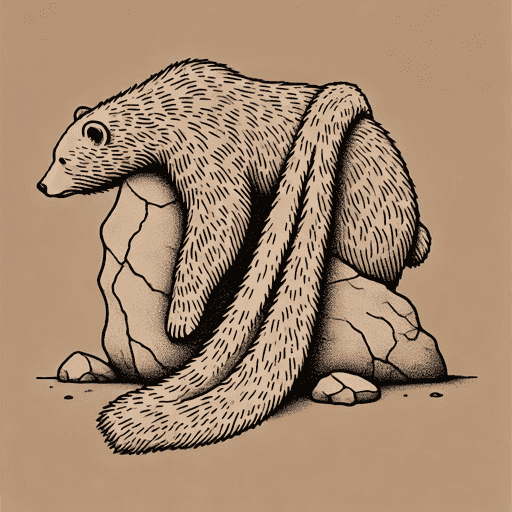
Through Arthur’s father, Warren, it is revealed that Arthur is a foundling whom Warren discovered in the woods, covered in an animal pelt. Despite trying to raise him as a normal boy, Warren and his wife, Carol, eventually turned Arthur loose to live in the wild alone. He can strip off his bear skin for periods but must return to being a bear for nourishment and survival. Arthur’s shape-shifting symbolizes transformation, instability, and the fluid nature of identity. He represents the line between human and animal. His duality also points to the tone of uncertainty in the novel. For Birdie, her relationship with him exposes the blurred lines between reality and illusion and safety and danger. Arthur’s arc does not lead to a clear moral resolution. His killing of Birdie shows that he cannot escape his animal instincts. Arthur fully embraces his bear-ness, indicating that suppressing his natural desires is impossible. Ultimately, his transformation is irreversible, and he must submit to it instead of overcoming his animal nature.
Warren Nielsen
Warren is Arthur’s adoptive father, a retired Alaska state trooper, an avid hunter, and a bush pilot. He serves as the third narrative voice in the text, providing context for Arthur’s backstory. Warren has dedicated his life to understanding the wilderness, yet he is keenly aware of its unpredictability, shaped by his experiences with Arthur. He is gentle, kind, and loving, but he struggles to understand who his son truly is. Through Warren, the story explores The Sacrifice of Parental Love. Warren feels apprehension and pride as he watches Arthur fall in love, yet he remains wary of its potential consequences. After Carol’s death and his daughters’ departure, Warren fully embraces Birdie and Emaleen as family, as their presence fills the void in his life. Warren’s character embodies the endurance required to survive the Alaskan wilderness. Despite personal tragedies, he continues to move forward, carrying the weight of the past while trying to impart his knowledge to the next generation.
His decision to take in Arthur as an orphaned bear cub reveals Warren’s nurturing instinct, though his care methods were sometimes rigid or questionable, such as putting a dog collar on his son. Warren’s survivalist mentality is evident in his approach to Arthur and Emaleen, as he desires to prepare them to exist in an unforgiving world. His deep understanding of the wilderness gives him a certain wisdom, yet his inability to fully navigate human relationships complicates his life, particularly with his daughters. While not directly responsible for her death, Warren understands that he played a role in Birdie’s fate, as he neglected to reveal the truth about Arthur to her. His interactions with Emaleen, particularly after Birdie’s death, reflect his attempt to atone, even as he remains emotionally guarded. Warren takes on a paternal role in Emaleen’s life, though his approach is often indirect and restrained. Seeing her again incites conflicting emotions: “It was bewildering, how closely grief ran alongside joy” (294). He does not attempt to replace her mother but offers her knowledge, stability, and a connection to the past. His quiet, steady presence and guidance help her navigate her path toward understanding her mother, Arthur, and herself.

Unlock analysis of every major character
Get a detailed breakdown of each character’s role, motivations, and development.
- Explore in-depth profiles for every important character
- Trace character arcs, turning points, and relationships
- Connect characters to key themes and plot points