Black Woods, Blue Sky
57 pages • 1-hour read
Eowyn IveyBlack Woods, Blue Sky
A modern alternative to SparkNotes and CliffsNotes, SuperSummary offers high-quality Study Guides with detailed chapter summaries and analysis of major themes, characters, and more.
Part 1, Chapters 1-6Chapter Summaries & Analyses
Part 1, Chapter 1 Summary
Content Warning: This section of the guide includes discussion of death and substance use.
Birdie is 26, works at the Wolverine Lodge in Alaska, and lives on the property in a guest house with her six-year-old daughter, Emaleen. She wakes up hungover from partying with Roy and friends at the lodge bar. Birdie knows that she made a mistake doing cocaine and drinking too much, but she got carried away with the music and atmosphere, which took her mind off her problems. Birdie gets dressed and walks outside into the cold morning to smoke. Remembering that her grandfather Hank always said that fishing is the “[b]est cure for a hangover” (7), Birdie grabs her gear and walks to the stream to fish for trout. She forgets to bring her rifle, and though she’s never seen a bear near her house, she recalls all the stories she’s heard about bear attacks.
Birdie drinks in the fresh air to clear her head. Yet, as she fishes, she worries about money, childcare, and her strained relationship with Grandma Jo. She catches a trout and is excited to return to the house to surprise Emaleen with a fish. Walking home, she runs into Arthur Neilsen, who has a scarred face and a missing ear. Arthur occasionally visits the lodge but lives in the high country. He speaks strangely, and as Birdie passes, she hears him sniff her. He says that he’s coming to fish but doesn’t have any fishing gear.
Part 1, Chapter 2 Summary
Emaleen awakens and tries not to be afraid since she is often alone in the house when her mother is working. She comforts herself by pulling out her silver thimble, where her imaginary friend Thimbelina lives. She makes them hot cocoa and waits for her mother to return. After convincing herself that she must look for her mother, Emaleen leaves the house, trying to forget every frightening thing that she’s been told about the woods. There’s a reason why Emaleen feels compelled to search for her mother, but she says it’s a “secret” that “ma[kes] her feel ashamed. Like she’s told a lie or ruined something” (16).
Emaleen thinks that she’s following the path to Uncle Syd’s house, but the thick, dense underbrush disorients her and causes her to get lost. She hears strange sounds and sees a witch’s hair in the trees. She fords the creek and climbs to higher ground to get her bearings, but she still has no idea where she is. Remembering a story that Grandma Jo told her, Emaleen resolves to stay put, hoping someone will find her. She cries out for her mother and clutches the thimble for comfort, wishing that her imaginary friend could rescue her.
Part 1, Chapter 3 Summary
Birdie realizes that Emaleen is missing and runs to the lodge to get her boss Della’s help. Syd also joins the search, and they comb the area with no luck. Birdie feels sick with guilt until they see Arthur emerge from the woods, carrying Emaleen on his shoulders. She is unharmed, save a few scratches, and has been crying. Emaleen apologizes to Birdie for getting lost in the woods. Della is angry with Birdie for leaving the child alone, and Birdie says that Della has no idea what raising a child is like but immediately regrets saying it. Della says, “I don’t want to lose you two” (24), and she switches Birdie from working nights to working mornings.
Emaleen is tired and begs Birdie to let her stay at the cabin while she works. Birdie refuses and forces her to get dressed. As they leave, they see a baby moose crying and looking for its mother. Birdie waits tables in the lodge for breakfast while Emaleen colors at a table. Emaleen spills hot cocoa on the table, and Birdie sends her upstairs to watch television. Arthur comes in and sits at the bar, which isn’t open yet. He orders chamomile tea and says that he is fine sitting alone in the dark. Birdie thanks Arthur for helping find Emaleen. She asks if he still lives on the North Fork, and he says yes but little else.
Part 1, Chapter 4 Summary
Arthur begins coming to the lodge every morning for breakfast. Birdie talks to him, but he says little in return. She asks him what happened to his ear and jokes that he must have gotten into a bar fight, but Arthur says that he doesn’t drink. Arthur has large hands, blonde hair, and a scraggly beard. Birdie stares into his eyes, and their unique color transfixes her. Walking away from the table, she thinks about touching Arthur’s skin.
Della says that Roy got drunk and wrecked his car. He’s in the hospital and will have to face drunk-driving charges. He’s lived with his sister, Evelyn, since his wife, Lois, kicked him out. Lois is recovering from a hysterectomy and caring for their children. Birdie feels guilty that she used cocaine with Roy that night at the bar. She agrees to help Della raise money to help Roy and his family pay his medical bills. Roy rides to the lodge on a bicycle with his arm in a sling. Emaleen is happy to see “Uncle Roy” and wants a bike like his. Birdie questions his judgment since he is there when his wife and children are at home and since he’s heading to jail for drunk driving. Roy says that Birdie will understand one day when she is older.
Part 1, Chapter 5 Summary
Birdie enjoys sitting at the lodge picnic table and gazing at the mountains. Her mind is filled with guilty thoughts about her failing as a mother and a person flood. She doesn’t want to turn out like Roy or her mother, who abandoned her and her sister, Liz. Arthur arrives and sits with her at the picnic table. Birdie points to the mountains and says that she has many happy memories of being in nature from her childhood and often wonders if being outside might fix her problems. Arthur lives near the spot that she points to and says he enjoys spending time there. Birdie likes how Arthur smells and is attracted to him but refrains from making an advance for fear that she might “spook him.”
Birdie and Emaleen watch the movie version of Heidi, and Birdie asks Emaleen if she wants to move to the mountains like Heidi. Birdie thinks back to her childhood. After their mother abandoned them to move to Florida, Liz and Birdie lived with Grandma Jo and Grandpa Hank. In her youth, Birdie sought escape from her pain through adventure, adrenaline, and, eventually, sex and substances. She became pregnant with Emaleen after having a relationship with a traveling worker named Rex. Birdie and the baby stayed with Grandma Jo, and Birdie thought that “[s]he would be grounded, weighted, finally content” (42). However, motherhood didn’t fix Birdie as she had hoped, and eventually, she found it too hard to live under Grandma Jo’s roof. That’s when she began working at the lodge and leaving Emaleen alone at night. Birdie emerges from her memory, and Emaleen says that she will move to the mountains as long as they stay together. Birdie thinks that she can be a better mother away from the lodge, but Emaleen says she is a perfect mother.
Part 1, Chapter 6 Summary
Warren, Arthur’s father, is a retired Alaskan state trooper who flies a bush plane and lives alone with his dog, Spinner. Warren watches Arthur drive away and wishes that his wife, Carol, were still alive to help him know what to do. Arthur has been returning home more frequently to visit Birdie at the lodge for several weeks. After Della confronts him about Arthur and Birdie, Warren is worried. He doesn’t know Birdie well but has heard the stories about Child Protective Services visiting her twice. However, Warren empathizes with Birdie’s position as a single mother.
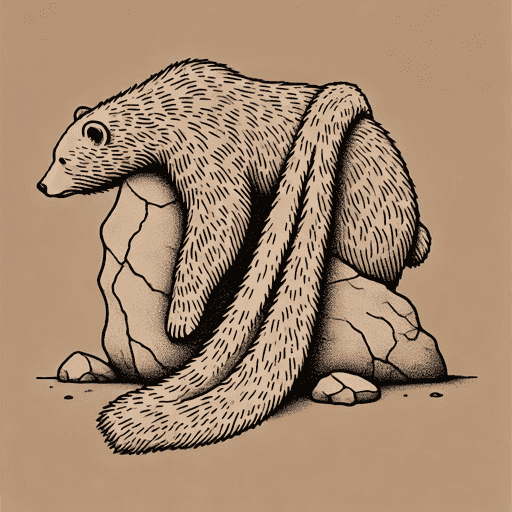
Warren longs for Arthur to find happiness and not be alone. He knows that if Carol were there, she’d wish for the same, yet she would encourage Arthur to break it off with Birdie just as before. Warren misses the tenderness that Carol had with Arthur since “he isn’t the same” and laments that he doesn’t have a partner in handling the situation (47). Warren goes outside to the uprooted tree where the suspended earth and roots create a cave-like area, digging until he finds the freshly disembodied bear skin. Warren puts on the skin to understand what being Arthur is like.
Part 1, Chapters 1-6 Analysis
The initial chapters establish The Sacrifice of Parental Love with the juxtaposition of Birdie’s isolation and her innate human desire for connection. Birdie’s life as a single mother is lonely, and her job offers a chance for human interaction. Yet the allure of escapism leads her to overindulge in substances and neglect her daughter. At this point in the narrative, Birdie embodies the stereotypes of a “failing” single mother, which Della perceives as Birdie being irresponsible. Birdie claims that she fiercely protects Emaleen, but her actions show otherwise. However, Birdie is a free-spirited young woman who has been emotionally scarred by her mother’s abandonment. Ivey portrays Birdie as more than an impulsive risk taker; she is also a young woman trying to do her best and not replicate her mother’s actions. The author creates empathy for Birdie through her interiority as she wrestles with the pain of her past and the guilt of falling short as a mother. Birdie wants what’s best for her daughter but currently lacks the maturity and resources to be successful.
Birdie’s fishing trip establishes the Alaskan landscape as not just a setting but also a formidable character and emphasizes the Human Connection With Nature. Fishing often involves long stretches of waiting, uncertainty, and the possibility of failure, all experiences that mirror Birdie’s emotional state at the novel’s beginning as she raises her daughter alone and navigates life in a secluded environment. Just as she casts her line without guaranteeing success, she moves forward without knowing what will come next. The fishing scene also underscores Birdie’s deep connection to nature. She is resourceful in knowing how to fish and understands that the meditative process is good for her mental health. Her attentiveness to the water, her understanding of fish behavior, and her patience as she waits all reveal her intimate relationship with the landscape, evidenced by the transcendental moment she experiences: “It was as if her mind narrowed to a point that ran down the clear line and into the cool, dark water” (10). Unlike others who view the wilderness as hostile or intimidating, Birdie finds a way to exist within it. This foreshadows the novel’s exploration of Birdie’s increased coexistence with nature and whether true harmony with the wild is ultimately possible.
The introduction of Arthur adds a mysterious element to the story. He is an outlier and an outsider whom the locals perceive as odd. Despite this perception, his oddness doesn’t induce fear in Birdie. Instead, she is drawn to him, and her interactions with Arthur introduce a dynamic that challenges her perceptions of solitude and companionship. This interplay raises questions about the sacrifices that Birdie will make for love and the inherent risks of venturing into uncharted physical and emotional territories. Emaleen’s misadventure in the woods and Arthur’s timely intervention foreshadow the challenges and transformations that lie ahead, including those between safety and danger.
Otherworldliness emerges when the narrative switches to Emaleen’s perspective of being lost, highlighting The Line Between Reality and Fantasy. Emaleen’s adoption of an imaginary friend and her perception that the woods are filled with fearsome, mystical creatures is a figment of her childlike imagination and a manifestation of her fears. As she narrates her trip through the dense forest full of strange sounds and draped with witches’ hair, Emaleen has slipped into a fantasy world, like Alice’s journey down the hole in Alice’s Adventures in Wonderland. This allegorical journey represents her vulnerability and highlights how Emaleen perceives her environment differently from an adult. Emaleen’s trip through the woods is a foil to Birdie’s in that Birdie finds solace and comfort in the wilderness, while Emaleen sees it as frightening and menacing. While Birdie finds a certain strength in nature, Emaleen yearns for protection and comfort, emphasizing the child’s need for parental guidance. Emaleen does not fully understand Birdie’s struggles, but she feels them, contributing to her sense of uncertainty. Her observations reveal how she absorbs the moods and tensions of the adults around her.
Ivey introduces a magical element when the narrative shifts to Warren’s perspective, revealing Arthur’s duality. The insinuation that Arthur is a bear invokes the idea of shape-shifters, which have long been an element in fantasy and folklore across cultures and symbolize transformation, deception, and the unknown. Arthur’s existence straddles the human and animal worlds as his physical presence blurs the line between reality and myth. Whether he is a literal shape-shifter or a figure perceived as one due to myth and legend is left ambiguous at this point, adding narrative tension and mystery. Arthur’s ambiguous nature parallels Birdie’s as she navigates the divide between her civilized self and her more primal instincts. In the harsh, untamed Alaskan wilderness, survival often depends on one’s ability to adapt.

Unlock all 57 pages of this Study Guide
Get in-depth, chapter-by-chapter summaries and analysis from our literary experts.
- Grasp challenging concepts with clear, comprehensive explanations
- Revisit key plot points and ideas without rereading the book
- Share impressive insights in classes and book clubs