Black Woods, Blue Sky
57 pages • 1-hour read
Eowyn IveyBlack Woods, Blue Sky
A modern alternative to SparkNotes and CliffsNotes, SuperSummary offers high-quality Study Guides with detailed chapter summaries and analysis of major themes, characters, and more.
Part 1, Chapters 7-11Chapter Summaries & Analyses
Part 1, Chapter 7 Summary
Content Warning: This section of the guide includes discussion of animal death, substance use, and cursing.
Arthur comes to the lodge daily, and Birdie continues flirting with him. She asks him why he speaks in the present tense. Arthur explains that time isn’t a straight line but a circle and that he experiences the past, present, and future simultaneously. He says that he can see that she will come to live with him on the mountain. Emaleen is at Grandma Jo’s, so Birdie invites Arthur back to the cabin. Birdie leads him to the bed and undresses herself, but Arthur stands frozen. When she kisses him, he doesn’t reciprocate and then suddenly pins her to the bed and breathes on her neck. Arthur is too large and heavy for the bed, so Birdie moves to the floor and tries to take off his pants, but Arthur grabs her ankles and presses his face to her thigh. Without a word, he abruptly fixes his clothes and leaves the cabin as Birdie chases him.
Della sees Birdie wrapped in her bedclothes and escorts her home. She explains to Birdie that she should stay away from Arthur and tells her the story of her former employee, Sarah, whom Arthur’s parents hired as a house sitter while Arthur’s mother was receiving cancer treatment. One night, Arthur showed up at the house naked and acted so strangely that it frightened the dog. Arthur was hungry and injured, but when Sarah tried to help him, he disappeared and never returned. Della also reminds Birdie of the incident with a child near Arthur’s cabin, which Birdie claims can’t be blamed on Arthur. Della insists that Birdie and Emaleen stay away from Arthur, but Birdie is offended and thinks that Della is discriminating against him because he is different.
Birdie struggles to concentrate on her work as she mentally replays the scene at her cabin with Arthur. It was strange yet arousing, and she couldn’t stop thinking about the way he grabbed her legs. Arthur doesn’t return to the lodge, and Della says that he left and returned to his cabin in the high country. Birdie thinks that she is wise not to allow Emaleen to get attached to Arthur. One of her previous boyfriends, Pete Anderson, tried to be like a father to Emaleen and promised her a puppy. Birdie doesn’t want to “break Emaleen’s heart every time a man turn[s] out to be a son of a bitch” (60).
Part 1, Chapter 8 Summary
Arthur shows up at Birdie’s cabin unannounced. He brings her a clump of tundra from the spot on the mountain at which she loves to gaze. The clump contains small flowers and mushrooms, and Arthur’s gift intrigues and excites Emaleen. She begs to walk near the Wolverine River with Arthur and look for more flowers. Birdie hesitantly gives in, and they take off walking as Emaleen chatters about moose and plants. Arthur can identify every plant by its scientific name and says that he eats most flowers and roots, which Emaleen thinks is him teasing her. Birdie loses sight of them but finds them happily tossing rocks into the water.
While Emaleen plays in the sand, Birdie stretches out to soak in the sun, and Arthur sits near her. She expresses her confusion over his abrupt exit the last time. Arthur explains, in his strange way of speaking, “I am better when I am away, over there. When I am young, I think this is what I want. To be away from here. But when I am older, I am one way, another, back again” (67). Birdie interprets this as Arthur feeling like an outsider and preferring to stay in the mountains. She understands his feelings as she struggles to find her place. When they stand, she thinks that Arthur will kiss her, but instead, he smells the top of her head and suddenly disappears into the woods.
That night, Arthur returns to the cabin and says that he can’t stop thinking about Birdie. Emaleen is asleep, so Birdie gets a quilt and meets Arthur outside. Arthur kisses her, and she spontaneously runs into the woods, shedding her clothes. Thrilled by the chase and running through the woods naked, Birdie feels alive. Arthur catches her and pins her to the ground, but she moves on top of him, feeling powerful and liberated.
Part 1, Chapter 9 Summary
Emaleen overhears the adults in the lodge discussing something that happened in the woods. Birdie tells her that a grizzly bear killed the baby moose. Della reminds Emaleen not to venture into the woods alone again. While at Grandma Jo’s house, Emaleen draws the moose and other things in nature that have died. She thinks about what she knows about death and how she once thought that Norma, her mother’s mother, was dead because she never saw her. Emaleen now knows that Norma left her daughters to move to Florida. Emaleen’s secret is that she worries that Birdie will leave her.
Part 1, Chapter 10 Summary
It’s the summer solstice, and Della hosts a bonfire and potluck dinner at the lodge. Birdie hopes that she and Emaleen can depart for Arthur’s cabin soon. When she sees Warren, she suggests that he can fly them to Arthur. From Warren’s lack of response and strange facial expression, Birdie knows instantly that Arthur hasn’t mentioned the move to Warren.
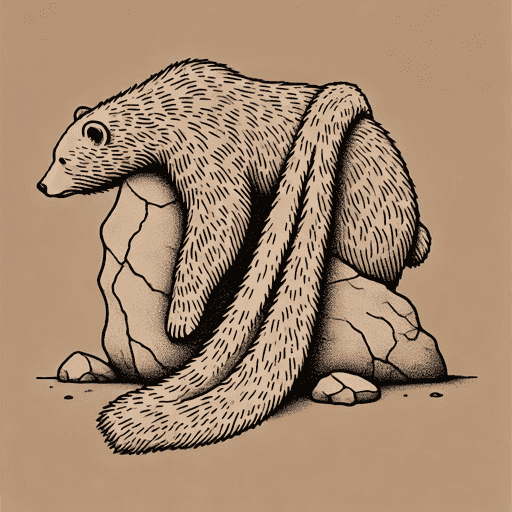
Syd, a packer for hunting parties, brings “magic” brownies to the bonfire. Syd joins Emaleen by the fire and starts rambling about books and art. He is high, and Birdie can’t make sense of his musings on Marcel Proust and Maxfield Parrish. He encourages her to read more books. He mentions her upcoming move and says that everyone has a different nickname for Arthur: “Barefoot wanderer. Four-legged man. Golden friend. Honey-eater. A dark thing. No one wants to call him up with his true name […] No one wants to summon him” (80). He jokes that no one gets in Arthur’s way and that people joke about him being their “kin.” Not following him, Birdie explains that Arthur has lived in the wilderness for a while and knows how to deal with bears. Syd reminds her that when bears are skinned, they look like humans. Indigenous Alaskans believe that it’s murder to kill a bear because they are in the constellations and are “divine.” When they do kill one, they leave its spirit as an offering as penitence. Syd motions toward Warren and exclaims that Carol “saw it from the start” (82). Syd adds that Birdie shouldn’t worry about what others think and should follow her heart. He gives her his hat before leaving.
Part 1, Chapter 11 Summary
Emaleen enjoys the bonfire and the comfort of everyone being together. As she stands at the edge of the woods, she considers what frightens her about its mystery and concludes that as long as her mother is near, she has nothing to fear. The partygoers get increasingly silly as the night wears on. Soon, Emaleen realizes that she is the last child at the bonfire and begins feeling sleepy. Looking up at the stars, Emaleen makes a wish that she will never be apart from her mother. Birdie says that it’s time to go home. When they snuggle into bed in their cabin, Birdie says that they are leaving for the mountains the next day.
Part 1, Chapters 7-11 Analysis
These chapters oscillate between Birdie’s and Emaleen’s perspectives, developing their relationship with Arthur and the growing sense of unease as their connection to him puts them at odds with the locals. Birdie’s relationship with the wilderness evolves as she is increasingly drawn to it and prefers it over staying in civilization. Letting Arthur chase her naked through the woods symbolizes her attraction to wildness, the beginning of her transformation, and her surrender to the primal forces of nature. This scene reinforces the novel’s exploration of The Human Connection With Nature while deepening Birdie’s connection to Arthur. In allowing Arthur to chase her, she is not just exposing herself physically but also embracing the raw, untamed world Arthur inhabits. Stripping off her clothes symbolizes her shedding societal constraints. The chase mirrors the behaviors of animals in the wild in predator-prey dynamics or mating rituals. Rather than resisting or fearing Arthur, however, she actively engages in the chase, as she is attracted to his wild nature and the idea of transforming herself.
This moment shifts Birdie’s perception of Arthur from a mysterious figure of the woods to an embodiment of her untapped self. For Birdie and Emaleen, Arthur is not simply an escape from their daily lives but a force that invites exploration. However, his presence is undeniably tinged with danger. The correlation between predator and protector is complex; carnivorous animals are essential to a balanced ecosystem yet remain ruthless. Ivey illustrates this duality when the discovery of a dead baby moose follows a passionate night with Arthur. For Birdie, Arthur is the embodiment of temptation and a gateway to her wilder self, while for Emaleen, he is a protector and companion.
Syd’s conversation with Birdie at the bonfire is symbolic since it occurs on the summer solstice, a day when the sun reaches the highest point in the sky and contains the longest amount of daylight in the year. The solstice thus marks the transformation from light to dark since the days get shorter and less light thereafter; it also represents mysticism, as shape-shifters are known to roam freely. Syd encourages Birdie to choose risk over certainty and the unknown over civilization while reminding her of the potential consequences of messing with the supernatural. The bonfire symbolizes the last vestiges of Birdie’s domesticity, a controlled flame, in contrast to the wild, unpredictable fire of her attraction to Arthur and the forest. The novel’s title, as well as its epigraph, comes to the fore as Syd quotes from Proust’s Swann’s Way:
Now are the woods all black, but still the sky is blue. May you always see a blue sky overhead, my young friend; and then, even when the time comes, which is coming now for me, when the woods are all black, when night is fast falling, you will be able to console yourself, as I am doing, by looking up to the sky (Epigraph, 79).
Known for his fascination with the fluidity of experience, the Proustian connection extends to Birdie and Emaleen’s experiences, where their surroundings sometimes collapse into past and present, much like how Proust describes memory’s non-linear nature. This is also seen in Arthur’s experience with time as he describes it, “like circles, the many circles spinning, each within another. There is nothing to hold on to (54).
Through this scene at the bonfire, Ivey also develops the motif of metamorphosis. Because the summer solstice is an event associated with transitions and renewal, it is symbolic that Birdie picks this moment to leave to live in the mountains with Arthur. This decision signifies the physical and psychological changes that Birdie will soon experience in the wilderness.
Ivey develops the theme of The Line Between Reality and Fantasy through Emaleen’s reflections. When she stands at the woods’ edge during the bonfire, she is first afraid of its mystery. Then, she realizes that as long as her mother is near her, she should not be afraid of the mythical or scary elements that she fears the woods contain. In wishing that she will never be apart from her mother, Emaleen underscores her needs as a child and The Sacrifice of Parental Love that she expects from Birdie as a result. While this moment reflects Emaleen’s ability to comfort her anxieties and self-soothe, it also foreshadows how their move to the wilderness—which Birdie announces to Emaleen in this section—will ultimately separate mother and daughter, Emaleen’s greatest worry.

Unlock all 57 pages of this Study Guide
Get in-depth, chapter-by-chapter summaries and analysis from our literary experts.
- Grasp challenging concepts with clear, comprehensive explanations
- Revisit key plot points and ideas without rereading the book
- Share impressive insights in classes and book clubs