Blacktop Wasteland
Blacktop Wasteland
A modern alternative to SparkNotes and CliffsNotes, SuperSummary offers high-quality Study Guides with detailed chapter summaries and analysis of major themes, characters, and more.
Summaries & Analyses
Quizzes
NEWReading Tools
Important Quotes
“Beauregard heard his Daddy’s voice every time he drove the Duster. Sometimes he heard it when he was driving for crews. And those moments, it offered him bitter pearls of wisdom. Nonsensical chatter that reminded him not to end up like his Daddy. A ghost without a grave.”
(Chapter 1, Page 5)
This explanatory paragraph appears in the narrative just as Bug begins a drag race; this pauses the story and draws in the reader. When the narration offers information about the main character’s father, it does so without a full explanation, giving only enough detail to make the reader wonder what happened to the father.
“Once upon a time he had dreamed of living in a house like this one. A house with running water and roof that didn’t leak like a sieve. [...] He didn’t know what was sadder. That his dreams had been so modest or that they had been so prophetic. [...] But after all these years, he had learned to accept that some dreams don’t come true.”
(Chapter 2, Page 24)
Alone in his mobile home after his wife has taken his two young sons to school, Bug reflects on how the dreams of his youth are less fulfilling than expected. Living as he had hoped, with indoor plumbing in a home that is in good condition, is not enough for him, particularly when he is facing mounting bills and debt. Additionally, that which he longed for most—the return of his father who unaccountably disappeared when Bug was 13—remains an unfulfilled dream that sets the tone of longing for his life.
“The Lake Castor Convalescent Home took great pains not to look like a nursing home. The front of the building had an elaborate Greek Portico that covered the automatic doors at the entrance. Lush green boxwood shrubs that appeared to have been trimmed with lasers lined the sidewalk like verdant sentries. […] Beauregard stepped through the automatic doors and was smacked in the face by the pungent scent of urine. All that fancy architecture couldn’t do anything about the smell of piss.”
(Chapter 3, Page 33)
Bug knows that nursing home director Mrs. Talbot, along with all the workers at the home, would love to be rid of Ella Montage, Bug’s mother, who is constantly hateful and needy. He is about to discover his mother’s $48,000 in arrears. In his previous life of crime, Bug could have raised the cash. As an honest businessman, he cannot. The pervasive, unavoidable stench of urine in a place that appears sanitary and well-kept symbolizes the underlying wretchedness of the home.
“Anthony Montage always seemed so full of life it was difficult to accept the fact he was dead. Beauregard had no doubt that if his father was alive he would have come back by now. Most of the folks around here who wanted him dead were either in prison or in the ground. […] Kia wanted him to [Anthony’s] Duster. He could probably get at least twenty-five grand for it if he spruced up the paint job. That was never going to happen. She didn’t understand that the Duster was his father’s tombstone.”
(Chapter 3, Page 44)
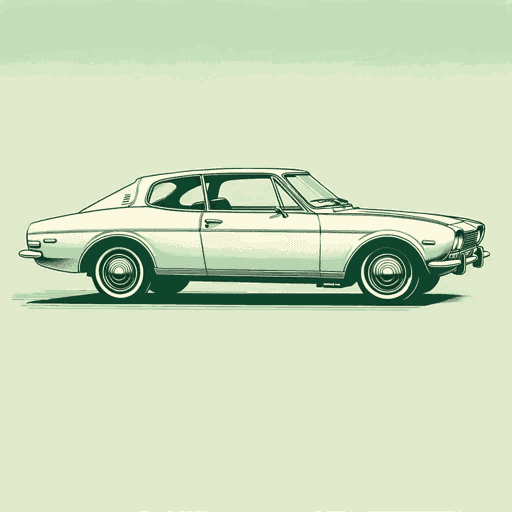
Bug periodically expresses longing for his missing father. The only tangible vestige of Anthony “Ant” Montage is the muscle car, the Duster. While Bug also has a truck and drives other vehicles, the Duster symbolizes a special part of his identity—the truly alive part that loves thrill. When Bug gets into the Duster for a trip, Cosby portrays him as transformed into a different, unassailable person. The Duster also symbolizes his relationship with his father; the dual symbolism suggests that Bug’s risky, thrill-seeking behavior comes from a temperament he inherited from his father.
“Beauregard stepped aside. He wanted to ask for a hug. Wrap his arms around her and tell her he was sorry he hadn’t been stronger. Apologize for not taking her from that viper’s nest of a household. Tell her that every time he went on a job, he gave her mother half his earnings. Let her know he fought for her. […] He wanted to say all those things. Had wanted to say them for a long time. But he didn’t.”
(Chapter 4, Page 57)
The narrator offers a glimpse into Bug’s thoughts as he stands beside his daughter, Ariel, in a convenience store. As with his other close relatives, Bug cannot explain his actions or describe his life to this person he loves dearly. When Ariel tells him in that she can’t attend college because the tuition is impossible, it’s the determining factor in his decision to participate in the jewelry store robbery. The conversation, to this extent, adds to the novel’s theme of moral ambiguity: Though Bug does enjoy the thrill of the crime, love is his primary motivation in the heist.
“When you grew up poor you got used to waiting. Wait for a welfare check in the mail. Wait in line for the poor box from the church. Wait for the parishioners to gaze at you with a sour look of pity on their faces. Wait for your brother to outgrow his no-name sneakers so you could take over gluing them back together. Wait, wait, wait. Wait to die so you can finally get out of debt. He was sick to death of waiting.”
(Chapter 5, Pages 61-62)
Ronnie reflects on the poverty of his youth, which has now become his permanent financial condition. Ronnie is white and an ex-con. He is unafraid to take big chances in hopes of achieving a once-in-a-lifetime payout that will allow him to live an opulent, decadent life. Ronnie’s greed and lack of foresight constantly endangers himself and others.
“The money was important. God knows they needed it. So many people were depending on him. Kia, his mama, the boys, Ariel, Kelvin. He thought about what Boonie had said. About how he wasn’t like his father. That’s what he liked to believe. That they were completely different. In some respects that was true. No matter how intense the pressure got, he didn’t run out on his family or his friends. He wasn’t Anthony Montage. So why did he feel a flutter in his chest like a hornet was trapped in ribs? If he wasn’t like his daddy, why did he miss the Life?”
(Chapter 6, Page 70)
Once Bug decides to participate in the jewelry store robbery, memories and feelings from his previous criminal experiences return. Bug refers to his illegal activities as “the Life.” The more Bug becomes involved, and as the date of the robbery draws close, the greater the thrill he feels. He constantly compares himself to his father, who was also a getaway driver, but one who had other negative qualities that harmed those he loved. Bug wants to think he can do all the things his father did without also hurting those he loves.
“Beauregard navigated his way down a pothole-filled dirt road that the county in their infinite wisdom had decided to name Chitlin Lane. […] The county administrators decided to fully embrace the stereotypical Southern ethos and name all the side roads with names that sounded like rejected country song titles. They thought it might help tourism. The only problem with that was that Red Hill was no one’s destination. It was a place you drove through, not to.”
(Chapter 7, Page 72)
Having agreed to serve as the getaway driver, Bug drives to a meeting in the mobile home of Reggie Sessions, the brother of Ronnie, who is the architect of the robbery. In describing the area where the Sessions brothers live, Cosby contrasts Ronnie with Bug: Though they are both career criminals living in trailers in a destitute area of southeast Virginia and playing roles in the same crime, the two men are extremely different.
“You see this grease on my hands? I’ve washed them five times today and it still won’t come all the way off. Don’t get me wrong, there is no shame working with your hands for a living. But for me, it was the only choice I had. It don’t have to be that way for you. You want to go to Auto and Diesel school and get a job working on race cars, that’s fine. You want to go to VCU, take art classes and be a graphic designer, hey that’s fine too. You want to be a lawyer or a doctor or writer, ain’t nothing wrong with that either. Education gives you those choices.”
(Chapter 10, Page 99)
Bug addresses Javon, his 12-year-old son who is quite bright. Bug is dead set against Javon doing anything but gaining a high school and college education, which Bug believes will spare Javon from financial destitution. Because Javon may achieve the life and freedom that Bug never had, the child symbolizes hope to Bug. This passage shows how much Bug believes in Javon’s potential, asserting that his son can be anything from an artist to a doctor.
“‘Feel good, don’t it? Getting ready for a job,’ Kelvin said.
‘No,’ Beauregard lied. It felt better than good. It felt right. It was like he had found a comfortable pair of old shoes that he had thought were lost forever. Intrinsically he knew that was a problem. It shouldn’t feel good or right. The list of things that should bring him joy should begin with his wife and children and end with something benign like an upcoming fishing trip or going to see a legal drag race. But what should be and what was rarely aligned.”
(Chapter 11, Page 105)
As the heist approaches, Kelvin recognizes that Bug is preparing for some type of getaway. Bug enjoys the planning, reviewing the route several times and refitting a seemingly innocuous vehicle into a powerful, bullet- and wreck-proof car. He recognizes the contradiction this engenders: Those activities that should bring him fulfillment cannot compare with the consuming excitement of significant crime.
“‘Don’t come back to Red Hill. You’re persona non grata now. I don’t ever want to see you again. And you,’ he said as he turned to face Ronnie.
‘I don’t wanna see you until you got my money.’”
(Chapter 13, Page 123)
The robbery succeeded but with deadly results, and Bug is furious with his accomplices. Despite Bug forbidding it, Reggie and Quan were high during the robbery, resulting in three deaths. Bug’s profound outrage isn’t because the heist was more stressful than planned—it’s because innocent people died, which will also trigger a more relentless police investigation. His anger suggests a moral anchor, despite his criminal activities.
“He checked his watch. It was five minutes after four. Ronnie was supposed to meet him at two on the dot. He wasn’t surprised he was late for the meeting. He had been a week late getting the money from his ‘guy’ in DC. The delay had made Beauregard’s already desperate situation worse. His suppliers were blowing up his phone like a spurned lover. The mortgage on the garage was due in three days. Not to mention the deadline for Ariel’s college registration was approaching quick, fast, and in a hurry. The nursing home staff was gleefully packing his mother’s bags, anticipating her imminent removal.”
(Chapter 15, Page 133)
As Bug waits for a late Ronnie to show up with Bug’s share of the robbery proceeds, Cosby uses Bug’s extensive list of creditors to reinforce the idea that Bug felt he could not remain afloat financially if he did not participate in the robbery. This monetary fastidiousness contrasts with Ronnie, who—breaking another of Bug’s rules—immediately makes elaborate purchases and calls attention to himself. More than two hours late to their rendezvous, Ronnie shows up in a newly purchased Mustang.
“‘I don’t know what to say.’
‘You ain’t gotta say nothing. You my daughter.’
He didn’t say he loved her. He wanted to, but it felt wrong to say it now. She might feel obligated to say it back and he didn’t want that. Just because he had given her this money didn’t mean he had earned an ‘I love you’ just yet.
Ariel let out a long sigh.”
(Chapter 16, Page 144)
Because so many bad financial consequences loom over him, Bug immediately begins to pay off his creditors. He also gives more than $24,000 to Ariel for her first year’s tuition to Virginia Commonwealth University. He also quickly pays the mortgage on his business and gives Mrs. Talbot at the nursing home $30,000 in cash toward the debt on his mother’s care. Cosby uses Bug’s activities to further contrast between Bug and Ronnie, who does not split the money evenly and who immediately goes on a lavish spending spree. Regarding Ariel, though he knows she is grateful for the tuition money, Bug does not expect this single gift to make up for his absence from Ariel’s youth.
“She didn’t want to pass Ronnie on the road. He’d follow her and pretend he didn’t care if she had a guy at her place, then he’d try sweet-talking her. She couldn’t have that. She might just tell him everything. No, she had to run. Running might make her look guilty to the cops but staying would get her killed. She’d seen the news. Lou Ellen was lying. Whoever owned the shop didn’t want the police in their business. They were sending guys like the dead guy on the floor of her apartment with a mouth full of rotten teeth to handle it for them. Once she got down south, she’d call Ronnie and warn him. She did owe him that.”
(Chapter 17, Page 152)
The narration shows Jenny’s inner world, with its many cogs turning through contingencies and logical processes. The quote is rich with characterization, conveying many traits: Jenny skillfully assesses others’ psychology; she rapidly calculates cause-and-effect scenarios that she then subjects to risk-benefit analyses; she is capable of overpowering a mobster; and, despite her duplicity, she has a sense of moral obligation, as she feels she “owes” Ronnie. Jenny’s character is vivid but fleeting, her demise illustrating a theme of chance: A series of unfortunate coincidences leads to her taking a certain route out of town, and the deadly black Cadillac is there.
“He wished it would always be like this. Him and his Daddy riding the roads on a rocket with wheels. Watching the rolling hills blur as they flew past. The smell of gasoline and burning rubber soaking into their clothes. Just him and his Daddy surfing the blacktop. No destination in mind, just enjoying the drive. But he knew that was a daydream. Things will never be that way and he was learning to accept that. The truth was his daddy was always a better father in his daydreams than he was in real life. That didn’t stop him from loving him so completely it felt as inherent as the color of his skin.”
(Chapter 18, Page 166)
As Bug remembers his final ride with his father in his Duster, the flashback leads up to the memory of 13-year-old Bug running over three men to save his father’s life. The passage actually foreshadows another event in which three men show up at Bug’s trailer to try to abduct Bug’s wife and children. Like Bug, 12-year-old Javon steps up by taking his father’s pistol and firing at the men, killing one and forcing the others to run for their lives. Just as childhood ended for Bug after this idyllic episode of riding with his father, so childhood ends for Javon when he has to go into police custody.
“‘The only reason we still alive now is because he wants that truck. And he’s scared of that guy he was talking about. That’s our ace in the hole. The truck and his fear,’ Beauregard said.
‘You got a plan already?’ Ronnie asked.
‘I’ve been making a plan since he shot Quan,’ Beauregard said.”
(Chapter 22, Page 195)
Bug and Ronnie have just been dropped off outside Red Hill by Lazy’s henchmen, and Bug’s steely ingenuity is on full display. Just as he planned the heist, he plans another gambit. His strategizing calculations are so rigorous, in fact, that they went to work mere seconds after Bug witnessed Quan’s murder—a spectacle that would jar most people out of their ability to think clearly.
“Ronnie sat on the couch with the door open. The AC had finally died a horrible death. Spitting out water and Freon like it had mechanical tuberculosis. Reggie was lying down in his room with his foot elevated. Ronnie could see the sun setting through the open door. Orange and red streaks sliced through the sky. Sunlight danced across the waxed surface of his Mustang. He hadn’t driven the car since he got back from seeing Quan get his face blown off. The car only had a quarter of a tank of gas left. It was enough to get down to Danny’s, but then what? He didn’t have enough to pay for a drink, let alone get back to the house.
‘Oh, how the mighty have fallen,’ he said.”
(Chapter 23, Page 203)
Ronnie finds himself in a familiar place: He’s acquired a large sum of money, immediately squandered a portion of it, and lost the remainder. Once again, he is destitute, living in his brother’s trailer, and wanting to avoid people who have reason to harm him. Like Kelvin, Ronnie sometimes quotes literature beyond his educational background. In this case, ironically, he quotes II Samuel 1:19 from the Hebrew Bible—“How are the mighty fallen,” from the lament of David over the deaths of King Saul and his son Jonathan. The irony comes from Ronnie comparing his typical reversal of fortunes to that of the great Hebrew leaders from the Bible. This small action captures his grandiosity. Additionally, just as Ronnie squanders money, he squanders opportunity: Given another chance at redeeming himself, Ronnie once again tries to outsmart those who are on his side, resulting in his death and the deaths of three others.
“But this wasn’t a normal score, was it? His desperation and Ronnie’s greed had landed them all in a hornet’s nest surrounded by vipers. Yet despite the startling lack of preparation in the sharp vicissitudes he had experienced in his fortunes since they knocked over the jewelry store he still planned on getting out of this alive. Lazy had made the same mistake a lot of people made about him. People like his own mother. Or the boys at Precision. The folks at the bank. Ariel’s mama’s people. Even sometimes his own wife. They all underestimated him.”
(Chapter 24, Page 206)
Bug thoughtfully considers the factors that have precariously positioned him to carry off another heist to settle his debt to Lazy. Bug knows that even if he delivers the stolen truck to Lazy, the mobster will still try to kill him. Unlike the previous quote, in which Ronnie demonstrates a total lack of insight into his situation and himself, Bug shows a clear, honest grasp of how he got into this jam. He also has a workable plan for pulling off the robbery and dealing with the mobsters afterward. His insight proves correct: Others habitually underestimate his intelligence, his ability to strategize, and his willingness to follow through.
“Boonie had gotten them the pickup truck and two other vehicles for Beauregard’s plan. The box truck he had to steal. He and Kelvin had slipped down to Newport News and copped it from a plumbing supply store on Jefferson Avenue. The van they were going to steal was fifteen feet long, six feet wide and six feet seven inches tall. The Akers and Son box truck was just wide enough, deep enough and had barely enough headspace for the job. Originally it had a roll door that slid up and rolled on the two metal slats attached to the roof. Beauregard had gotten rid of the roll door in addition to making a few more adjustments.”
(Chapter 24, Page 217)
As the platinum hijacking proceeds, Bug explains how he intends to conceal the van within a bobtail truck; the details and logistics are meticulous, and Bug is the only character capable of devising such schemes. Tracing the course of these outlaws—from the jewelry store heist to the platinum hijack—it’s clear that Bug has been pivotal to every success, while his associates have been pivotal to every failure.
“He tumbled head over heels as shots rang out from the ridge line and bullets ricocheted off the desiccated trunks of diseased pine trees. Dirt and twigs and dead leaves found their way into his shirt and into his pants and into his mouth as his body careened down the side of the hill. The world was a swirling kaleidoscope until he flipped one last time. The wide trunk of an old pine tree rushed toward his face then there was just blackness.”
(Chapter 25, Page 229)
After successfully hijacking the van with his accomplices, Ronnie shoots Kelvin, who dies instantly, and Bug, who falls down a steep embankment. Three hours later, Bug awakes alone in the darkness—and he awakes to a different world. This is a world without his dearest friend, Kelvin. It’s a world in which Ronnie is an outright enemy. The novel is rife with irony, however: Though Ronnie meant to kill others and secure personal wealth, the only thing he’s secured is his own death, as Bug will avenge Kelvin.
“‘Once I take care of all this I’m going to come back and bury you right. I promise you that. You should have never been here. You never owed me a damn thing,’ Beauregard mumbled into Kelvin’s chest. A few moments passed. Beauregard’s mind played him scenes from the past like a home movie spliced together from old 8-millimeter reels. Kelvin and him as kids souping up their bicycles with playing cards stuck in the spokes to replicate the sound of a motorcycle. Kelvin daring him to drive without lights through Callis Road knowing damn well Bug would do it. Kelvin in a tuxedo handing him a ring. Those moments and a thousand more like them split his soul like razors and flayed it open.”
(Chapter 25, Pages 232-233)
After Ronnie unexpectedly kills Kelvin, Bug must deal with his cherished cousin’s murdered body. Kelvin had been his closest friend and compatriot. This death confirms that none of the characters are sacrosanct, which contributes to the narrative’s pervasive mood of uncertainty.
“Beauregard knew she was trying to hurt him. The only person who knew your weak spots better than the woman who raised you was the woman who shared your bed. But he took it. Took it like he had never taken it before because she was right. He had brought this horror down on his family. But that didn’t mean he did love them.”
(Chapter 27, Page 244)
Bug and Kia converse in the hospital waiting room while Darren undergoes emergency surgery to remove a bullet fired by one of Lazy’s men; the catastrophe would not have happened if Bug hadn’t re-entered the criminal underworld. Bug is devastated and desperate, recognizing that Kia’s warnings about his criminal activities have turned out to be prophetically correct. It’s a moment of reckoning for Bug, who must decide whether to stay with his family or pursue the thrill of crime—the latter seemingly the only thing that makes him feel alive.
“You know, I used to think of myself as two people. Sometimes I was Bug and sometimes I was Beauregard. Beauregard had a wife and children. He ran a business and went to school plays. Bug… well, Bug, he robbed banks and armored cars. He drove 100 miles per hour on hairpin curves. Bug threw the people who killed his cousin in a car crusher. I tried to keep them apart, Beauregard and Bug. But my daddy was right. You can’t be two types of beast. Eventually one of the beasts gets loose and wrecks shop.”
(Chapter 28, Page 247)
Bug says this to his mentor and supporter Boonie, having just asked for several favors that will allow him to find the van, deal with Ronnie, and deliver the platinum to Lazy. This statement is the essence of self-awareness, as Bug confesses that he has tried to be two different people and the attempt has resulted in the death of his cousin and ruined the lives of people he loves. With this moment of clarity, he realizes what he must do to protect his loved ones.
Beauregard watched as the Caddy fishtailed across the highway. Burning Man tried to maintain but he wasn’t a wheelman. He overcorrected, and the Caddy ran off the road, hit the ditch and somersaulted through the air. The Caddy crashed into a fence surrounding a pasture. It rolled a few more times, sending a few cows scampering for cover. It came to rest upside down with the wheels still spinning. Oil and gas were pouring from the hood and spilling across the ground. Beauregard skidded to a stop, backed up and drove down the service driveway next to the pasture. He guided the Duster through the ruined fence.”
(Chapter 32, Page 277)
This scene is a climax in the novel, and it is also one of the most physically dramatic, action-packed scenes. Lazy survives the crash and shoots at Bug, who runs over him with the Duster. The first and last men Bug ever killed were both with the Duster.
“‘You’re never really going to change, are you, Bug,’ she said. The statement came out flat and listless. Some might say hopeless.
Beauregard closed his eyes. Faces rushed at him out of the darkness.
Red Navely and his brothers.
Ronnie and Reggie.
Lazy.
Burning Man.
Eric.
Kelvin.
A dozen other faces floated up from the river of his memories, their mouths slack, their eyes glazed over. Their last words wasted on pleas of mercy. Their last breaths becoming a death rattle in their throats. Other faces joined them, accompanied by the squeal of tires and the shriek of bullets. […]
Finally, he whispered, ‘I don’t know if I can.’”
(Chapter 33, Page 285)
Sitting in Darren’s hospital room, Kia and Bug have an intimate discussion about Bug’s criminal tendencies. Kia wants him to rise above his father’s example and not simply disappear, as Bug plans to do. When she asks him if he has the capacity to leave “the Life” of crime behind him, Bug honestly answers that he doesn’t know. Bug’s thoughts show that his hesitance is not because he is unaware of the need to change or incapable of it but rather because the weight of his past misdeeds might catch up with him. This scene, with the faces that “[float] up from the river of his memories,” creates a montage—Bug’s last name.

Unlock every key quote and its meaning
Get 25 quotes with page numbers and clear analysis to help you reference, write, and discuss with confidence.
- Cite quotes accurately with exact page numbers
- Understand what each quote really means
- Strengthen your analysis in essays or discussions