Bonk: The Curious Coupling of Science and Sex
51 pages • 1-hour read
Mary RoachBonk: The Curious Coupling of Science and Sex
A modern alternative to SparkNotes and CliffsNotes, SuperSummary offers high-quality Study Guides with detailed chapter summaries and analysis of major themes, characters, and more.
Chapters 4-6Chapter Summaries & Analyses
Content Warning: This section of the guide includes discussion of sexual stimulation and response.
Chapter 4 Summary: “The Upsuck Chronicles: Does Orgasm Boost Fertility, and What Do Pigs Know About It?”
Roach investigates whether female orgasm plays a biological role in conception. She opens in a Danish pig-insemination barn, where researchers claim that stimulating sows during artificial insemination increases fertility by about 6%. The government’s “Five-Point Stimulation Plan” (88) and its awkward instructional video illustrate how seriously the industry treats the link between arousal and conception. Roach uses this comic scene to introduce a long-standing scientific question: Does orgasm create uterine contractions that “suck” sperm toward the egg?
Tracing the idea’s history, she recalls Hippocrates’s belief that women release “seed” at climax, Aristotle’s rejection of that theory, and the centuries of debate that followed. Early anatomists and doctors, from 18th-century experimenter Lazzaro Spallanzani to 19th-century gynecologist Joseph Beck, conducted questionable animal and human studies to prove “uterine insuck.” Roach recounts experiments on dogs, rabbits, cows, and even a prolapsed-uterus patient whose cervix allegedly “gasped like a fish” (105) during orgasm. Each sought visible evidence of suction, though results remained inconsistent or misinterpreted.
Modern sex researchers Masters and Johnson refuted the upsuck hypothesis, documenting expulsive (not ingestive) uterine contractions and showing that orgasm often propels fluid outward. Later physiologists noted that uterine contractions reverse direction during the menstrual cycle, potentially drawing material inward near ovulation, yet no definitive human study confirms a fertility benefit. Contemporary experts, such as fertility specialist Bob Nachtigall, admit that science still cannot answer whether orgasm affects conception and that testing it would be logistically and ethically difficult. Roach concludes with characteristic humor and curiosity: Despite centuries of inquiry (from boars and cows to MRI-era medicine), no one can yet say whether pleasure itself aids reproduction.
Chapter 5 Summary: “What’s Going On in There? The Diverting World of Coital Imaging”
Roach follows scientists who attempted to visualize sex in real time. In London, medical physicist Jing Deng tried to capture 4-D ultrasound footage of intercourse to better understand coital biomechanics and potentially diagnose problems like dyspareunia or structural penile issues. Roach and her husband volunteered. The clinical setting and protocol underscore how imaging reduces sex to measurable motion. Deng’s earlier work included dynamic scans of an “erecting penis,” and a French team’s ultrasound study showed how pelvic-floor contraction pulls the clitoris closer to the anterior vaginal wall, suggesting a mechanism behind front-wall sensitivity.
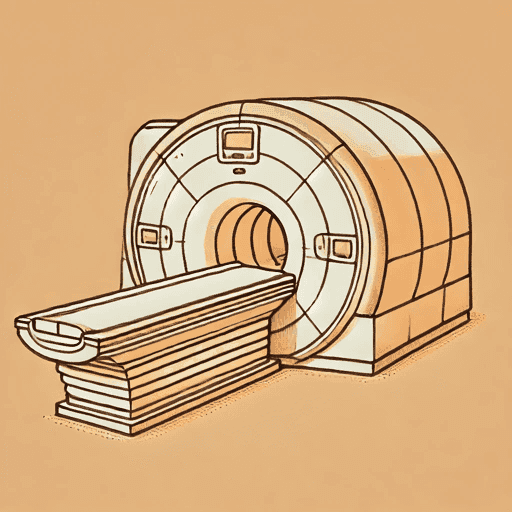
Roach situates Deng’s project within a longer history of “coital imaging.” She revisits Leonardo da Vinci’s speculative cross-sections—erroneous and pre-dissection—and then Robert Latou Dickinson’s early 20th-century test-tube tracings of vaginal angles that refuted myths of routine penis-cervix “interlocking.” In the 1990s, Dutch researchers Pek van Andel and colleagues used MRI to film couples during sex; the cramped 20-inch tube and long stillness requirements defeated most participants until faster scanners and, later, Viagra enabled publishable images. These scans established, among other findings, that much of the penis’s length is subcutaneous and that, during intercourse, the organ assumes a boomerang-like configuration rather than the straight rod depicted in historical diagrams.
Roach also samples quirky adjacent research, from fetal “masturbation” observations on prenatal ultrasound to laboratory simulations of semen-displacement mechanics using model “dongs.” Returning to Deng’s room, she noted how the resulting ultrasound loops were clear yet felt unlike lived intimacy. Roach acknowledges the value (and limits) of imaging: It can chart sex as moving anatomy for clinical purposes, but the experiential, relational whole exceeds what scans can capture.
Chapter 6 Summary: “The Taiwanese Fix and the Penile Pricking Ring: Creative Approaches to Impotence”
Roach reports from Taipei on urologist Geng-Long Hsu’s operating room as he performs venous-ligation/stripping surgery for erectile dysfunction (ED). Hsu “degloves” the penis, isolates and ties off drainage veins (especially the deep dorsal vein), and removes them to reduce venous leak and maintain tumescence. Roach explains erection physiology: Smooth muscle in the corpora cavernosa relaxes, blood fills the tissue, and passive venous occlusion traps it until detumescence. She contrasts this with age-related fibrosis and weakened smooth muscle that allows blood to escape, producing ED. Hsu claims high long-term success; Western urologists remain skeptical, given studies showing recanalization or collateral vein growth and diminishing results over time. Hsu’s zealous work (including cadaver studies, detailed vein mapping, and a standing order for donated specimens) underscores his belief that meticulous technique can improve outcomes.
The chapter then surveys the modern medicalization of impotence. From the 1980 JAMA provocation “Impotence Is Not All Psychogenic” (141) through vacuum pumps, implants, and especially the 1998 launch of Viagra, ED shifts from a psychological diagnosis to a treatable vascular/mechanical problem. Roach notes practical diagnostics such as nocturnal penile tumescence testing (RigiScan and the old “postage-stamp” method) and the common use of PDE5 inhibitors as a short-term “bridge” even when psychogenic factors are suspected.
Roach widens the lens via a brisk history of prescientific and pseudoscientific cures. Medieval Europe attributes impotence to witchcraft, even staging “impotence trials” and the obscene “trial by congress.” In the 18th and 19th centuries, anxieties about masturbation (e.g., Tissot’s Onanism) spurred alarming catalogs of ailments and devices designed to prevent emissions, including lockable anti-masturbation gear and the “Penile Pricking Ring” (146), whose spikes or hair-tugging mechanisms woke the sleeper upon erection. Roach closes by cautioning that while physiology explains much, the causes of impotence vary, and early surgical “cures” often overpromise or rest on fragile evidence.
Chapters 4-6 Analysis
These chapters deepen Roach’s exploration of how sexual science is often shaped by the tension between what is measurable (objective results) and what is meaningful (subjective experience). Roach moves from the cultural awkwardness of early research into fertility labs, ultrasound suites, and operating rooms, where sex is treated as a set of measurable outcomes. Roach’s narrative voice remains steady, but here she leans more heavily on the contrast between sophisticated instrumentation (equipment to measure physiological sexual response) and the human experiences those instruments inevitably bracket out (the emotional response to pleasure). Her structural strategy (describing animal experiments, imaging technology, and surgical innovation side by side) highlights how different disciplines approach sex studies with sharply different priorities (e.g., to prove uterine “insuck,” visualize sex in real time, or to address erectile dysfunction), revealing the implicit assumptions embedded in each scientific frame.
A recurring pattern in these chapters is that bodies are treated mainly as tools, especially in fields that care about sex only when it affects measurable outcomes. Roach spotlights this blunt pragmatism in a remark from a Danish pig-production researcher: “‘We don’t know. And to be honest? We don’t really care whether she has an orgasm. We just know these contractions seem to improve the semen transport and the fertility’” (98). The flat dismissal of subjective experience captures a worldview in which pleasure becomes valuable only when it enhances reproductive output. Roach includes this not to critique animal research itself but to show how easily scientific frameworks reduce complex behaviors to mechanical efficiencies. A parallel emerges in Chapter 6, where erectile dysfunction is described in strictly vascular terms: “Erections are all about blood. Blood is the backbone of a stiff penis” (134). The crisp parallel phrasing reflects how ED has been redefined as a hydraulic problem. In both cases, Roach’s curation of clinical language illustrates how modern science privileges what can be optimized or fixed, a dynamic that aligns with questions thematically central to The Science Versus the Soul of Sexuality: Physiological insight illuminates but does not fully capture subjective sexual experience.
In addition, Roach uses historical material to expose how scientific authority has often been entangled with spectacle, misinterpretation, and cultural anxiety. Her reference to 19th-century gynecologist Joseph Beck’s description (“Instantly that the height of excitement was at hand, the [cervix] opened itself to the extent of fully an inch…made five or six successive gasps as it were” [102]) reveals the theatrical style in which early male clinicians narrated women’s bodies. The breathless diction (“height of excitement,” “gasps”) positions the clinician as both an observer and a storyteller, blending prurience with scientific posture. By juxtaposing such accounts with later dispassionate validations and refutations, Roach demonstrates how early sex research often reflected the era’s moral scripts more than empirical rigor. This historical layering supports a broader thematic argument connected to The Cultural Politics of Sex Research: the boundaries of legitimate knowledge have long been shaped by gender norms, propriety, and institutional discomfort rather than objective inquiry.
The chapters on coital imaging highlight another dimension of Roach’s approach: what pictures can and cannot tell us about sex. When she describes a London lab where a scientist attempted to capture three-dimensional ultrasound footage of human genitalia during sex, the sentence’s journalistic precision underscores the extraordinary lengths required to “see” sex in action. The locked room, off-hours scheduling, and intricate imaging apparatus emphasize both technical ambition and persistent cultural unease. However, Roach is careful to show that clearer pictures do not necessarily produce fuller understanding. Her concluding observation—“Sex is far more than the sum of its moving parts” (130)— quietly corrects the experimental impulse to treat sexual experience as a solvable mechanical problem. Imaging can map motions and angles, but it cannot account for context, desire, discomfort, or pleasure.
Roach points out gender imbalances in what sexual science chooses to measure and value. Fertility research centers on semen transport; ED treatment prioritizes penetration; and historical “cures” treat male function as the default benchmark. Roach’s account of the 1998 Viagra rollout (“Viagra sealed the deal. In 1998, Pfizer—with a cadre of media-savvy urologists in tow—launched a massive publicity campaign to announce an exciting new approach to impotence” [141]) illustrates how institutional power, marketing, and language combine to redefine male sexual difficulty as an urgent biomedical issue. The absence of equally robust institutional attention to female dysfunction underscores a pattern that the book returns to later. In this sense, Roach’s account of early and modern interventions thematically foreshadows The Importance of Communication in Finding Mutual Pleasure, showing that scientific priorities often mirror cultural hierarchies more than shared sexual well-being.
Throughout these chapters, Roach’s narrative strategy reveals how sex research advances through ingenuity and precision yet continually encounters the limits imposed by culture, technology, and the assumptions that researchers bring to the work.

Unlock all 51 pages of this Study Guide
Get in-depth, chapter-by-chapter summaries and analysis from our literary experts.
- Grasp challenging concepts with clear, comprehensive explanations
- Revisit key plot points and ideas without rereading the book
- Share impressive insights in classes and book clubs