Bound by Honor
52 pages • 1-hour read
Cora ReillyBound by Honor
A modern alternative to SparkNotes and CliffsNotes, SuperSummary offers high-quality Study Guides with detailed chapter summaries and analysis of major themes, characters, and more.
Important Quotes
Content Warning: This section of the guide includes discussion of sexual content, rape, sexual assault, death, violence, and suicide.
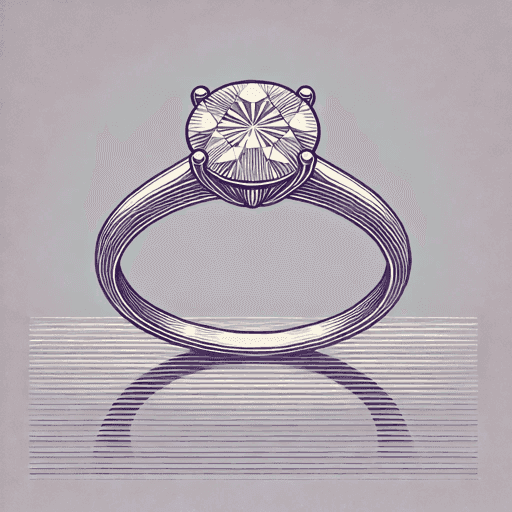
“What was meant as a sign of love and devotion for other couples was nothing but a testament of his ownership of me. A daily reminder of the golden cage I’d be trapped in for the rest of my life.”
(Prologue, Page 3)
This quote, from the novel’s opening, immediately establishes the symbolic meaning of the wedding ring. Aria’s internal monologue uses metaphor to reinterpret a traditional symbol of love as one of imprisonment, revealing that she does not welcome her marriage and feels frightened by the prospect of belonging to Luca.
“‘He’s a good catch. He’ll be the most powerful man on the East Coast soon enough. He’ll protect you.’
‘And who will protect me from him?’ I hissed.”
(Chapter 1, Page 14)
This exchange between Aria and her bodyguard, Umberto, uses a rhetorical question to highlight the paradoxical nature of protection in their world. Umberto voices the conventional view of a powerful husband as a shield, but Aria’s response reframes this protection as a threat in itself. The dialogue highlights the conflict between external perception and Aria’s lived reality, as the source of her safety is also the source of her greatest fear.
“‘She’s mine,’ Luca said quietly, sending a chill down my back with his voice, not to mention his eyes.”
(Chapter 2, Page 28)
Spoken while Aria is eavesdropping, Luca’s declaration is a succinct statement of ownership that defines his perspective on their relationship. The use of sensory details—the quietness of Luca’s voice and the chill it sends down Aria’s back—conveys the menace underlying the possessiveness. This quote contributes to Aria’s fear of Luca early in the narrative.
“‘Don’t deny it. I know want when I see it. And you want Aria,’ Luca growled. […] ‘If I find out you touch as much as her hand, I will kill you.’”
(Chapter 2, Page 31)
In this confrontation with Raffaele, Luca’s dialogue demonstrates his jealousy and possessiveness toward Aria. The animalistic verb “growled” characterizes his protective instinct as predatory and primal. While Luca is determined that no other man will have access to Aria, he signals that he sees her as vulnerable and in need of protection. This jealousy also reveals the value placed on chastity and fidelity, which extends to female characters but not to Luca himself.
“But Aria is no longer your responsibility. You lost your right to punish her when you made her my fiancée. She’s mine to deal with now.”
(Chapter 2, Page 33)
Luca’s interruption of Aria’s father uses legalistic, possessive language to assert his authority over Aria, framing her as property being transferred from one owner to another. This moment is a turning point, marking the formal shift in control from father to future husband. The quote explicitly codifies the patriarchal power structure within Mafia families.
“We have our own weapons, Aria, and you’ll have to start using them. If you want to survive a marriage with that man, you’ll have to use your body to manipulate him.”
(Chapter 3, Page 41)
Gianna’s advice to Aria introduces a counter-narrative of female agency within a patriarchal system. Her dialogue serves as a foil to Aria’s passivity, suggesting that sexuality can be weaponized for survival and control. This perspective complicates the power dynamics, acknowledging that while men hold institutional power, women can exert influence through their sexuality.
“‘It’s a Sicilian tradition that the Famiglia has proudly upheld for generations,’ Nina explained, eyes fixed on my face. ‘After the wedding night, the women of the groom’s family come to the bridal pair to collect the sheets they spent the night on. Then those sheets are presented to the fathers of the bride and the groom and whoever else wants to see proof that the marriage has been consummated and that the bride was pure.’”
(Chapter 4, Page 56)
The explanation of the presentation of the sheets tradition codifies the societal obsession with female purity and honor, establishing the theme of Duty and Honor as Mechanisms of Control. The tradition functions as a plot device that transforms the private act of consummation into a public spectacle of patriarchal control. The quotation also reveals why Aria feels fearfulness about her initiation into sexual activity: Sex is presented as a source of physical pain for women, not of pleasure.
“Being born into our world meant being born with blood on your hands. With every breath we took, sin was engraved deeper into our skin. Born in blood. Sworn in blood, like the motto of the New York Famiglia.”
(Chapter 5, Page 65)
This quote, referencing the Famiglia motto, establishes the inescapability of sin and violence in the characters’ lives. The personification of sin being “engraved” onto skin suggests that their fate is predetermined and permanently marked by the violent legacy of their families. By connecting this concept to breathing, the author illustrates that violence is as fundamental to their existence as a basic biological function.
“He pressed the sharp tip of the knife into the soft skin below the crook of his arm, drawing blood. […] He approached the bed, dipped his fingers into the liquid and then smeared it onto the center of the sheet.”
(Chapter 6, Page 95)
In this pivotal scene, Luca uses an act of self-inflicted violence to perform an act of protection, sparing Aria from the forced consummation required by tradition. Rather than penetrating Aria’s body, Luca uses a phallic symbol associated with masculine violence (the knife) to pierce his own flesh and shed his own blood. Luca protects both his own reputation and Aria’s, developing the theme of The Desire to Protect Loved Ones From Danger, and also creates a newfound intimacy between them because they now share a secret and a mutual interest in protecting it.
“‘Born in blood, sworn in blood, I swear that I won’t try to steal your virginity or harm you in any way tonight.’ […] ‘I already bled for you, so that seals it. Born in blood. Sworn in blood.’”
(Chapter 6, Page 103)
Luca appropriates the formal, binding language of a mafia initiation oath—a pledge of violence and loyalty—and applies it to a promise that he will respect Aria’s boundaries and consent. The repetition of the Famiglia motto reframes it from a symbol of brutal duty to one of respect and autonomy, illustrating duty and honor as mechanisms of control. This demonstrates how the characters navigate their violent world by adapting its codes for their own unique relationship.
“The tradition of bloody sheets in the Sicilian mafia is as much a proof of the bride’s purity as of the husband’s relentlessness. So what do you think it will say about me that I had you lying half-naked in my bed, vulnerable and mine, and yet here you are untouched as you were before our wedding?”
(Chapter 7, Page 105)
Luca’s rhetorical question reveals the performative nature of power and masculinity within the mafia. He explains that his public persona must be one of absolute dominance, framing his reputation for brutality as a necessary survival tool. This moment clarifies that his actions are dictated not by personal desire but by the rigid expectations of his role, where any perceived weakness is a fatal vulnerability.
“When we stopped at a red light, he glanced over. ‘You look great.’ ‘Thanks.’”
(Chapter 9, Page 136)
This brief, mundane exchange creates a moment of narrative dissonance that contrasts sharply with the life-and-death stakes of the characters’ world. Set within a story defined by violence and high drama, this simple compliment and terse reply highlight the characters’ attempts to navigate the rituals of a conventional relationship. The stilted dialogue also underscores the hesitancy and shyness between them, developing the forced marriage trope in which two characters who do not know one another must navigate performing the roles of husband and wife.
“How can I be cheating when we don’t have a real marriage? I can’t even fuck my own wife. Do you think I’ll live like a monk until you decide you can stand my closeness?”
(Chapter 9, Page 157)
Luca’s justification for his infidelity reveals his transactional view of marriage and his inherent sense of entitlement. He frames faithfulness not as an emotional or moral commitment but as a reward contingent upon sexual access. The statement underscores the deep disconnect between his understanding of marital duty and Aria’s desire for a genuine connection. It also highlights the hypocrisy of patriarchy, since Luca is obsessively jealous of Aria, but feels justified in having sex with other women.
“You are far too beautiful and innocent to be married to someone like me, but I’m too much of a selfish bastard to ever let you go. You are mine. Forever.”
(Chapter 11, Page 186)
Luca’s declaration articulates his internal conflict while reinforcing the theme of ownership. He creates a clear dichotomy between his self-perceived corruption (“selfish bastard”) and Aria’s “innocence,” revealing why he does not believe true intimacy is possible between the two of them. The final, stark sentences—“You are mine. Forever.”—use short, definitive syntax to underscore the inescapable and permanent nature of their bond as he defines it.
“‘But the Famiglia always comes first,’ I said lightly. ‘If you had to kill me to protect the business, you would.’ Luca became rigid, but he didn’t deny it.”
(Chapter 11, Page 217)
This passage reveals the growing tension between Aria’s desire to be loved and Luca’s devotion to the Famiglia. Aria’s light tone belies the gravity of her question, which tests the limits of their developing personal bond against Luca’s institutional obligations. Luca’s physical response—becoming “rigid” and silent—seemingly serves as a non-verbal confirmation that his duty to the Famiglia is absolute and would supersede his role as her husband. However, his lack of explicit agreement hints that he may be torn between his loyalties.
“‘I’m only yours,’ I said fiercely, and God help me it was the truth, not just because of the ring on my finger that marked me as his.”
(Chapter 12, Page 241)
Aria’s declaration signals a critical shift from reluctant partner to willing participant in her marriage. The adverb “fiercely” conveys a newfound conviction, suggesting she has internalized Luca’s language of ownership as an expression of her own feelings. By distinguishing her emotional commitment from the symbolic ownership of the ring, the narration emphasizes that her loyalty has become a matter of personal choice rather than external obligation.
“I closed my eyes. I had condemned a man to his death with my words. My first murder. But what about the girls he would have attacked in the future? They were safe now.”
(Chapter 12, Page 247)
Aria’s internal monologue reveals a significant moral turning point in her character arc. She reframes her role in Rick’s death as a form of protection for others, adopting a utilitarian logic that mirrors the mafia’s own moral justifications. This rationalization marks her deepening assimilation into a world where violence is a necessary tool for maintaining order.
“I found her. […] ‘The floor was covered with her blood and I slipped on it and fell. My clothes were soaked with her blood.’ His voice was calm, detached. ‘I ran out of the bathroom screaming and crying. My father found me and slapped me. Told me to be a man and clean myself up. I did. I never cried again.’”
(Chapter 13, Page 268)
This memory functions as the psychological origin of Luca’s detached brutality: He describes finding his mother after she died by suicide. His father’s reaction punishes emotional vulnerability, forcing a young Luca to equate masculinity with the suppression of all feeling, a lesson that shapes his adult identity as a killer. While this memory reveals why it is hard for Luca to access his emotions or show affection, his choice to share it reflects the growing emotional intimacy that is developing between him and Aria, explaining his Individual Capacity for Both Brutality and Tenderness.
“My father doesn’t love me. Matteo and I are his guarantee for power and a way to keep the family name alive. Love has nothing to do with it.”
(Chapter 14, Page 273)
Luca coldly describes his family of origin dynamic to Aria, explaining that his own father does not love him and sees him merely as a tool for maintaining power. This comment explains why Luca finds it hard to believe that anyone could truly love him and why he rebuffs Aria’s attempts at tenderness and emotional intimacy. Describing these family dynamics reveals the possibilities for the future between Aria and Luca, especially once they have their own children. They can replicate these cold and loveless dynamics in their own marriage, or they can forge a new path.
“He gets what he wants? It’s not hunting if he forces her into marriage by asking my father for her hand. That is cowardice.”
(Chapter 15, Page 286)
In a heated argument with Luca, Aria deconstructs the predatory language the men use to describe their acquisition of wives. By reframing Matteo’s “hunt” for Gianna as “cowardice,” she challenges the mafia’s patriarchal norms and implies that relationships are meaningless if they do not include genuine consent on both sides. While Aria’s own arranged marriage has proved successful, she is outraged and resistant to the idea of her sister being likewise unwillingly forced into a marriage.
“You won’t touch my wife again, Matteo. You are my brother and I’d take a bullet for you, but if you do that again, you’ll have to live with the consequences.”
(Chapter 15, Page 287)
Luca delivers this threat after Matteo physically restrains Aria during an argument. It marks his increasing prioritization of Aria over and above his Mafia loyalties, symbolized here by his own brother. As Luca’s love and affection for Aria have deepened, she has become the most important thing in his life. This incident foreshadows how Luca will subsequently privilege Aria’s safety during the confrontation with the Bratva.
“‘Is this a fucking lie?’ he asked roughly as he curled his fingers in me and made me gasp in pleasure. ‘Tell me, Aria. Tell me you enjoy this as much as I do.’ The despair in his voice startled me.”
(Chapter 16, Page 293)
During a sexual encounter, Luca’s dialogue reveals emotional vulnerability beneath his confident exterior. The word “despair” is a crucial piece of characterization, showing that his need for Aria’s reciprocity is not merely about physical pleasure but about emotional validation. Luca has not merely been acquiescing to Aria’s boundaries, but he can only be happy when she is a willing and active participant in their relationship.
“Romero stormed toward us, two guns drawn, when a red dot appeared on Umberto’s forehead. I cried out but it was too late. There was a shot and Umberto’s head flung back, blood splattering everywhere.”
(Chapter 17, Page 300)
This passage marks the violent intrusion of the Bratva into the relative safety of the Vitiello mansion. The stark, efficient prose—the ‘red dot’ of a sniper’s laser sight appearing without warning—depicts the sudden and impersonal nature of mob violence. The abrupt killing of a lifelong bodyguard shatters any illusion of security. While much of the novel’s conflict revolves around the interpersonal dynamics between Aria and Luca, they also face significant external threats.
“‘And I killed a man and I don’t feel sorry. Not one bit. I would do it again.’ I glanced up at Luca. ‘What does that make me, Luca? I’m a killer like you.’”
(Chapter 18, Page 314)
Reflecting on her actions during the Bratva attack, Aria articulates the completion of her character arc. She has grown from a terrified bride to an active participant in her violent world. Her lack of remorse and self-identification as a ‘killer’ signifies her full assimilation into the mafia’s moral code. This confession shows her acceptance not only of Luca but of the brutality required to survive in their life, erasing the distinction between her ‘innocence’ and his violence, and thereby making it possible for them to function as true partners.
“When I became a Made Man, I swore to put the Famiglia first […] But you are my first choice, Aria. I’ll burn down the world if I have to.”
(Chapter 18, Page 315)
In his confession of love, Luca explicitly renounces the foundational oath of his identity as a mafia Capo. By stating Aria is his ‘first choice,’ he reorders his priorities, accepting a vulnerability that his world defines as a fatal weakness. Because of the trust and intimacy that has been established between them, Luca is finally able to profess his love, fulfilling a key romance trope.

Unlock every key quote and its meaning
Get 25 quotes with page numbers and clear analysis to help you reference, write, and discuss with confidence.
- Cite quotes accurately with exact page numbers
- Understand what each quote really means
- Strengthen your analysis in essays or discussions