Bound by Honor
52 pages • 1-hour read
Cora ReillyBound by Honor
A modern alternative to SparkNotes and CliffsNotes, SuperSummary offers high-quality Study Guides with detailed chapter summaries and analysis of major themes, characters, and more.
Prologue-Chapter 4Chapter Summaries & Analyses
Content Warning: This section of the guide includes discussion of violence, bullying and emotional abuse, sexual violence, and rape.
Prologue Summary
Aria marries Luca Vitiello in a lavish ceremony attended by hundreds of guests, including members of the Chicago Outfit and the New York Famiglia (two rival Mafia families). The marriage has been orchestrated to forge a bond between the two gangs, which is especially important since they both face a growing threat from the Bratva (the Russian mob). As she speaks her vows, Aria is full of fear and uneasiness.
Chapter 1 Summary
Three years before the wedding, 15-year-old Aria Scuderi is summoned to her father, the Consigliere of the Chicago Outfit.
Her father explains that to combat threats from the Russian Bratva and the Taiwanese Triad, the Chicago Outfit must ally with the New York Famiglia. He reveals he met with Salvatore Vitiello, the Capo dei Capi of New York, and that he and Chicago’s Boss, Fiore Cavallaro, have arranged for Aria to marry Salvatore’s oldest son, Luca Vitiello. Since Fiore has no daughters, he offered Aria as the most beautiful girl available. Her sister Gianna was spared because she is younger.
Aria protests she is too young, but her father says the deal is sealed, though her mother convinced Fiore to postpone the wedding until Aria turns 18 and finishes her studies. Aria knows Luca is nicknamed The Vise for crushing a man’s throat with his bare hands.
Later, as Gianna comforts the crying Aria, they research Luca online. They find photos of a tall, muscular man with cold gray eyes who appears with different women. Articles call him the Bull. Aria sees him as heir to an empire of death and blood.
She asks her bodyguard, Umberto, for information. He reveals that Luca became a Made Man at age 11, after killing his first man. When Umberto calls Luca a good catch who will protect her, Aria asks who will protect her from Luca. Umberto’s silence is ominous.
Chapter 2 Summary
Two months later, the engagement party is approaching. Aria has continued to be distressed about her impending wedding. While she is playing with Gianna, Fabiano, and Liliana (her younger siblings), she encounters Luca for the first time. He is accompanied by his brother Matteo Vitiello and his bodyguard Cesare.
Fabiano attacks Luca, shouting for him to leave Aria alone. Luca easily restrains the boy while stopping Cesare from intervening. After Gianna speaks rudely to Luca, Aria apologizes and sends her siblings away.
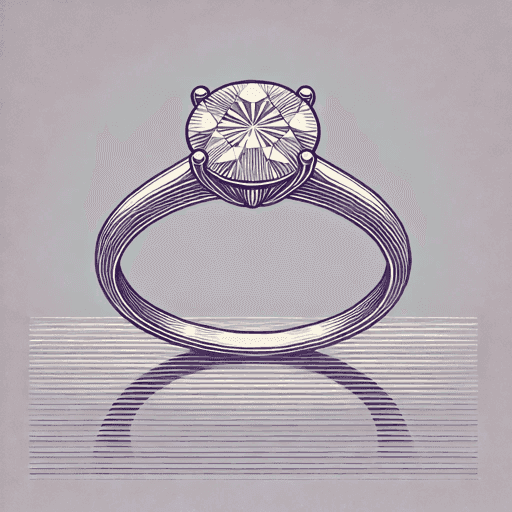
For the engagement party, Aria’s father forces her to wear a revealing dress and five-inch heels. She is presented to the assembled men. When Salvatore Vitiello suggests the couple have time alone, Luca gives Aria a large diamond engagement ring. She flinches at his touch.
Unable to sleep after the tense dinner, Aria finds Gianna eavesdropping through a secret passage behind the lounge. They overhear Luca call Aria a child but declare she is his. Luca summons Aria’s assigned guards, Umberto and her cousin Raffaele, to question them. He approves of Umberto but confronts Raffaele for leering at Aria. When Raffaele crudely threatens to “rape” Aria and “break her in” for Luca, Luca attacks him. After receiving permission from Aria’s father, Luca cuts off Raffaele’s pinky finger with a knife.
Gianna screams and vomits, exposing their hiding spot. Their furious father bursts through the secret door and slaps Gianna. When he moves to hit Aria, Luca catches his wrist and declares that, as his fiancée, Aria is now his to discipline. In response, their father announces that for any of Aria’s future misdeeds, Gianna will receive the punishment instead. Umberto leads the two girls away, explaining that (in his eyes) Luca acted appropriately. Even though the wedding will not take place for three years, Aria is now Luca’s property.
Chapter 3 Summary
On Aria’s 18th birthday, six months before the wedding, she goes dress shopping with her mother and sisters, accompanied by Umberto and another guard. She has not seen Luca since the engagement but has received expensive gifts from him. The dress shopping marks the start of the final wedding preparations.
The narrative then jumps forward to five days before the wedding. The family is now in New York, staying at the Mandarin Oriental Hotel. Salvatore Vitiello offered them rooms in his mansion, but Aria’s father declined. Guards are stationed at all suite doors.
While shopping with her sisters, Aria receives her first text from Luca, telling her to meet him at six o’clock. Back at the suite, Gianna advises Aria to use her body to manipulate Luca. Luca arrives unexpectedly early, along with Matteo, Romero, and Cesare. Aria notices his gaze on her body now holds desire.
Luca takes Aria to her bedroom to speak privately. He expresses his eagerness for their wedding and his desire for her, but she panics when he alludes to the two of them having sex. After Aria calls him a monster, Luca turns cold and formal. He announces that Romero will replace Umberto as her personal bodyguard until the wedding, citing Umberto’s lapse in leaving the suite door unattended. Aria is uneasy about this change, since Liliana is going through a rebellious phase and will flirt with Romero. Luca also gives Aria birth control pills from the Famiglia’s doctor, instructing her to start taking them immediately. He makes it clear that the two of them will have sex as soon as they are married, even though Aria expresses that she does not want to.
When Aria and Luca leave the bedroom, Umberto has arrived, and Luca explains that he has been replaced. Romero will now be guarding the sisters. Luca and the other men all leave, with only Romero remaining with the three sisters. When Liliana provocatively sits on his lap, Aria pulls her off and scolds her. Romero explains Luca trusts him because he is loyal and will not touch what belongs to Luca. He adds that he protects men from Luca’s wrath as much as he protects Aria, since Luca would kill any man who touched her. Aria realizes her sisters will also face arranged marriages someday and reflects on the injustice of their lives as women. She wishes she could somehow escape from her impending wedding.
Chapter 4 Summary
Four days before the wedding, the hotel suite is decorated for Aria’s bridal shower. Seventeen-year-old Gianna is allowed to attend, but Lily is not. Aria’s cousin Valentina, a 23-year-old widow whose husband, Antonio, died about six months earlier, arrives early. She reveals her father is already arranging her remarriage because her first marriage was childless. Aria asks Romero to wait outside for the all-female gathering.
During the party, Luca’s stepmother, Nina Vitiello, gives Aria extremely revealing lingerie for her wedding night. When Luca’s cousin Cosima mentions the presentation of the wedding-night sheets, Aria is confused. Nina explains the Sicilian tradition: After the wedding night, women from the groom’s family collect the bloody sheets to present them as public proof of the bride’s virginity and that the marriage was consummated. Gianna calls the tradition barbaric, but Nina states the Famiglia will not abandon it.
Aria is horrified, realizing the tradition means there is no escaping consummation with Luca on their wedding night.
Prologue-Chapter 4 Analysis
Bound By Honor utilizes the popular romance tropes of a forced marriage and an enemies-to-lovers transition. While the novel is set in the contemporary United States, the antiquated and patriarchal structures that govern the Mafia world provide parallels to older time periods, in which marriages were brokered as alliances between aristocratic families. Both Aria and Luca are the scions of elite Mafia families, which provide them with status, power, and opulent lifestyles. However, their families also significantly forestall their agency. Aria’s extreme youth (she is 15 when she becomes engaged and 18 when she marries) reinforces her vulnerability and innocence as a protagonist.
Within the Mafia world, female agency is constrained not only through arranged marriage but also through systems that weaponize women’s relationships with one another. Aria understands herself as exchanged property—she has been sold “like a cow” (16). Valentina’s situation as a widowed, childless wife being directed toward remarriage shows the same logic of circulation and utility applied across generations. The most explicit coercive mechanism appears after Luca stops Aria’s father from hitting her, prompting her father to redirect discipline onto Gianna: “For every one of your wrongdoings, Aria, your sister will accept the punishment in your stead” (33). This order converts sisterhood into leverage, making Aria’s self-protection inseparable from Gianna’s safety and ensuring that resistance carries an immediate, intimate cost. Control is thus maintained not only through threats against Aria’s body but also through engineered liability for those she loves.
The novel begins with a flash forward to the wedding and then recounts the events leading up to the ceremony. This narrative structure centralizes the wedding and ensures that the reader knows that Aria’s fate is inevitable. The Prologue frames Aria’s marriage as a prison rather than a union, using the image of a golden cage to foreground the theme of Duty and Honor as Mechanisms of Control. Aria’s ring functions as a visible sign of captivity—she notes that “what was meant as a sign of love and devotion for other couples was nothing but a testament of his ownership of me. A daily reminder of the golden cage I’d be trapped in for the rest of my life” (3).
Aria largely accepts her fate even though it terrifies her because she has internalized a value structure in which it is her role to meekly obey. The surrounding ritual language aligns marriage with mafia obligation rather than consent. That logic is reiterated when her father describes the alliance as a political necessity and positions Aria as leverage, calling her their “door into the New York Famiglia” (8). Duty and honor, therefore, remain rooted in how the families frame coercion as tradition and strategy: Aria’s personal future is absorbed into a public economy of reputation, alliance, and enforcement.
The tensions surrounding the betrothal and marriage create the opportunity for the theme of The Desire to Protect Loved Ones From Danger to surface. Comically, Aria’s siblings initially try to protect her from Luca, perceiving him as a threat. These futile interventions reveal that the impulse to protect is actually a positive and nurturing one. This is important because Luca’s initial protective gestures appear oppressive and even sinister. He mutilates Raffaele and entrusts Romero with the mission to protect Aria, all of which implies that he is domineering and possessive. Because the narrative is recounted in the first-person, readers only have access to Aria’s point of view, and they get to know Luca at the same pace that she does. In the early stages of their relationship, Luca is a chilling presence for Aria. The narrative links Luca’s “care” to control: His interventions reduce other men’s access to Aria, but they also narrow Aria’s autonomy by shifting authority over her safety and sexuality to him.
In this section, blood emerges as a motif connecting mafia identity, punitive power, and the regulation of female sexuality. The oath language—“Born in blood. Sworn in blood” (7)—casts violence as both origin and contract, making bodily harm a normative proof of belonging. That abstraction becomes immediate in Raffaele’s mutilation, where blood operates as a warning: Violations of Luca’s power are answered with public, bodily consequences. The bridal shower’s discussion of the wedding-night sheets then redirects blood symbolism toward sexual policing; the requirement of proof transforms consummation into a communal verification of “honor,” collapsing intimacy into a spectacle of compliance. Together, these moments treat blood as evidence of loyalty, of punishment, and of a bride’s conformity to patriarchal expectations.

Unlock all 52 pages of this Study Guide
Get in-depth, chapter-by-chapter summaries and analysis from our literary experts.
- Grasp challenging concepts with clear, comprehensive explanations
- Revisit key plot points and ideas without rereading the book
- Share impressive insights in classes and book clubs