Bound by Honor
52 pages • 1-hour read
Cora ReillyBound by Honor
A modern alternative to SparkNotes and CliffsNotes, SuperSummary offers high-quality Study Guides with detailed chapter summaries and analysis of major themes, characters, and more.
Symbols & Motifs
Content Warning: This section of the guide includes discussion of sexual content, violence, cursing, rape, death, and suicide.
Blood
Blood is a dominant motif in the novel, functioning both literally and symbolically. Blood is most commonly shed in instances of the violence required by life in the Mafia; Luca repeatedly appears covered in blood, revealing that he has been engaging in gruesome acts as part of his role. However, a woman’s initiation into sexuality is also portrayed as marked by blood: Aria learns that the bloody sheets will be displayed after her wedding night, and Grace taunts her at the wedding by telling her, “[Luca] will fuck you bloody” (76). The motif of blood reveals the conflation of sexuality and violence, in a world where a woman’s pleasure and consent are not valued. Aria initially views Luca as a man who sheds blood (confirmed by the scene where she watches him mutilate her cousin, Raffaele) and therefore assumes that he will also brutally shed her blood when he forcefully consummates their wedding.
However, the motif of blood encompasses intimacy and vulnerability as well as violence. Rather than forcing her, Luca protects Aria on their wedding night by shedding his own blood. Instead of patriarchal dominance, the bloodstained sheets represent a fragile collaboration in which Luca and Aria begin to trust one another. This motif continues when they do finally consummate their marriage, choosing to do so only when Aria freely consents. She still bleeds when they have sex for the first time, but this blood is shed because she feels safe to trust Luca. Blood also features prominently in the memories Luca eventually shares with her: He recounts finding his mother’s body after she died by suicide, and how he bled copiously when his father denied him medical attention to protect the security of the family.
In addition to literal bloodshed during violence and intimate moments, blood functions symbolically to represent the ties of loyalty between members of the Mafia. This is most clearly articulated in the Famiglia’s motto, “Born in blood. Sworn in blood” (8). For characters like Aria and Luca, blood is the element that binds them to their families and to each other, a permanent stain that dictates the violent course of their lives from birth until death, leaving no room for personal desires or escape.
The Wedding Ring
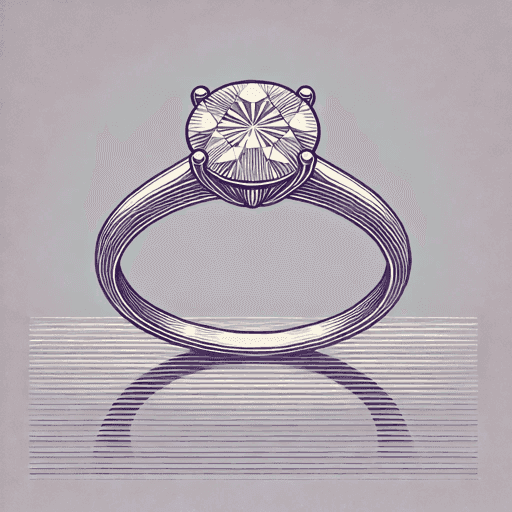
Aria’s wedding ring symbolizes her unbreakable bond with Luca and the way in which their fates are yoked together. The meaning of this symbolism changes over the course of the plot, since Aria initially finds her union with Luca oppressive. At first, she reflects, “What was meant as a sign of love and devotion for other couples was nothing but a testament of his ownership of me. A daily reminder of the golden cage I’d be trapped in for the rest of my life” (3). Because neither Aria nor Luca freely choose their marriage, it does not reflect their desires. Since Luca has made it clear that he sees marriage as a patriarchal institution in which he will have complete control over his wife, the ring symbolizes a loss of agency in which she ceases to have control over her own fate and becomes subject to his desires and decisions. The ring’s value, represented by its “twenty small diamonds” (3), reinforces the golden aspect of her imprisonment. As Luca’s wife, Aria will have access to material luxury, but not to freedom or autonomy.
However, as Aria gets to know Luca better and gradually falls in love with him, she more willingly accepts that their fates are intertwined. She realizes that she would not want to be free from him, even if she could be. As Aria’s feelings for her husband transform, the ring becomes a symbol of loyalty and an unwavering bond between them rather than an oppressive construct. Because the novel participates in the forced marriage trope (in which a character gradually falls in love with a spouse they initially objected to), the meaning of their marriage changes over time, and it becomes genuine. When Luca professes his love for her at the end of the novel, the couple’s marriage is affirmed out of free will: They now choose to be together, and the wedding ring comes to symbolize true love reinforced by mutual consent.
Aria’s Golden Hair
Aria has beautiful, golden blonde hair, which is a notable character trait that others comment on; her father remarks that “there aren't many Italian girls with hair like yours. Fiore described it as golden” (8). Luca repeatedly fondles Aria’s hair, leading her to notice how he “reached for a strand of my hair and let it glide over his finger. I wasn't sure why he always did that” (161). Aria’s hair symbolizes her desirability and status as a commodity. Because her hair resembles a precious substance, she is viewed as rare and valuable: something that many men covet, but only one man can own. Aria is traded between two competing Mafia families like currency: She is desirable both because of her physical beauty and because of her family lineage.
Aria’s golden hair also symbolizes how she functions as a fairy-tale princess; in fact, Luca takes to playfully referring to her as principessa (the Italian word for princess). Aria’s beauty and innocence, as well as her birthright as a member of “Mafia royalty,” likens her to a princess who must be jealously guarded and carefully protected. Her isolation in Luca’s sequestered penthouse apartment reinforces this symbolism, functioning as a kind of tower where she is locked away. While her blonde hair symbolizes her virtue and innocence, it also alludes to the sensuality and seductive capacity she will gradually unearth. Long, flowing hair is sometimes associated with the figure of a woman as a temptress and seductress; Aria’s hair drives Luca wild with desire because it simultaneously symbolizes her innocence and her ability to arouse him.

Unlock the meaning behind every key symbol & motif
See how recurring imagery, objects, and ideas shape the narrative.
- Explore how the author builds meaning through symbolism
- Understand what symbols & motifs represent in the text
- Connect recurring ideas to themes, characters, and events