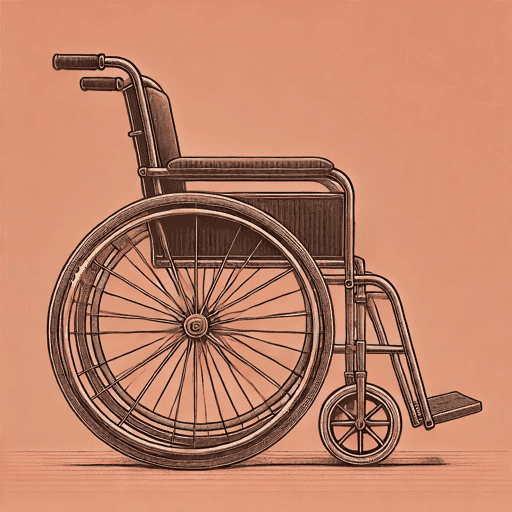
Brain Damage
56 pages • 1-hour read
Freida McFaddenBrain Damage
A modern alternative to SparkNotes and CliffsNotes, SuperSummary offers high-quality Study Guides with detailed chapter summaries and analysis of major themes, characters, and more.
Chapters 10-19Chapter Summaries & Analyses
Content Warning: This section of the guide contains discussion of graphic violence, physical abuse, and emotional abuse.
Chapter 10 Summary: “One Year, Nine Months Before”
In the “before” timeline, Charlotte reviews the chart for Stanley Leroy, whom she treated for groin fungus and scheduled a follow-up appointment. He thanks her, claiming that she inspired him, and asks her to dinner. She declines, citing professional ethics. After he leaves, she regrets her decision and hurries to the waiting room, but he’s gone. Before she can return to her office, however, a man named Mr. Kyle Barry verbally threatens her, blaming her for his wife’s potentially leaving him. Clark is in the waiting room and comes to Charlotte’s defense, intimidating Mr. Barry until he’s escorted out. In an exam room, Clark comforts Charlotte, who’s shaken. She notices that his cat scratch is infected and writes him a prescription. When he asks for a second date, she agrees.
Chapter 11 Summary: “Two and a Half Months After”
In the “after” timeline, Charlotte, who now goes by Charly, attends group therapy, struggling with memory loss and left-side neglect. To help, her therapist, Amy, uses a red pen to draw Charly’s attention to text during a memory game. An elderly man interrupts the session by loudly recounting a movie plot. A handsome man, who seems familiar to Charlotte, arrives and introduces himself as her husband, Clark. After the session, he wheels her back to her room, complimenting her but pointing out that her face is lopsided before leaving abruptly. Later, the elderly man from therapy tells her that he doesn’t like Clark.
Chapter 12 Summary: “Two and a Half Months After”
Charly has a recurring dream in which she’s shot while a voice tells her, “You deserve this” (82). She awakens to see a man in her room. Due to left-side neglect, she misreads his ID badge as “rapist” and screams. A nurse explains he’s an occupational therapist. Later, unable to find the call button on her left, Charly unbuckles her wheelchair safety belt, setting off an alarm. When she tries to stand, she falls and wets herself. To prevent future falls, her doctor orders that she be in the hallway at all times so that the staff can more easily supervise her.
Chapter 13 Summary: “Two and a Half Months After”
Now designated a “Hallway Parker,” Charly eats lunch in her wheelchair at a busy intersection. She watches another patient, Jamie, who has staples in his skull, as he struggles to eat. He notices her staring and calls her “Helmet Girl” before playfully smearing cream cheese on his face. When a nurse confronts him, he blames Charly and then makes a joke, causing her to laugh for the first time. Before he’s wheeled away, he winks at her.
Chapter 14 Summary: “Two and a Half Months After”
Charly attends her first “Walking Group” and watches Jamie lurch uncontrollably between the parallel bars, remarking aloud that it was “terrible.” Overhearing her, Jamie challenges her to do better. When it’s her turn, however, Charly discovers that she can’t even stand, let alone take a step, without significant support. Shaken, she overhears a therapist say they’ll let her keep trying for a few more days. After witnessing her struggle, Jamie refrains from taunting her.
Chapter 15 Summary: “Three Months After”
During speech therapy, Amy corrects Charly’s mistaken belief that she fell (which is how Jamie was injured), gently reminding her that she was shot. Amy does an exercise to illustrate Charly’s left neglect, explaining that her brain might be subconsciously processing information from her left side. At dinner, Charly laughs when Jamie spills his peas. In retaliation, he throws peas at her. His father explains that Jamie is a responsible single dad and that this behavior is unusual. Forced to apologize, Jamie does so reluctantly and then immediately throws his dinner roll at Charly.
Chapter 16 Summary: “Three Months After”
Charly reflects that her mother is her only consistent visitor (her father is deceased), and Clark has only visited once. She wonders if this is a sign that she wasn’t a good person before her injury. During one visit, she asks her mother if she has children. Her mother explains that Charly chose to prioritize her career over starting a family. Charly considers this and decides that it’s for the best, given her current condition.
Chapter 17 Summary: “One and a Half Years Before”
Back in the “before” timeline, four months into her relationship with Clark, Charlotte feels insecure, buying new clothes and beauty treatments to feel worthy of him. One evening, Clark tells her he loves her for the first time. She confesses that she feels she isn’t pretty enough for him, but he reassures her that she’s not only attractive but also smart, funny, and sweet. Believing him, she stops questioning their relationship and tells him that she loves him, too.
Chapter 18 Summary: “Sixteen Months Before”
At their six-month anniversary dinner, Charlotte is distracted by a fear that she has contracted scabies. Her insecurity heightens when a waitress flirts with Clark. After the meal, Clark surprises Charlotte by proposing and presents a large diamond ring. She accepts. The next morning, they go to get the ring resized, but first have breakfast at their favorite diner. There, they run into Stan Leroy, the former patient whom Charlotte refused to date. When he asks how they met, Clark says that he was also one of her patients. While Clark goes to get a table, Stan angrily accuses Charlotte of hypocrisy for only dating patients who meet her attractiveness “standards” and then storms out.
Chapter 19 Summary: “Fourteen Months Before”
In a taxi on their way to City Hall, Charlotte and Clark prepare to get married with her mother as the only witness. Charlotte reflects on their whirlwind romance, satisfied with her decision for a simple ceremony. After they get out of the cab, Clark admits that he’s nervous. He momentarily hesitates but quickly dismisses his concerns, takes her hand, and leads her toward the building.
Chapters 10-19 Analysis
The alternating narrative structure continues to explore the subjectivity of perception, further developing The Fragility of Perception and Reality as a theme. The text describes Clark’s calculated deceptions in the “before” timeline and how she, in the “after” timeline, struggles with a neurologically fragmented consciousness. In the flashback chapters, Charlotte perceives Clark’s actions through the filter of a hopeful perspective, which frames his intervention when Kyle Barry threatens her as heroic. Though Clark explains that he came to “apologize” for being a “jerk,” his presence in the waiting room at the exact moment she’s attacked there is suspiciously coincidental. In the narrative present chapters, her hemispatial neglect after the shooting is a physical metaphor for her earlier psychological blindness. Her inability to perceive the left side of her world leads to her misreading an occupational therapist’s badge as “rapist” and failing to see key elements of her surroundings until prompted, mirroring her failure to see the duplicitous side of Clark’s character in the “before” chapters. The narrative creates dramatic irony by granting the audience the complete picture that Charlotte lacks, both literally in her visual perception and figuratively in understanding her life. This structural choice reinforces that reality, as a construct, is vulnerable to both internal damage and external manipulation.
In addition, these chapters thematically develop The Dangers of Misplaced Trust through the character foils of Clark and Jamie. In the “before” timeline, Clark exploits Charlotte’s confessed insecurities about her appearance. When she questions why he loves her, he offers a scripted affirmation that she’s “really pretty, but [also] smart and funny and sweet” (114), a reassurance that placates her self-doubt. His “protection” of her from Kyle Barry is a maneuver to indebt her to him. This behavior contrasts with his conduct in the present. During his first visit to the rehab facility, his facade crumbles as he handles her wheelchair clumsily, revealing his impatience. Jamie becomes his foil. Though Jamie initially seems abrasive, smearing his face with cream cheese and taunting Charlotte as “Helmet Girl,” his behavior stems from his having a TBI. His father’s explanation that his son’s current behavior radically differs from his former character establishes a parallel with Charlotte’s own shattered identity. The antagonistic rapport between them reflects an authenticity absent from Clark’s calculated romance of Charlotte in the “before” timeline, demonstrating that genuine connections can arise from mutual vulnerability.
The symbol of the helmet gives tangible form to the theme of Reconstructing Identity After Trauma, physically representing the crisis that Charly experienced. Before her injury, Charlotte’s identity was largely defined by her professional competence and material signifiers of success. The shooting violently stripped this away, replacing it with the identity of a dependent patient, as the protective helmet visually symbolizes. This object becomes the emblem of her fractured self, signifying her physical fragility, cognitive deficits, and altered social status. Jamie’s nickname for her, “Helmet Girl,” centers her identity on her injury, but his interaction with her shows genuine caring, while Clark’s awkward pat on the helmet during his visit underscores his inability to see beyond the trauma and connect with the woman beneath. The helmet physically protects her damaged skull and emotionally isolates her from her past self. It’s a public reminder of her loss of agency and the gulf between the capable doctor she was and the dependent patient she has become, forcing her to navigate a new reality.
The recurring motif of left-side neglect and Charlotte’s falling out of the wheelchair externalize her fractured psychological landscape. The unseen left side extends beyond the clinical diagnosis of hemispatial neglect to become a dominant metaphor for all that is lost or hidden from Charlotte’s awareness. It’s the void where her attacker lurks in her nightmares and the repository for her erased memories, which will eventually reveal Clark’s betrayal when restored. Amy’s therapy session, in which Charlotte can only perceive a complete picture after a red ruler guides her gaze leftward, demonstrates how her reality relies on external aids. Her fall from the wheelchair operates in tandem, representing a loss of control. The fall is a consequence of neurological deficits and her attempt to reclaim autonomy, and it relegates her to becoming a “Hallway Parker” like Jamie. In the Walking Group, her struggle to stand upright physicalizes her disorienting internal state. These incidents create a visceral sense of her dislocated reality, in which the world is unstable and half of it remains a blank space.

Unlock all 56 pages of this Study Guide
Get in-depth, chapter-by-chapter summaries and analysis from our literary experts.
- Grasp challenging concepts with clear, comprehensive explanations
- Revisit key plot points and ideas without rereading the book
- Share impressive insights in classes and book clubs