Brain Damage
56 pages • 1-hour read
Freida McFaddenBrain Damage
A modern alternative to SparkNotes and CliffsNotes, SuperSummary offers high-quality Study Guides with detailed chapter summaries and analysis of major themes, characters, and more.
Chapters 20-31Chapter Summaries & Analyses
Content Warning: This section of the guide contains discussion of graphic violence, physical abuse, emotional abuse, and substance use.
Chapter 20 Summary: “Three Months After”
In a Walking Group session, Angela (a stroke patient) compliments Charly’s violet eyes and explains that birth control pills caused her stroke. During the session, Charly shows minimal progress walking with assistance. Angela then points to the arm sling that Charly is wearing, but because of severe left-side neglect, Charly is unaware of the sling; she can’t even perceive her left arm. Jamie, who is unusually quiet, is discouraged and refuses to participate until his therapists coax him into walking, but he shows little improvement. Later, Charly sees Dr. Greenberg prescribing medication to treat Jamie for depression and observes that the staples in Jamie’s head have been removed.
Chapter 21 Summary: “Three and a Half Months After”
During occupational therapy, Charly’s confusion is obvious when she tries to comb her hair with a toothbrush. Dr. Greenberg confirms her diagnosis of left neglect. Her therapist, Valerie, jokes about amputating Charly’s unresponsive limb, which frightens Charly until the doctor reassures her and suggests electrical stimulation therapy. Later, during a demonstration of the device on what Charly is told is her own left arm, she feels a buzzing sensation and sees her fingers open, but she can’t voluntarily make a fist.
Chapter 22 Summary: “Three and a Half Months After”
In the dining area, Jamie, whose mood has improved with medication, gets Charly’s attention by again calling her “Helmet Girl.” They talk, and Charly explains that she wears the helmet because a piece of her skull was removed after she was shot. Curious, Jamie asks to see her head. Charly removes her helmet, and he gently places his fingers on the soft, indented area of her scalp. A nurse scolds Charly for removing the helmet, but Jamie defends her, saying it was his fault.
Chapter 23 Summary: “Four Months After”
In the Walking Group room, Jamie, noticing that Charly is discouraged about her slow recovery, opens up to her. He explains that his motivation for getting better is his six-year-old son, Sam, and reveals that his injury was from falling down stairs at the bar he and his brother own. When Charly asks to meet his son, he withdraws. Sensing her discouragement, her therapist, Natalie, encourages her to try a hemi-walker. Charly is terrified at first, but the entire group, including Jamie and Angela, begins chanting her name, bolstering her confidence. She agrees to try and successfully walks across the room for the first time.
Chapter 24 Summary: “Four Months After”
In her hospital room, Charly watches a TV show that triggers her recurring dream of being shot while a voice whispers, “You deserve this” (155). She asks her mother about the police investigation, but her mother reports only that the police suspect a burglar and quickly changes the subject. Dr. Greenberg arrives with the good news that he can remove Charly’s feeding tube. She’s excited and insists that he do it immediately. Though the procedure is intensely painful, Dr. Greenberg triumphantly declares her officially tube-free.
Chapter 25 Summary: “Four Months After”
Jamie’s father brings his son, Sam, for a surprise visit. Though Jamie didn’t want his son to see him yet, thinking it would scare him, he’s overjoyed. The reunion is happy, and Jamie introduces Charly to Sam. However, Jamie’s happiness sours when his father mentions that Sam’s mother, Karen (who struggles with substance use), has been in contact and wants to discuss joint custody. Jamie becomes enraged and declares that for her get custody, “She’ll have to kill me first” (166).
Chapter 26 Summary: “Four Months After”
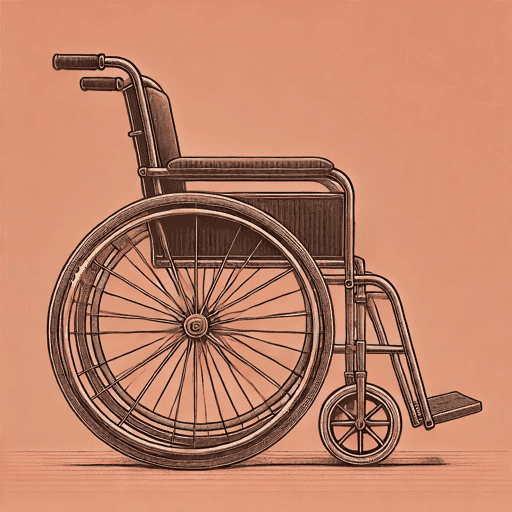
During a session on wheelchair mobility, Charly’s left-side neglect causes her to grab her therapist’s arm instead of her own and later to crash into a wall. The word “race” triggers a memory of running marathons, and she asks her therapist, Natalie, if she’ll ever run again. Natalie’s evasive answer solidifies for Charly the permanent reality of her injuries.
Chapter 27 Summary: “Four Months After”
Charly feels extremely ill and refuses therapy. Jamie alerts Dr. Greenberg, who confirms that she has a fever and sends her to her room. While sleeping, she has a vivid dream that feels like a memory. In it, she enters her apartment, sees a gun, and finds herself paralyzed on the floor after an explosion. She senses a person in her left blind spot lean in and whisper, “You deserve this” (175). Charly wakes with a start, drenched in sweat.
Chapter 28 Summary: “Fourteen Months Before”
Flashing back to the “before” timeline, Charly is on her honeymoon when she learns that Clark extended their vacation by a week and quit his job a month before the wedding without telling her. She confronts him, and he claims that he quit to start his own practice but admits that he has no clients and planned to use her savings. He apologizes for his secrecy. Though they reconcile, Charly feels a flicker of doubt about their chemistry for the first time.
Chapter 29 Summary: “Thirteen Months Before”
Charly is now paying for Clark’s office rental. She sees Stan Leroy “everywhere,” yet, checking his chart, notes that his residence isn’t near hers. At a restaurant, a former colleague of Clark’s reveals that he was fired from his law firm more than a year ago. Furious, she confronts him. He confesses that he was fired for incompetence and then “blackballed,” hiding the truth out of shame and fear that she would leave him.
Chapter 30 Summary: “Four and a Half Months After”
In the “after” timeline, Charly is back in the hospital hallway after a three-day confinement for a urinary tract infection. She discovers that many patients she knew have been discharged. Jamie appears, confessing that he was worried about her, and they share a brief moment holding hands. A nearby patient recognizes Charly as the doctor who performed his hair transplant. After he leaves, Jamie points to a small pile of feces on the floor where the man had been standing.
Chapter 31 Summary: “Four and a Half Months After”
Charly’s cognitive function improves enough for her to graduate to the Thinking Skills Group. The other patients in the group include her friend Angela, a woman named Helga, and a former psychiatrist named Dr. Vincent. The group discusses Jamie’s crush on Charly before Dr. Vincent bluntly states that her husband shot her. Later, Charly has her recurring dream of the shooting, but this time she remembers greeting a neighbor right before going into her apartment. The dream ends as always, with an unseen figure whispering, “You deserve this” (205).
Chapters 20-31 Analysis
The alternating narrative structure continues to externalize Charly’s neurological and psychological confusion, thematically reinforcing The Fragility of Perception and Reality. Her first-person narration, rendered unreliable by the TBI, is a study in subjective storytelling. In the “after” segments, Charly’s world is disjointed: She’s unaware of a sling on her arm and crashes her wheelchair into a wall she can’t see. This depiction of hemispatial neglect contrasts with the linear flashbacks to her early marriage in the “before” timeline. However, this clarity is deceptive. The flashbacks reveal Clark’s lies, creating dramatic irony by conveying information of which Charly is unaware. Her recurring, incomplete dream of the shooting, which concludes with a voice whispering, “You deserve this” (155, 175, 205), structurally anchors the dream. Its gradual accumulation of detail mirrors her slow recovery of both memory and objective truth, transforming her physical therapy instruction (to “scan left”) into a metaphor for her psychological quest to uncover deceptions hidden in her blind spot. In the “before” timeline, her constant sightings of her dermatology patient Stanley Leroy, who expressed anger toward her in the previous section, present another potential suspect for the shooting, raising doubt about Clark’s culpability.
Jamie continues to be a foil to Clark, as the novel contrasts Jamie’s connection to Charly, which stems from shared hardship, with the predatory nature of Clark’s affection toward her. This juxtaposition of their character contributes to thematically developing The Dangers of Misplaced Trust as the flashback sequences lay bare Clark’s manipulation: He conceals his unemployment to secure his relationship with the financially successful Charly, and the claims that he extended their honeymoon by a week because he needs time to decompress after losing his job. However, this seems suspicious in light of his happy new marriage and foreshadows Charly’s later discovery relating to Clark’s involvement with a woman named Haley Matthews, who met him at the resort after Charly left and has been part of his plan to capitalize on Charly’s wealth. Clark preys on Charly’s insecurities, performing to keep her happy. In contrast, Jamie’s bond with Charly is built on shared vulnerability, and he doesn’t hide his despair or his physical limitations. His concern for Charly is genuine; he senses the severity of her illness when she develops a fever, insisting, “There’s something wrong, Doc. I know it” (172). In an intimate moment, she trusts him to see and even gently touch the unprotected soft area of her scalp—the physical locus of her trauma. This act demonstrates an acceptance of her damaged self that starkly contrasts with Clark’s calculated deception.
The novel further develops its exploration of a reconstructed self through the symbolism of the helmet that protects Charly’s head where the skull is missing, which physically manifests the core conflict inherent in the theme of Reconstructing Identity After Trauma. The helmet is a constant signifier of her new, damaged identity; it prompts Jamie to call her “Helmet Girl” (142, 147) and is an external marker of her internal state: fractured and alienated. Removing the helmet is a moment of profound relief. Her imagined description of the injury, based on Jamie’s observation that it “looks like somebody took a bite out of your skull” (146), is a visceral image of violation and incompleteness. This identity, defined by a void, is thrown into sharp relief by the triggered memory of her former life as a marathon runner—an identity defined by strength and endurance. That person has been erased, and her therapeutic journey isn’t about returning to who she was, but about learning to integrate “Helmet Girl” with the “Dr. McKenna” of her past. Equally satisfying to Charly is the permanent removal of the feeding tube, signifying a major achievement in her slow recovery.
The motif of Charly’s hemispatial, or left-side, neglect continues to metaphorically represent her psychological blind spots, transforming a neurological symptom into a symbol of the hidden truths she must confront. Her physical world is halved. This physical blindness is repeatedly linked to the central mystery of her attack. The perpetrator in her traumatic nightmares is always located in this unseen void, connecting the act of physical therapy directly to the act of psychological recovery. Her struggle to “scan left” (140) isn’t merely about navigating a room but about reclaiming the sundered half of her own story. Within this metaphorical blind spot, the narrative positions Clark’s entire deception. Her journey toward wholeness is therefore a process of turning to face what has been deliberately concealed from her, suggesting that healing requires a conscious effort to see the full picture.

Unlock all 56 pages of this Study Guide
Get in-depth, chapter-by-chapter summaries and analysis from our literary experts.
- Grasp challenging concepts with clear, comprehensive explanations
- Revisit key plot points and ideas without rereading the book
- Share impressive insights in classes and book clubs